Earlier quoted context omitted.
Well, you're ignoring massive swathes of infrastructure types. Containerization has led to a complete revamping of US ports during that period. The electrical infrastructure has been massively upgraded, including a huge decrease in coal fired plants. While passenger trains haven't been improved at all, freight train usage has grown rapidly and the already very extensive rail lines have been maintained (conflicting de…
Containers, cell phone networks, the Internet, internet banking etc is infrastructure that has been built and implemented in the rest of the Western World as well, many places to a higher degree or more advanced than in the US, while still maintaining and expanding roads, rails, electrical grid, subways and airports. You are right that the US has lower population density than most of Europe, but Canada doesn't and it…
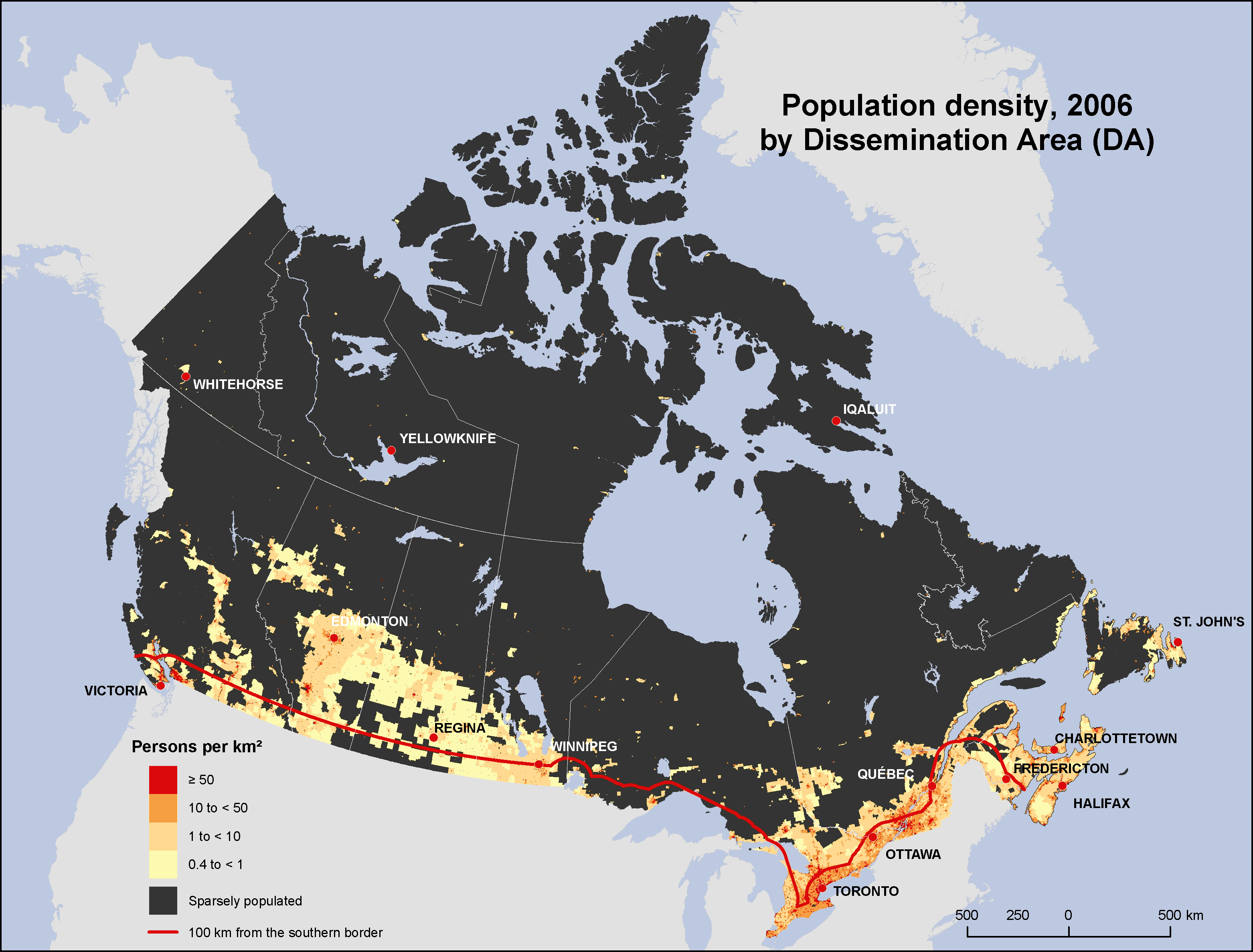
Population maps of the US [1] and Canada [2] highlight the problem with this argument, though. Canada has low total density, but it's overwhelmingly concentrated around the southern border of the country. The US concentrates population along three coastlines and the Great Lakes, and has more population to support in the low-concentration areas. (For example, Salt Lake City and Las Vegas exist.)
So southern Canada has better-than-US infrastructure at higher-than-US population density, while much of northern Canada has exceedingly limited infrastructure. Outside of Alaska, there's no territory in the US comparably written-off to much of Nunavut and the Northwest Territories.
An example: US highways are nationwide [3], while Canadian highways simply stop [4]. And despite the look of that projection, that's more than a quarter of Canada which is further from a highway than any point in the continental US.
[1] https://upload.wikimedia.org/wikipedia/commons/2/21/US_popul...

[2] http://www12.statcan.gc.ca/census-recensement/2006/as-sa/97-...
[3] https://www.mapsofworld.com/usa/usa-maps/usa-road-map.jpg