Live data from Hacker News

Deutsche Bahn introduces "MetaWindow"

railtarget.eu

271–280 of 474 posts

Re: Deutsche Bahn introduces "MetaWindow"

#271

Earlier quoted context omitted.

If you dive into the graffiti scene a bit you will start to appreciate all those graffitis. The story behind some of them is super interesting. There is a lot of "competition", "collaboration", and group dynamics involved. It is truly fascinating. I was living in Cologne (Ehrenfeld) for a while in a place with awesome graffiti and every weekend there were people taking pictures "collecting" and documenting the graffi…

There is exactly nothing about defacing public infrastructure which elicits the tiniest spark of "admiration" or "interest" in me. If you want to live out your "artistic ambitions" do it somewhere away from public property.
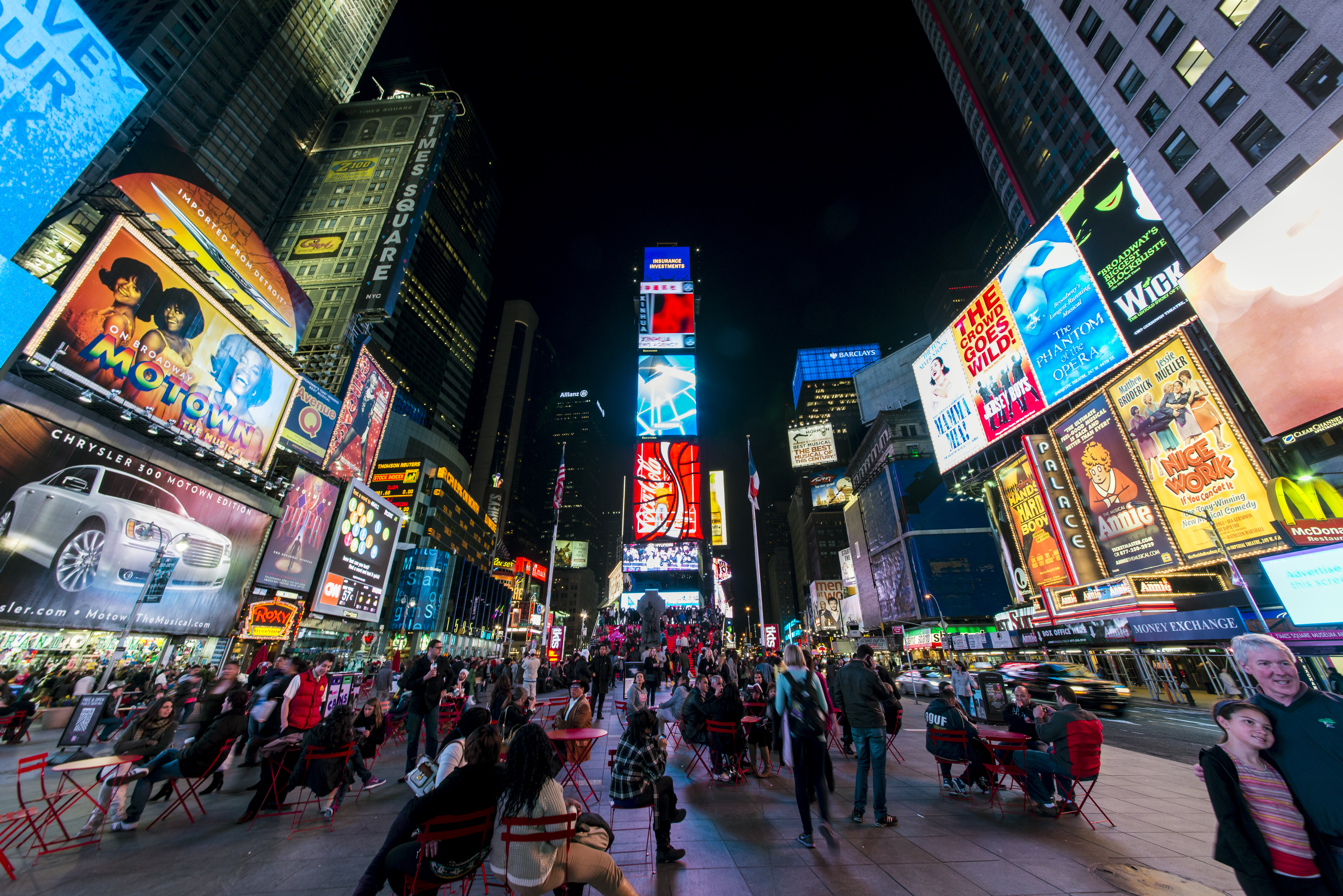
Meanwhile in non-defaced public property: https://upload.wikimedia.org/wikipedia/commons/c/c0/1_times_...

The thing about a big city is it's not just about the people who own the stuff you look at, it's about all the other people who have to look at it. I'll take graffiti over advertising any day. At least graffiti isn't trying to sell me anything or make me depressed or addicted or whatever.

Re: Deutsche Bahn introduces "MetaWindow"

#272
post #4

> a transparent noise barrier Most rail noise barriers in Germany are completely covered in graffiti [0], so I wouldn't expect them to remain transparent for more than a few weeks. [0] https://ga.de/imgs/93/8/5/9/3/0/9/1/9/tok_8596521c60eeaa53ee...

If you dive into the graffiti scene a bit you will start to appreciate all those graffitis. The story behind some of them is super interesting. There is a lot of "competition", "collaboration", and group dynamics involved. It is truly fascinating. I was living in Cologne (Ehrenfeld) for a while in a place with awesome graffiti and every weekend there were people taking pictures "collecting" and documenting the graffi…

I mean, if they appreciate the effort going into the keeping the infrastructure working, they can have some (un)written rules like not spraying identification numbers, street signs, transparent surfaces (like windows), I think many people will appreciate what they do and the story behind more.

I’m all for street art, but not fond of not being able to navigate because some group decided to let me they were here by making a road sign unintelligible.

Re: Deutsche Bahn introduces "MetaWindow"

#273
post #140

My hart jumped when I initially thought that they had implemented an idea that I had once. Turns out MetaWindow is not an augmented reality display in the train's window, where one can read information on the scenery that one passes through while traveling. What is that city in the distance? When was that church built? How many cows are in that meadow? Stuff one has to know.

A public institution doing this, fine fire away. A private train company? This will be an obnoxious video ad space.

A large fraction of trains and buses in Europe are already equipped with large full-color monitors. They are primarily used to show trip progress, potential transfers, and basic informative messages. Ads are rare, and are usually static images advertising the transport company's own products.

Re: Deutsche Bahn introduces "MetaWindow"

#274

I love this. I read so much criticism here, but noise pollution is a main issue when it comes to railroads in residential zones. Yes, punctuality is an issue with Deutsche Bahn. No, this doesn’t fix that instantly. But as an organisation you can work on two things at the same time. This invention is spectacular. I wish more people would work on noise pollution. It makes a huge difference.

> I wish more people would work on noise pollution

Absolutely agree.

It's one of the most insidious kinds of pollution that has big effects on mental and cardio-vascular health, and is accumulative.

Everything from aircraft, to emergency vehicle sirens, to construction and poor housing, is slowly killing people.

In Europe we've actually made big leaps forward with regulation, building standards for isolation, and abatement laws. But these often go unenforced or even flippantly dismissed and mocked because people don't recognise the harm pathways and effects.

Whenever this topic comes up I am reminded of this (very funny) curmudgeon's screed "On Noise". Although Arthur Schopenhauer was "serious" about this, his acerbic style only gets more funny with time [0].

[0] https://www.gutenberg.org/files/10732/10732-h/10732-h.htm

Re: Deutsche Bahn introduces "MetaWindow"

#275

This article goes into a little more detail: https://www.heise.de/en/news/MetaWindow-Laermschutz-an-Gleis... And the PhotonicVibes site is here: https://phononic-vibes.com/metawindow-for-railway/ Here is a demo video for a meta material made by them: https://youtu.be/NElK8qKRrBU?si=CfBjUESlu_XUvnn_

That's a really cool demo!

Weirdly it says "up to 10dB" attenuation.. which isn't actually that much at all. 10dB would be a halving/doubling. I'm not sure how the apparent loudness / change in waveform amplitude display is so great, considering that actual hard stat...

Re: Deutsche Bahn introduces "MetaWindow"

#276

They don't give any numbers on the amount of resistances to the expansion of the infrastructure, based on noise alone. This reads like a "we did a cool thing" but without qualitatively demonstrating the merits for the need.

Qualitatively speaking it definitely is a problem in Germany. DB planning rules used to include a guidance note that noise barriers higher than the typical lower edge of a train window should only be considered in exceptional cases. Two or three decades of constant complaints about train noise have led to legal rules and planning regulations having been significantly tightened up and now mean that four, five or even six metre high noise barriers are nothing out of the ordinary for new-built infrastructure.

The result being that people still complain about fear of more noise when new infrastructure is proposed (despite freight trains having gotten quieter, too, due to the introduction of new brake shoes), but now they're also complaining about the visual blight, too. (And nobody cares about the views of the train passengers.)

Meanwhile in Switzerland for example the current state is that balancing noise reduction needs vs. the visual impact of noise barriers still is an official planning goal because apparently people haven't been screaming so loudly about noise and nothing else, so the Swiss tend to build fewer and lower noise barriers even today.

(Also purely empirically from my visits there, the UK also doesn't seem to build as many and as high noise barriers, even on infrastructure that has been newly built or rebuilt within the last two decades.)

Re: Deutsche Bahn introduces "MetaWindow"

#277
post #126

Earlier quoted context omitted.

I would go further, and say that public transport improves quality of life far more than sound absorbers for public transport do. It's nice that these things exist, but we should be spending money on more public transport, not necessarily on making public transport more palatable to people. I realise that's an unfortunate necessity, but it's clear that people pushing back on public transport just haven't seen its ben…

I think you're missing the point. Many public transport projects are dependant on the community around allowing them to be built, mitigating the impact of said projects allows more public transport to be built. E.g. a tram doesn't go very fast and is also pretty quiet. A train usually runs a lot faster, and causes more noise pollution. If you can mitigate the noise, then you'll probably be able to build the railway i…

I don't think that is really true. In principle, a slower train is quieter, but a tram usually has very tight curves in lots of places, resulting in screeching, as opposed to a (modern) mainline railway which has much wider curves. A tram also needs to run closer to the homes, to still be attractive despite the lower speeds, increasing noise levels at the homes and also requiring more road space near people. Meanwhile a mainline train is much faster, thus can run farther away from home as the access penalty is offset by higher speeds. Low-floor trams also often feature more screeching due to the inability to use conventional bogies.

Anecdotally, in germany, projects to (re-)build trams in cities often fail over local protests, while rail reactivations don't usually succumb to that. HSR does get a lot of local protests, but (IMHO) not really because of the noise and fails less often compared to trams.

Re: Deutsche Bahn introduces "MetaWindow"

#278

I love this. I read so much criticism here, but noise pollution is a main issue when it comes to railroads in residential zones. Yes, punctuality is an issue with Deutsche Bahn. No, this doesn’t fix that instantly. But as an organisation you can work on two things at the same time. This invention is spectacular. I wish more people would work on noise pollution. It makes a huge difference.

Noise reduction with trains is probably best done with improving the trains. I live next to a frequent trainline, so I can say:

There are modern long electric passenger trains, that barely make a noise at all. And then there are old freight trains, that can be heard from miles away. Since I doubt this noise barrier will be placed everywhere except at some very special key areas, I rather want the Bahn to focus on better trains in general.

Re: Deutsche Bahn introduces "MetaWindow"

#280

This is an international site and I think people don’t understand just how big Deutsche Bahn’s problems with delays are and how incredible dissatisfied its customers are. The situation with DB is really unique compared to its neighbors in any direction. While the tech described probably has merits, anyone who has been near DB lately would instinctively go: why are you doing this when you cannot get the basics right?

> While the tech described probably has merits, anyone who has been near DB lately would instinctively go: why are you doing this when you cannot get the basics right? DB is facing the problem that the network needs substantial overhaul - the problem is that when you do a large-scale renovation, you gotta adhere to current code, not late 19th century code (which is when quite a few of the railways had been built). An…

> And that means noise protection anywhere where the tracks are adjacent to residential areas, but NIMBYs will launch intensive protests if they get presented with a massive wall of steel in their backyard - understandably so, these things are an eyesore.

Though to some extent people got themselves into that situation of their own fault by constantly screaming about noise and nothing else – politicians listened and tightened up the rules for noise protection, with the result that legally noise protection is now weighted 100 % and visual aesthetics 0 %. Whereas to my knowledge the Swiss still take a somewhat more balanced approach, and don't completely disregard the visual impact of noise protection barriers.

Post reply on HN