Live data from Hacker News

Lithium-free sodium batteries exit the lab and enter US production

newatlas.com

231–240 of 396 posts

Re: Lithium-free sodium batteries exit the lab and enter US production

#231
post #146

Earlier quoted context omitted.

"Mostly from Australia and Chile" seems like the opposite of baggage, that sounds like about the best you could hope for in a global commodity, so many of which come from unstable regions, conflict regions, or outright adversaries. Yes, I know that China does most of the refining/assembly, but that has little to do with the chemistry. "Building new Na-ion capacity outside China" is probably even harder than "building…

Let's unpack it then. You've stated: >"Mostly from Australia and Chile" seems like the opposite of baggage, that sounds like about the best you could hope for in a global commodity, so many of which come from unstable regions, conflict regions, or outright adversaries. So let's break it down with some facts (all easily searchable.) (1) The graph states that Australia is the largest producer of Lithium, and states tha…

Why did you spend 200 words arguing for the premise of my second point? Usually one spends time arguing against your opponent but ok, sure, I'm glad we both prefer refining and manufacturing in friendly countries.

> [the commencement of mass production of Na batteries in the USA] refutes the core premise of your statement

How so? This plant is one tiny step on a very, very long road. I'm glad to see it happen, but extrapolating the outcome of a race from the first few steps would be incredibly foolish. China can build Na-ion too, so the question becomes whether the difference in chemistry creates an advantage for one party or another.

> unlike Li batteries, the materials are trivially sourced domestically

So China can cut out the only part of the supply chain that leans towards the US sphere of influence, while the US gets a discount on shipping? This isn't the own you think it is.
Re: Lithium-free sodium batteries exit the lab and enter US production

#232
post #67

I had an early EV with only 80 miles of range, and found it extremely useful for most in town travel and commuting. Now that EVs are pushing ~400 miles range at about 300Wh/kg, assuming sodium is about half that (from what I've seen), you'd still get a respectable 100-200 miles in a car. For me, and I imagine a lot of people, that would be totally acceptable if it means lower cost, and batteries that effectively last…

It would be really nice if there were a battery technology that could charge 100 miles in a few minutes, even if that meant you would be constantly charging on longer trips.

Re: Lithium-free sodium batteries exit the lab and enter US production

#233
post #174

Earlier quoted context omitted.

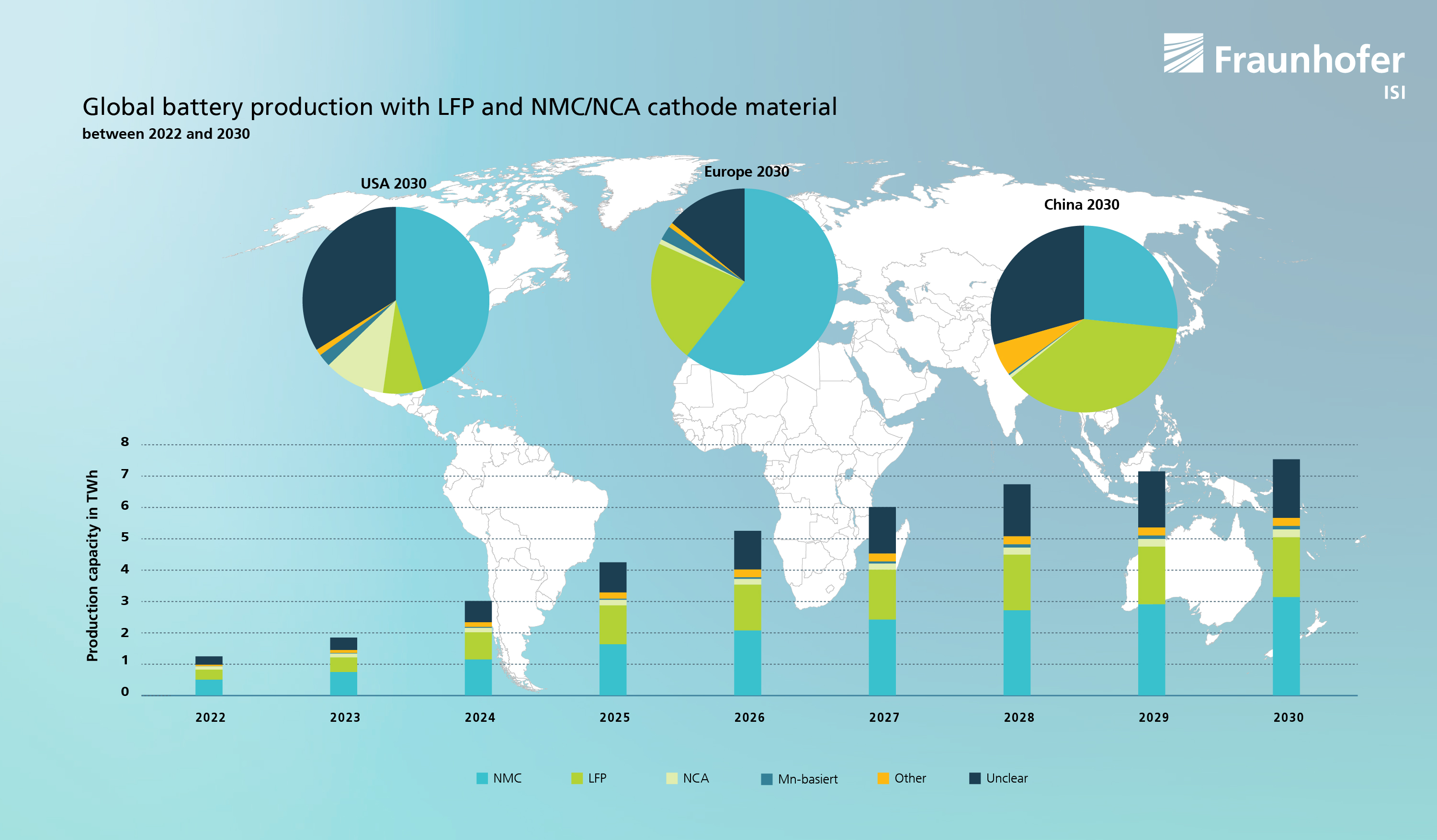
Since 2022, the majority of EVs manufactured have no cobalt in their batteries. Most manufacturers use lithium iron phosphate chemistry (LFP), which is cheaper and safer than NMC or NCA. The cobalt-based chemistries are only used in higher performance vehicles, where LFP's lower energy density becomes a problem.

Not yet. At least in the US the only LFP EVs available right now (Spring 2024) are certain models of the Ford Mustang Mach-E and the standard range Tesla Model 3. This may change over the coming months.

I'm talking about fraction of vehicles, not fraction of different models available.

Re: Lithium-free sodium batteries exit the lab and enter US production

#234
post #67

I had an early EV with only 80 miles of range, and found it extremely useful for most in town travel and commuting. Now that EVs are pushing ~400 miles range at about 300Wh/kg, assuming sodium is about half that (from what I've seen), you'd still get a respectable 100-200 miles in a car. For me, and I imagine a lot of people, that would be totally acceptable if it means lower cost, and batteries that effectively last…

100 mile range battery - that’s about 30kwh or a whopping $1500 worth of battery cells. ICE won’t be able to compete to this.

that much range currently costs about $6000 for a Nissan replacement. Rumors are a longer range current EV battery like in the Ioniq is $50k to replace.

Re: Lithium-free sodium batteries exit the lab and enter US production

#235

Earlier quoted context omitted.

100 mile range battery - that’s about 30kwh or a whopping $1500 worth of battery cells. ICE won’t be able to compete to this.

that much range currently costs about $6000 for a Nissan replacement. Rumors are a longer range current EV battery like in the Ioniq is $50k to replace.

I don’t expect replacements to drop in price.

Also that’s just cell cost. It takes quite a bit to assemble a pack, plus profit margin.

p.s. I doubt that rumour, unless Hyundai really likes to milk their customers. Teslas largest packs are less than 20k. Small ones less than 10k (which is how much I save per year because power is cheap and gas is expensive here).

Re: Lithium-free sodium batteries exit the lab and enter US production

#236
post #146

Earlier quoted context omitted.

Let's unpack it then. You've stated: >"Mostly from Australia and Chile" seems like the opposite of baggage, that sounds like about the best you could hope for in a global commodity, so many of which come from unstable regions, conflict regions, or outright adversaries. So let's break it down with some facts (all easily searchable.) (1) The graph states that Australia is the largest producer of Lithium, and states tha…

Why did you spend 200 words arguing for the premise of my second point? Usually one spends time arguing against your opponent but ok, sure, I'm glad we both prefer refining and manufacturing in friendly countries. > [the commencement of mass production of Na batteries in the USA] refutes the core premise of your statement How so? This plant is one tiny step on a very, very long road. I'm glad to see it happen, but ex…

Could have done without the first paragraph. :) I wouldn't be excited to have either Australia (supply locked up by China) or Chile (read anything re: politics last 5 years) as my sources. the general thrust that youre being flippantly dismissive to the point of shading instead of illuminating is correct. (requires discussion about new battery chemistry supply chains to only discuss lithium-ion (??) and specifically only lithium, and Chile and Australia)

Re: Lithium-free sodium batteries exit the lab and enter US production

#237

Earlier quoted context omitted.

Hopefully we can continue to lower the power requirements of our every day items and the lower capacity of these batteries will become less of an issue.

Lowering the power we use, is the only realistic goal. I wear an Apple Watch. On my wrist, is a small, Lithium-ion battery, that contains a great deal of power. That power is trickled out, over time. If it were to all release at once, I'd no longer have a left hand. Packing all that energy into smaller and smaller form factors, increases the risk; no matter what tech we use. Energy is energy. When it comes out quickl…

> If it were to all release at once, I'd no longer have a left hand.

Well, super interesting.

At first I doubted because the apple watch has very little energy, then I looked it up. Turns out the biggest ones have 2Wh worth of power. Doesn't seem like much until you consider that 2Wh is roughly 6000J. Bullets are launched in the neighborhood of 1000J.

Re: Lithium-free sodium batteries exit the lab and enter US production

#238
post #67

I had an early EV with only 80 miles of range, and found it extremely useful for most in town travel and commuting. Now that EVs are pushing ~400 miles range at about 300Wh/kg, assuming sodium is about half that (from what I've seen), you'd still get a respectable 100-200 miles in a car. For me, and I imagine a lot of people, that would be totally acceptable if it means lower cost, and batteries that effectively last…

Why do people need 200 mile range for an EV? For example, my daily mileage averages about 5 miles. As an errand-runner, a 30 mile EV would be very practical. The huge benefit of this is a smaller and cheaper battery, and the biggie - much less weight. Much less weight leads to much less tire/brake wear and tire/brake dust pollution. I'd still have a second gas car for the trips.

Most people do not want to have to own two cars.

Re: Lithium-free sodium batteries exit the lab and enter US production

#239
post #146

Earlier quoted context omitted.

Let's unpack it then. You've stated: >"Mostly from Australia and Chile" seems like the opposite of baggage, that sounds like about the best you could hope for in a global commodity, so many of which come from unstable regions, conflict regions, or outright adversaries. So let's break it down with some facts (all easily searchable.) (1) The graph states that Australia is the largest producer of Lithium, and states tha…

All that is a lot to unpack, but ever since I saw University of Santa Clara use one of these batteries, I have been interested: Yes, ALL your points are both well taken and accurate. The DRC is a disaster in many ways: https://www.cecc.gov/events/hearings/from-cobalt-to-cars-how...

Lithium Iron Phosphate (LFP) has been ramping for a decade, with "no cobalt" as a selling point. It's not huge in the US, but it is in China.

https://www.isi.fraunhofer.de/en/blog/themen/batterie-update...

Post reply on HN