Live data from Hacker News

Tire dust makes up the majority of ocean microplastics

thedrive.com

531–540 of 635 posts

Re: Tire dust makes up the majority of ocean microplastics

#531
post #324
post #231

Earlier quoted context omitted.

A mile to a store is a very comfortable distance. I've lived in such situation for a couple of years and just walked to the store a couple times a week, hauling back a couple of kilograms of groceries in my backpack every time. I needed the walk and the exercise anyway, and this way I was killing two birds with one stone.

So no kids?

Nope. But it wouldn't be a problem to carry even 8-10 kg in a backpack instead of just 3-4 kg. In fact, it's a recommended form of cardiovascular excercise (it's called "rucking").

Re: Tire dust makes up the majority of ocean microplastics

#532

Earlier quoted context omitted.

If a low range EV is enough 100% just buy a bike.

How often does it rain and snow where you live? Do you have kids?

All the time. Perfectly fine to bike all year. That sentiment is so funny. Before heavy snow days the police and newspapers put out warnings not to drive. But those days it's perfectly fine to bike. Then a few hours later coworkers that drove ti work show up angry about the chaos. If anything, it's the cars that can't handle snow!

A bike ala a Tern cargo bike solves most of a family with kids needs where I live. (disclaimer, I'm not living in a car based society like the US). Then for hauling big stuff or something one just rents one of the share cars in the street for an hour or two.

Re: Tire dust makes up the majority of ocean microplastics

#533
post #393

Earlier quoted context omitted.

> because the modern automobile is a wonder of transport speed, comfort, and convenience. It's also heavily subsidised and its cost does not include a signficant chunk of externalities. Also, this has been discussed to death, but a large chunk of car usage can be replaced by other modes of transportation. However, that transition requires upfront infrastructural investment. Sadly, arguments like yours ensure that inv…

Think of how differently the 20th century would have played out if we didn't have such a demand for oil.

For example if you google "why did Japan enter WW2" the summary answer is:

> "Faced with severe shortages of oil .. Japan decided to attack the United States and British forces in Asia and seize the resources of Southeast Asia."

Re: Tire dust makes up the majority of ocean microplastics

#534
post #402

Earlier quoted context omitted.

Well, I have looked, so if you don't mind pointing to data that addresses what I mentioned then that would be appreciated. It is hard to find, but what I have found is that EVs cross over, in terms of emissions, around 6-24 months into ownership over ICE vehicles. This accounts for manufacturing to use. As far as I could tell, it does not take into account the new mining required, the new manufacturing centers, the n…

[flagged]

I'm not really sure what you mean. What information from what sources? What is dubious? I didn't quote anything and simply stated my understanding. I am not aware of the 6-24 month cross over point being so-called "FUD". I don't think I have read this report directly before, but I just found Volvo's 50 page report (https://www.volvocars.com/images/v/-/media/market-assets/int...). On page 6, it effectively confirms what I just stated. With wind power recharging batteries, EVs cross over ICE at 49,000km. With EU-28 mix at 77,000km. With standard global electricity mixed power sources at 110,000km. Given I've had my car since 2015 and barely have 50,000 miles on it, that means that I would need to drive an EV for at least ten years before it crosses over an ICE car for CO2 emissions, according to Volvo's data. Now, I realize that my driving mileage is probably well under average, but it is my personal usage. (Of course, the data has +/- components depending on various specifics, but the idea is there.)

So that effectively confirms (and is actually worse than) what I stated above. Everything else I am merely asking about because I haven't seen the data that says one way or the other. You and the other commenter claim there's the magic data out there if I "just search for it", while everything I've stated is just oil propaganda. It's just dumb that if you even ask for data regarding EVs, you get labeled an oil person, when such a claim, for myself, could not be further from the truth.

The Volvo report seems pretty good, so I guess I'll read it while missing out on your and the other commenters' magic data unless you decide to materialize it. Although, it goes without saying that Volvo stands to make money from this, so there is a conflict of interest for sure, at least for this particular report. But it seems relatively accurate to my read so far.
Re: Tire dust makes up the majority of ocean microplastics

#535
post #467

Earlier quoted context omitted.

It's always this circular logic where "I need my car because the supermarket is an hour walk" but the supermarket is an hour walk because everyone drives. It's mind boggling how much resources get poured in to cars and car infrastructure only to provide a slower, inefficient, more expensive, and toxic system. Feels like the next generation is seeing this now and things are slowly starting to change in some countries.…

> It's always this circular logic where "I need my car because the supermarket is an hour walk" but the supermarket is an hour walk because everyone drives. If there’s no roads and vehicles, how does the food get to the supermarket?

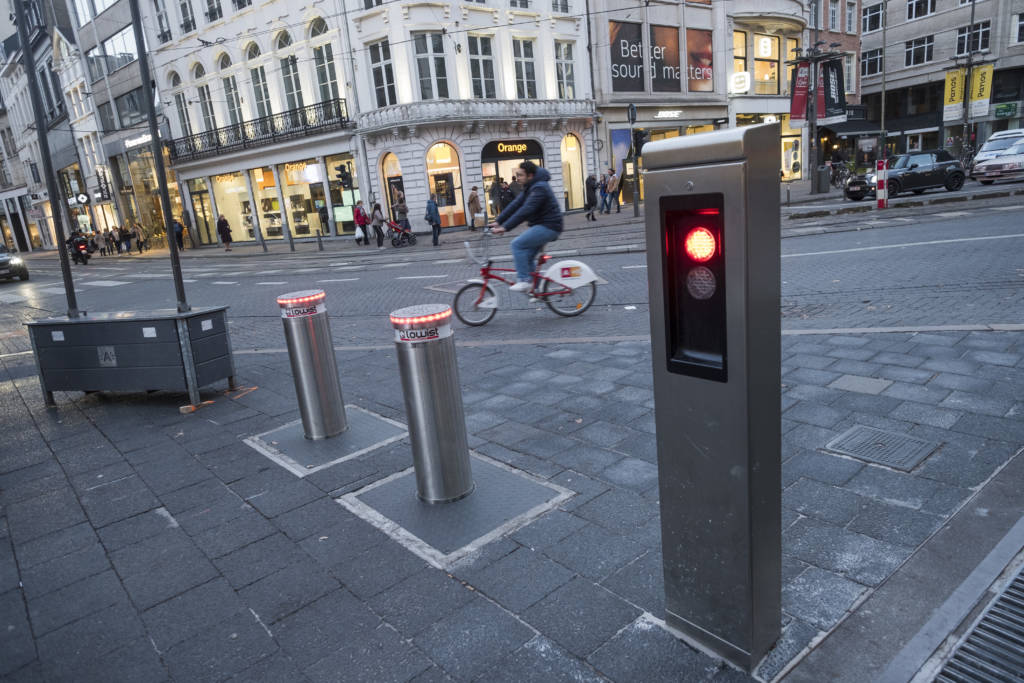
In the Netherlands many shops sit in pedestrianized areas. The local government sets specific times, mostly low-traffic hours such as between 07:00 and 11:00 to open the area to trucks and vans to resupply shops.

The other times these are closed with things like this: https://lowist.be/app/uploads/2017/03/Meir-antwerpen-4-1024x...

Re: Tire dust makes up the majority of ocean microplastics

#536
post #395

Earlier quoted context omitted.

Why not ride an e-bike that one mile to the grocery store and go more often instead of needing to haul 50lbs in one trip. Also, it’s the year 2023 it is easier than ever to get a tv delivered to your front door without you needing to haul it anywhere. I’m ready for your excuses.

> Also, it’s the year 2023 it is easier than ever to get a tv delivered to your front door without you needing to haul it anywhere. Is it really better for the environment to double-up on all the packaging and have an even heavier truck (that has worse emissions and even worse tire-wear / microplastic creation) than the car that weighs like 1/4th the weight of the truck? That's what I mean by the "last mile" problem.…

One heavy truck is still better in aggregate than many personal cars. I don’t have the numbers, but when transportation is the biggest cause of GHG emissions and microplastic pollution consolidating that transportation to as few vehicles as possible will always work out to less pollution than the status quo.

Re: Tire dust makes up the majority of ocean microplastics

#537
post #204

Earlier quoted context omitted.

Exactly. Not saying this is good news either way, but I can go multiple years on a set of tires, and majority of the mass is still there when I go to charge tires. Perhaps they mean just the mass in the pm2.5-pm10 size spectrum?

Indeed, the sentence says "particulate emissions" not gaseous emissions.

They compare "particulate emissions" to "tailpipe emissions". That's at the least very sloppy writing, at the worst it's intentionally misleading.

Re: Tire dust makes up the majority of ocean microplastics

#538

> Indeed, the scale of these emissions is significant. Particulate emissions from tires and brakes, particularly in the PM2.5 and PM10 size ranges, are believed to exceed the mass of tailpipe emissions from modern vehicle fleets, as per a study published in Science of the Total Environment this year. This simply cannot be true. Tailpipe emissions have more mass than the gasoline that gets burned. A car uses several l…

They are talking about particles in the PM2.5 and PM10 size range, not the mass of all emissions...

"exceed the mass of tailpipe emissions" - that implies all tailpipe emissions.

Re: Tire dust makes up the majority of ocean microplastics

#539
post #385

Earlier quoted context omitted.

I recently had the pleasure to vacation on a car-free island (few thousand inhabitants including tourists). Only motorized vehicles allowed are a handfull small electric transporters for logistics (and construction vehicles, ambulance). Turns out the space gained from lack of car infrastructure increases space efficiency by a lot (not that that wasn't obvious from theory). It really was bliss and it makes me despise…

Where was this island? Would love to go!

Spiekeroog

Re: Tire dust makes up the majority of ocean microplastics

#540
post #380

Earlier quoted context omitted.

Don't you think police would be jumping at the chance to show hard stats that your claims are true if they measured them? Why would it be so hard to find those things if police could use it to justify their policies and crackdowns?

I don't need to look up the stats. I already believe in them. And I frankly don't care to convince you of the fact. I'm not sure if anything you'd say could beat out my personal methodology on this particular question. I actually wave / say hi / talk to the grocery store clerks (and their managers) on a regular basis, so I've got people I trust who can tell me about rising (or not) shoplifting. I really don't need th…

I would care about their response, I just wouldn't consider any single source to be the operational "truth". I know how limited personal perspectives can be and how skewed perceptions can get when fear is one of the emotions in the mix. I'd take everything everyone says and judge based on their likelihood to react to incomplete data based on emotions, what's in it for them to spread certain narratives, and what kinds of hard evidence they can summon to back up their claims. None of these are dealbreakers, all of them fit into the wider picture.
Post reply on HN