Live data from Hacker News

Rivian embraces Tesla's charging standard for EVs

ev-edition.com

521–530 of 761 posts

Re: Rivian embraces Tesla's charging standard for EVs

#521
post #401
post #280

Earlier quoted context omitted.

Market share isn't a good metric for a company that started out with 100% market share and therefore has nowhere to go but down. I think Tesla will continue to be successful selling cars and grow the number of cars they sell at a high rate. Also, it sounds like this move is a really good incentive from a product perspective. If there really are a significant of people who only chose Tesla because of Superchargers, th…

I legit believe that many people in these threads haven't learned that the Model Y is the best selling vehicle in North America during 2023-Q1 [1]. Not just best selling EV, or best selling crossover; best selling vehicle . It outsold the Corrola, at half the price. This is not a situation of "oh Tesla will continue to do well, they'll sell cars" or "what's their moat? they're finished": They are #1. Dozens of compet…

You said best selling in NA, but the source says best selling in the world.

In NA I believe it's F150 first and model Y second.
Re: Rivian embraces Tesla's charging standard for EVs

#522

Earlier quoted context omitted.

When Tesla sells someone a car for $50k, what do you think is the value of the data on how often they charge it? $20? Surely it can never be a significant revenue stream.

It's not just charging data obviously, it's all the car usage data. Where you go, how fast, with who... And yes, after a few years, the value of that data is worth more than the original profit they made selling the car itself. Its also recurring revenue, they don't even need to sell you a new car to keep making money. There's a reason the Ford CEO declared a few years back that Ford was to become "a data company". T…

> Where you go, how fast, with who..

Where you go can not be inferred from the charging sessions. You can kinda infer the speed, by looking at the state of charger between two sessions. You can't infer with whom you're travelling.

Honestly, people always overinflate the usefulness of "data".

Re: Rivian embraces Tesla's charging standard for EVs

#523
post #502
post #137

Earlier quoted context omitted.

DC charging stations sometimes have batteries on site so that they can charge up from the grid and then deliver bursts of power from the batteries during charging. Apparently this is often worth it to avoid the high demand fees that utilities charge when you draw a lot of power at once. I assume this will become more ubiquitous as charging speeds continue to increase. (You're right that a megawatt is a high power dra…

The problem is obvious though, isn't it? Our current infrastructure simply cannot handle a ton of EV's all wanting to charge up all day long - as is done currently with gas stations all over the country. It'll take decades to bring our infrastructure up to where it needs to be to support this - yet people act like we're already there. Some states still struggle just to keep the lights on during major parts of the yea…

The load is spread out in a completely different way than gas, because 100% of gas cars get gas at a station, while 80% of people with EVs slow-charge at home (or work or whatever). Fast chargers are for road-trips only.

Obviously, if we're going to move to cleaner energy we will need infrastructure investment. Worrying that it's not already there makes no sense. The demand for improved electrical infrastructure will be a forcing function. There's no need to wait for it. But again, most charging isn't fast charging and likely never will be.

(Charging for apartments and stuff still has a bit of a way to go, so sometimes those people use fast chargers as part of their regular routine, but the solution to that is easy and underway: just put chargers in the apartment parking lot and/or on the streets.)

Re: Rivian embraces Tesla's charging standard for EVs

#524

Earlier quoted context omitted.

Battery tech is expected to improve to the point of 1000km in 20 minutes. This means 5 minutes will give you about 100 miles. The larger problem is how we will safely scale grid generation to meet the demand.

The average EV uses about 10 kWh of power a day. The average Air Conditioner uses about 10 kWh a day. Yes, the grid will need to expand, but it shouldn't be challenging. Unless your power grid is already broken for other reasons, ( cough California).

But you would charge overnight, when the Air conditioner isn’t running.

Re: Rivian embraces Tesla's charging standard for EVs

#525

Earlier quoted context omitted.

You'll never need that much power at home. Level 2 AC 240V 30-50A is fine for overnight charging. The way Tesla Supercharging works is by using a large bank of batteries for the heavy bursts of power draw (>100kW) during the initial periods of charging when the battery is warm and at a low percent. The batteries at the station are backfilled with less current from the grid in the background during periods of low use.…

I don't know about the NA, but that is definitively not the case for most superchargers (or any other brand of fast chargers, for that matter) in Europe. Batteries are expensive so this is only done in very special cases. I know they've used battery banks at some of the electrical ferries in Norway, simply because the cost of running new high-voltage power lines was deemed more expensive and the schedule of the ferri…

I don't think most NA superchargers have batteries either, though some definitely do, but I believe going forward they are likely to have "powerpacks" to support pickup and semi truck charging.

Re: Rivian embraces Tesla's charging standard for EVs

#526

Earlier quoted context omitted.

I don't like that a single private company is in charge of this standard, but I think this sort of thing is pretty common and necessary when two companies integrate technologies. For example, look at how USB C compatibility worked at first. There was a standard, but there were still lots of problems. In practice, implementers may not correctly understand certain parts of the standard, may not grasp the importance of…

Yeah but Google doesn't need to certify Anker or whoever to make a charger and there's no on-going agreement to make this charging brick work with my phone. Anker can't just later decide to not work with Samsung devices and suddenly not work. They all just speak USB-PD and it works. Tesla chargers shouldn't care if the car is a Tesla or Rivian or GM or VW or whatever, if it plugs in and it speaks CCS it should charge…

Hopefully government funding of any type will be withheld from Tesla until this happens. I don't care about the port as much as I care about anything with the right connector should be able to charge anywhere. Having to have the proper "agreement" between your car manufacturer and the charging company seems ridiculous. Especially with how mercurial some of the leaders of these companies can be.

Re: Rivian embraces Tesla's charging standard for EVs

#527

Earlier quoted context omitted.

>I wish the government would prod manufacturers to create a common connection That is exactly why this is happening. Tesla is expanding their network and opening it to more manufacturers in pursuit of a $7.5bn federal funding program.[0] >the new rules, issued after nearly eight months of debate...seeks to give consumers unfettered access to a growing coast-to-coast network of EV charging stations, including Tesla's…

But will the CCS be as fast at charging ? It seems like Tesla could control a lot with their proprietary connector if it has a faster charge rate.

The fastest chargers today are CCS.

Re: Rivian embraces Tesla's charging standard for EVs

#528

Earlier quoted context omitted.

I assume the next jump in power will come from voltage. A Model 3 pulls ~600A when charging at 250kW, because it's relatively low voltage. If they alter the charging design to accept 800 or 1000V we could see over half a MW without a change in cable design. But I'd guess at this point that would be moot because the cell charging rate is the real limit anyway.

Migrating to higher voltage doesn't do anything to charge batteries faster. The only advantage is that you can decrease the size of the cabling since current goes down. On the other side though, you need to move all drive circuitry, motors, etc, to handle higher voltage architecture, which may end of costing more overall.

Not necessarily. Ford uses a 400V-based architecture, but it can charge at 800V by connected two sections of the battery in series.

Re: Rivian embraces Tesla's charging standard for EVs

#529

I'm not an EV user, so I need some clarification. Is NACS actually a better connector? Or is it just more abundant at the moment? Technology Connections did a deep dive on CCS and it seems like it's a more flexible connector with a truly open standard. The argument for NACS I've seen is that it's a little sleeker (does this really matter all that much?) and it's already on Tesla's supercharger network.

If I compare it to USB-based connectors where USB-C never came along.

NACS is like a Lightning plug. From a practical/pragmatic perspective, it was clearly the best plug at the time it was created. It solved real user problems.

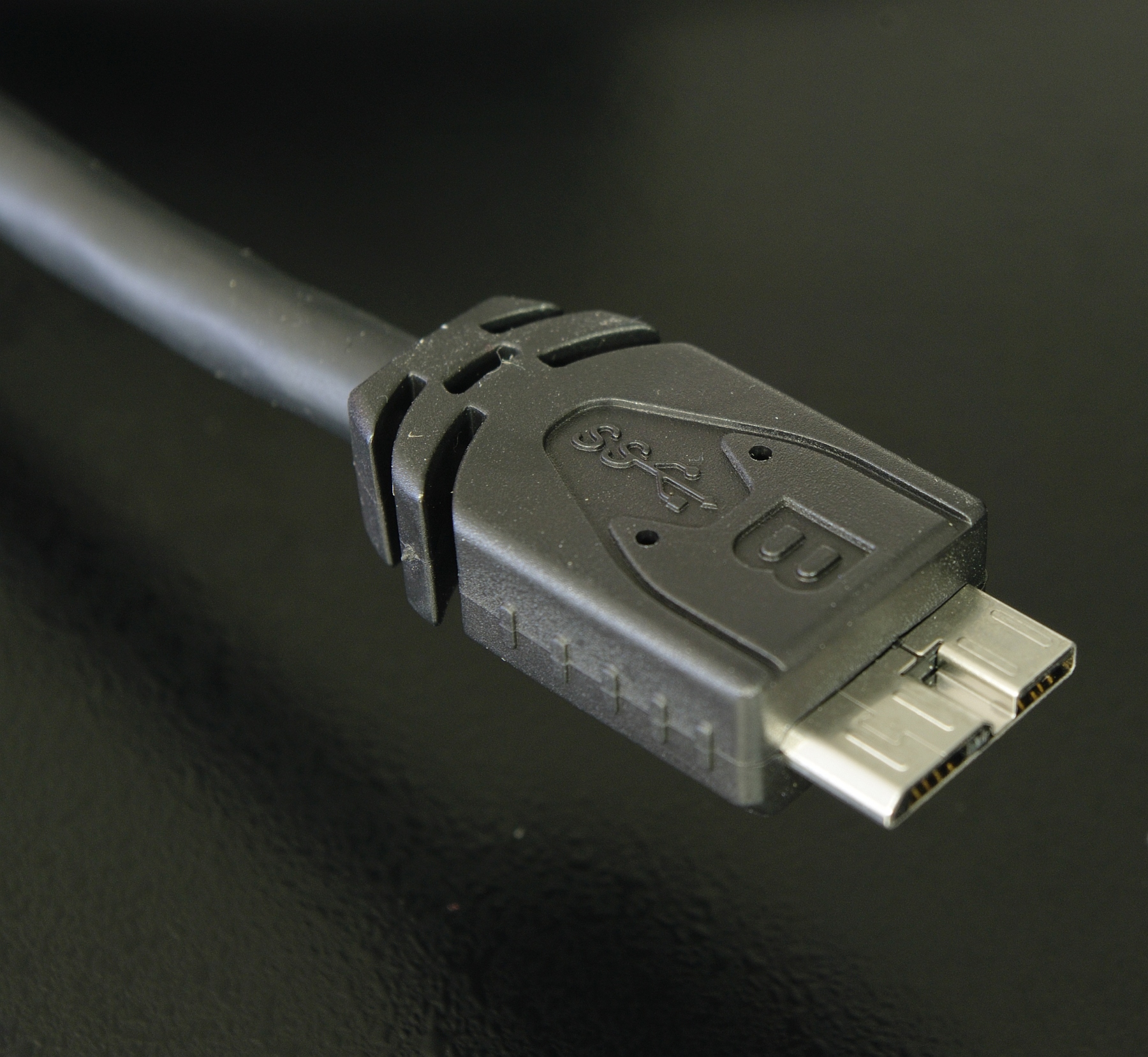
CCS a micro-USB 3.0 plug. Maybe you've never seen one[0], but they are a real thing. Let's take an awful plug (micro USB / J1772) and clumsily add a few more wires on to it to make it both more capable and even worse. It does what you need it to do, but nobody has ever thought it was good at it.

[0] https://upload.wikimedia.org/wikipedia/commons/c/c3/Connecto...

Re: Rivian embraces Tesla's charging standard for EVs

#530
post #468
post #460

Is there any reason to buy a non-Tesla EV before 2025?

Sure; maybe you want a type of vehicle Tesla doesn't offer, or you want to buy from a vendor who's more open about making parts and service information available to users, or you want a more traditional car interface with normal switches and buttons rather than a big touch screen. Your question is sort of like asking if there's any reason to buy a computer that isn't made by Apple. Of course there is, it just depends…

If any of those conditions are true, why not wait until 2025 when the charging connection is settled?
Post reply on HN