Earlier quoted context omitted.
I'd much rather be involved in a hydro-electric disaster than a nuclear one though...
Are you really? If you’re involved in nuclear accident, you get to live anywhere from days to months to years to decades. Even in the worst of the worst cases (you literally touched the fuel rod), you will have time to say farewells to the family, perhaps even write a will. With hydroelectric accident you drown. The end.
Japan Turns to Coal After Closing Nuclear Power Plants
131–140 of 142 posts
Re: Japan Turns to Coal After Closing Nuclear Power Plants
#132Earlier quoted context omitted.
> Same thing happened in Germany. Germany turned to coal? It didn't happen. Germany actually turned to renewables. https://en.wikipedia.org/wiki/Electricity_sector_in_Germany#...
It did happen. Germany has shut down most of its nuclear power generation and is phasing the rest out by 2022. So far, 'researchers [..] found that nuclear power was mostly replaced with power from coal plants, which led to [..] about a 5 percent increase in emissions.' https://www.wired.com/story/germany-rejected-nuclear-poweran...
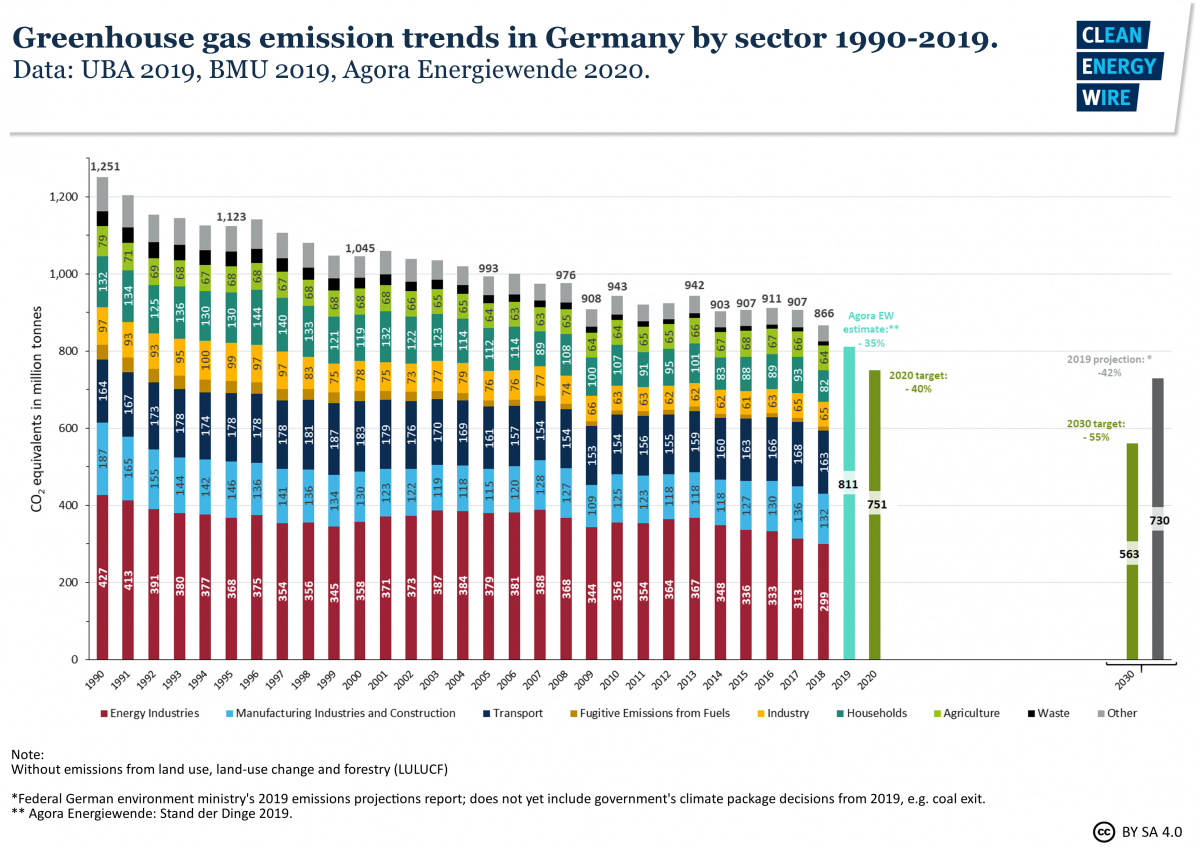
That article is just pure bullshit that isn't backed by any numbers. If they had picked 2015-2018 then maybe it would make sense but 2019? That's either pure incompetence or there is an agenda behind the article.
https://www.cleanenergywire.org/sites/default/files/styles/g...
https://abcnews.go.com/Business/wireStory/rising-carbon-pric...
https://www.cleanenergywire.org/news/transport-and-heating-t...
Re: Japan Turns to Coal After Closing Nuclear Power Plants
#133Re: Japan Turns to Coal After Closing Nuclear Power Plants
#134Earlier quoted context omitted.
https://strom-report.de/strom/ Share of electricity production in Germany in 2019: Coal 19.5% + 9.5% Gas 10.5% 19.8 + 9.5 + 10.5 = 39.8%
Interesting. The graphs on that website do not agree with the ones on Wikipedia. For example, for coal in 2016 Wikipedia says ~220 TWh but Strom says ~135 TWh. EDIT: I see my mistake. I did not add both brown (~135 TWh) and black coal (~100 TWh) together (surprised to see those broken out, but it's a valid difference). In that case, the numbers still do not agree, but at least they are comparable. [0] https://strom-r…
Re: Japan Turns to Coal After Closing Nuclear Power Plants
#135Earlier quoted context omitted.
Yes let's look at France, closing down 14 reactors and investing in renewables: https://phys.org/news/2018-11-france-nuclear-reactors-macron... Time and money has ran out for nuclear.
It's a beautiful exercise in circular logic you have going here. If time and money have run out for nuclear, it's only because of the anti-nuclear activism people like you have been ignorantly spouting for decades. Your point is less of an argument and more an instance of gloating.
Re: Japan Turns to Coal After Closing Nuclear Power Plants
#136Earlier quoted context omitted.
Nonsense. "Environmentalists" (a crude & politically inactive umbrella term) can't even get nations to do the minimum necessary for long-term survival (stop catastrophic rates of wetland & forest destruction even in wealthy nations, reduce CO2 emissions, etc, etc, etc). Greens (for example) hardly get elected anywhere outside of a couple of European nations. It is true there is public resistance to nuclear power, alm…
Nonsense. Fear or nuclear is a result of decades of lobbying and fear mongering by anti nuclear environmentalists.
Re: Japan Turns to Coal After Closing Nuclear Power Plants
#137Fukushima reactor design was terrible. Like legit bad. I wonder if open source nuclear power plants plans are the future.
Re: Japan Turns to Coal After Closing Nuclear Power Plants
#138Knowledgeable nuclear folks: Is there a way of designing safe nuclear plants in safe places in the world and efficiently exporting that energy to other parts within that same region? Thank you for your answers. I know v little on the subject but am a big believer in the inherent power that nuclear generates and its’ cost effectiveness.
Once you're past the distance where transmitting electrical power is feasible, you would probably have to store the energy chemically. In principle you could charge gigantic banks of lithium batteries and then ship the batteries, but that would require infeasible (probably ludicrous) amounts of lithium, and lithium batteries are a pretty inefficient way to chemically store energy. Alternatively, it probably isn't cos…
Another possible bonus of your scenario could be https://phys.org/news/2020-01-chemists-product-nuclear-power... wherin the use of an depleted uranium catalyst could be plugged somewhere into that to produce ethylene.
Re: Japan Turns to Coal After Closing Nuclear Power Plants
#139Earlier quoted context omitted.
> past the distance where transmitting electrical power is feasible A 1,100 kV link in China was completed in 2019 over a distance of 3,300 km with a power of 12 GW. https://en.wikipedia.org/wiki/High-voltage_direct_current It is feasible to transmit electrical power over far greater distances than most people imagine. For reference Barcelona to Moscow is a 3,000 km flight.
Sure, but if you want to be safe and resilient against earthquakes and other natural disasters, those are potentially going to take out long distance transmission lines, too.
Re: Japan Turns to Coal After Closing Nuclear Power Plants
#140Earlier quoted context omitted.
It's a beautiful exercise in circular logic you have going here. If time and money have run out for nuclear, it's only because of the anti-nuclear activism people like you have been ignorantly spouting for decades. Your point is less of an argument and more an instance of gloating.
Ok, lets build the modular nuclear reactor designs your international factory is churning out. Surely there must be at least one country on this planet that is doing so? It can't be that every country including china is abandoning nuclear without considering such an obvious design.