One of my employers actively discouraged meetings and phone calls. They wanted everything done through Slack and email. It felt great at first. Having a wide-open calendar and knowing that random managers can’t pull you into a waste of time meeting seems like a dream come true. However, we quickly learned that removing meetings doesn’t removed the need for communication. Instead of scheduled meetings, our Slack chann…
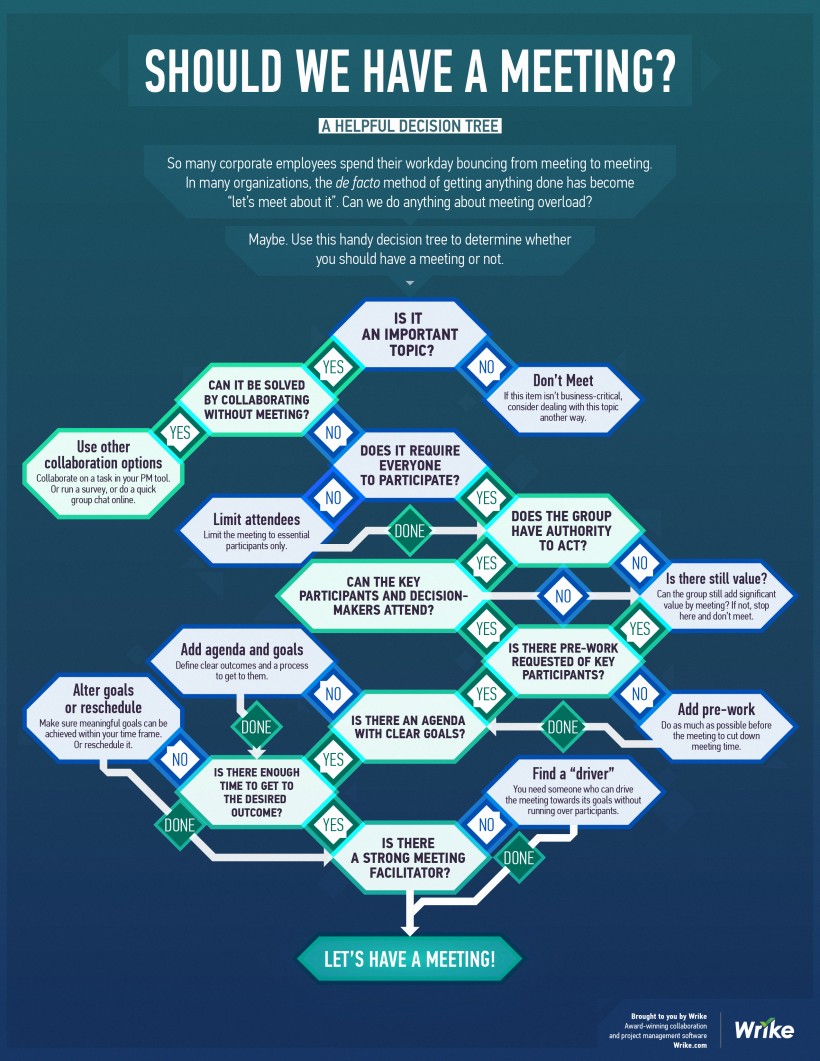
I've found that, with the exception of daily stand-ups, all meetings must have a bullet point agenda and notes should be sent out for each meeting with risks, action items, issues and ownership of those items. If both of those things are lacking, I doubt how useful the meeting will be or was.
We don't often celebrate making things harder to do, but adding friction to something that's happening too often can help bring it back into balance. That's especially true for things with large "multipliers". An unscripted meeting might take one hour for the person calling it, but eat 10 hours of other people's time (plus interrupt them). Adding an hour of prep and summary for the caller lowers that ratio a bit so everyone has a more similar view of the meeting.
That's rarely grounds to make things harder with no benefit, but meeting prep has very solid benefits. Even in terms of time wasted, a clear agenda keeps meetings from dragging on, and routing minutes/summary after the fact avoids repeating discussions or inviting people who only need to listen.