Live data from Hacker News

How insects like bumblebees do so much with tiny brains

bbc.com

61–70 of 143 posts

Re: How insects like bumblebees do so much with tiny brains

#61

Earlier quoted context omitted.

Our bodies can cool themselves decently well by sweating. I think that if the climate was affecting you to the point where your brain was getting cooked, the symptom would probably be less "slightly dumber" and more "seizures and organ failure". But I'm not a doctor or a scientist, so I could be completely wrong. Hopefully someone more informed will weigh in.

It'd make sense that there would be a mechanism for graceful degradation, no?

I think that sweating profusely and feeling thirsty is the graceful degradation. I don't think there's a way to gracefully degrade from "my brain is a burger patty now".
Re: How insects like bumblebees do so much with tiny brains

#62
post #58

Earlier quoted context omitted.

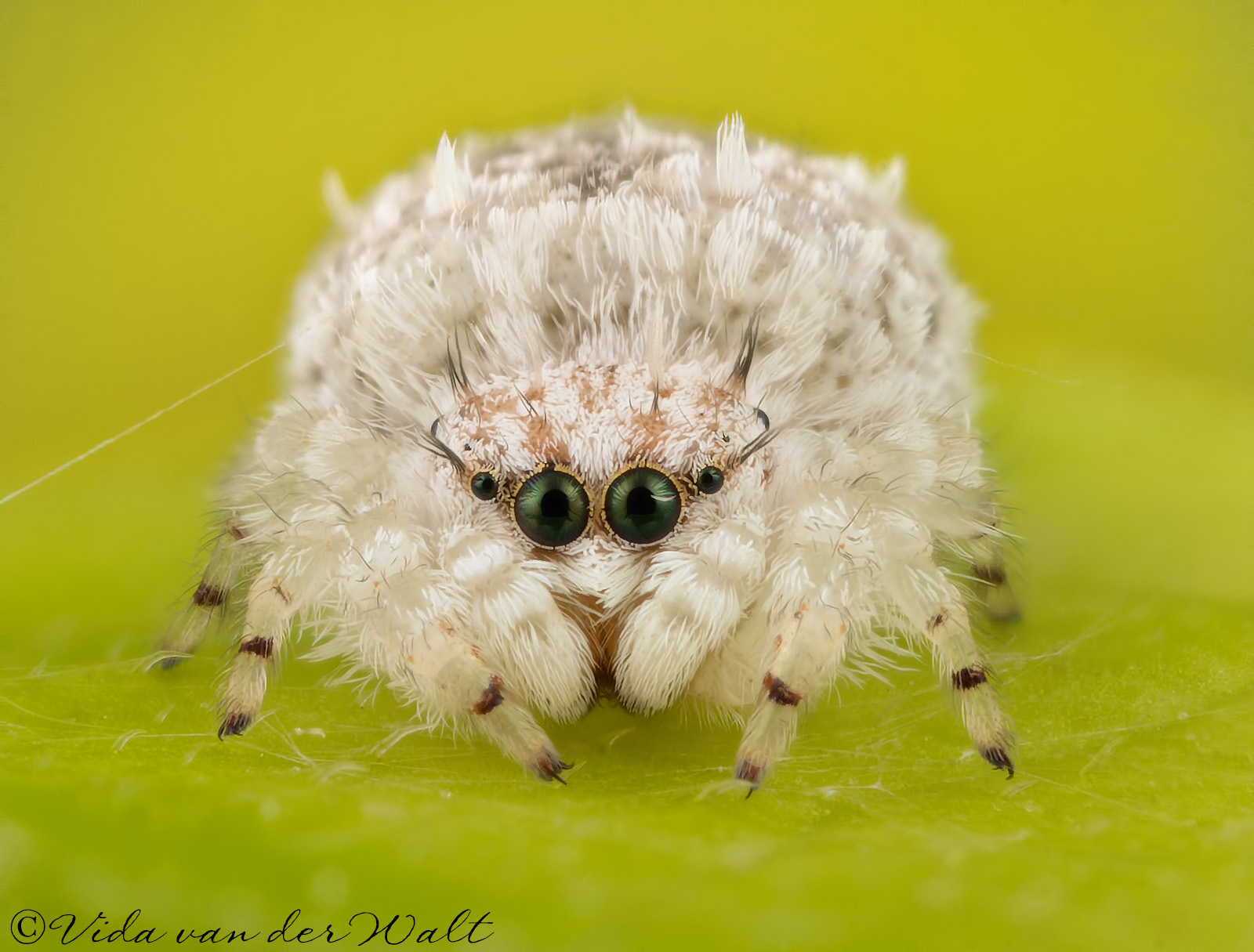
For people who don't believe that spiders can be cute: https://adlayasanimals.files.wordpress.com/2015/01/u2byv.jpg Also, I got interested and tried to find some documentation on Portia Labiata after reading Watts' book, and there's very, very little, but what he says appears to be true. They do have telescopic eyes with vibrating retinas. They do spend ages painstakingly scanning a scene before moving. They are absu…

In English is it correct to say spiders are insects? In my native language (portuguese) it would be not accurate, as they are arachnida class, along with scorpions,mites and ticks.

Spiders are not insects; from Wikipedia:

"terrestrial arthropods, such as centipedes, millipedes, scorpions, and spiders, are sometimes confused with insects"[1]

[1] https://en.wikipedia.org/wiki/Insect#Phylogeny_and_evolution

Re: How insects like bumblebees do so much with tiny brains

#63
post #52

Earlier quoted context omitted.

Probably a little bit of both, but definitely a huge amount of the former. Simplistic models of human intelligence being the result of neurons ignore huge amounts of human physiology, such as the fact that we have over 400 recognized types of neurons. Marvin Minsky has a lot of criticism of the overly fantastical fantasies of Neural Networks, and this is one of them.

Much of Minsky's criticisms came before current and modern implementations of neural networks, using extremely large datasets and large GPU processing. I'm not saying his criticisms are invalid - and certainly should not be tossed aside! We are in the very early stages of another "AI Spring" - I have the inkling of an opinion that if we are to advanced further in the GAI direction, it will be by applying these same k…

They did come before our current datasets and processing power, but those were very predictable trends back then. I think the biggest flaw in his criticisms were that they were mathematically focused on very simple neural topologies. And while larger datasets and better processing power would have helped all ML methods, NNs have benefitted from the combination of external advances combined with very significant topological advances that Minsky didn't foresee.

Much of his criticisms still stand even in the face of his failure to predict those topological advances. And his criticisms weren't even the derogatory kind...at their most ideological they were an attempt to refute the idea that conceptually simple neural networks are not essentially complex enough to describe the vast complexity of general intelligence. He still saw their place, as do I: NNs have performed remarkably in areas of sensory perception and processing, but still lag behind many other methods at higher level tasks like learning a mathematical model of a physical process. After reading a lot of Minsky, I'm pretty sure most of the advances in AI over it's entire history are due to AI Winters crushing the dreams of Neats and forcing them back to Scruffier methods.

And I'm right there with you. I'd love to see a new revolution in Expert Systems, Logic Programming, or tree-based models. Hell, we're kinda seeing a (IBM-centric) revolution in Symbolic AI and Logic Programming with Watson/UIMA. But I want more!

Re: How insects like bumblebees do so much with tiny brains

#64
post #58

Earlier quoted context omitted.

For people who don't believe that spiders can be cute: https://adlayasanimals.files.wordpress.com/2015/01/u2byv.jpg Also, I got interested and tried to find some documentation on Portia Labiata after reading Watts' book, and there's very, very little, but what he says appears to be true. They do have telescopic eyes with vibrating retinas. They do spend ages painstakingly scanning a scene before moving. They are absu…

In English is it correct to say spiders are insects? In my native language (portuguese) it would be not accurate, as they are arachnida class, along with scorpions,mites and ticks.

No, it's not.

Re: How insects like bumblebees do so much with tiny brains

#65
post #29

"With just a few hundred or thousand neurons, you can easily recognise perhaps a hundred faces". It makes me think we are missing something when creating arificial neural networks which needs much more neurons to achieve only this specific task. Maybe artificial neurons are too simplified models compared to biological ones, maybe our training process could be much more efficient?

If I had to guess: neural networks have to operate on pixel data whereas real neurons don't. Brains and eyes have evolved in tandem. Perhaps what makes them so efficient is that the eyes handle some of the processing as a consequence of their physical shape and characteristics. Look at the eyes of bees. Very different from our own (and from the cameras we build) and perhaps very specialized to the limited set of task…

That's much of a topology thing...our brain may be a CPU, but we have neurons throughout much of our body, processing extremely low level sensory inputs into richer information that brains can process at a higher level.

And different species have very different neural topologies: I've heard it described that Octopoda act more like an eight-member swarm intelligences than an intelligent eight-armed creature. Because their neural density is much more diffuse in their arms, they do so much more processing there, and the central brain acts more like a coordination unit than anything.

Re: How insects like bumblebees do so much with tiny brains

#66
post #33
post #24

Earlier quoted context omitted.

I assumed there was some relation between k T log 2 joules and 20 Watts, probably giving some sort of context to how easily or not easily information in our brains could be lost. The theoretical principles behind the amount of energy required to erase one bit, while interesting, doesn't necessary matter for that relationship, does it?

There is a relation but it is not too important in practice, which you'd find if you'd attempt to read what you avoided... twice. The theoretical information change limits are theoretical, in practice, there's always significantly more energy used, so 'pizza didn't even have to mention that limit in this case (although knowing that the limits exists is also important in considering what is possible and what simply is…

The condescension isn't too helpful here unfortunately (is it ever?). You could have made your initial response a bit less condescending by saying something like:

The comment mentions "Landauer's principle", which provides some explanation: https://en.wikipedia.org/wiki/Landauer's_principle

Here as well, you could have made your comment better if you just omitted this part: "which you'd find if you'd attempt to read what you avoided... twice."

Re: How insects like bumblebees do so much with tiny brains

#67
post #66
post #33

Earlier quoted context omitted.

There is a relation but it is not too important in practice, which you'd find if you'd attempt to read what you avoided... twice. The theoretical information change limits are theoretical, in practice, there's always significantly more energy used, so 'pizza didn't even have to mention that limit in this case (although knowing that the limits exists is also important in considering what is possible and what simply is…

The condescension isn't too helpful here unfortunately (is it ever?). You could have made your initial response a bit less condescending by saying something like: The comment mentions "Landauer's principle", which provides some explanation: https://en.wikipedia.org/wiki/Landauer's_principle Here as well, you could have made your comment better if you just omitted this part: "which you'd find if you'd attempt to read…

What do you find condescending in pointing that the clear sentence with enough information was edited of its most important part and that presented as "unclear"?

The way he quoted the comment, it's not even visible that "the comment mentions" like you suggest. He kept the formula of the principle and only edited its very name out. Which is a direct name of the entry in Wikipedia.

What do you find condescending when the person asking doesn't show that he even tried to read not only what the original sentence pointed to but also what the previous answer directly links, both times on such an obvious place as Wikipedia?

I see it more either as intentional trolling, or as somebody who could actually profit of learning to read what's already written, and I don't see I'm wrong here. But I welcome if you explain exactly why I should pretend somebody didn't do what he did in my answer, or even more important, what most of the readers would benefit from? I'm much more a reader than an active writer here, so that's an important question for me.

I very often ask here for the clarifications of the statements for which I can't easily find the answers to. But here the editing out in the single sentence couldn't be more blatant.

Re: How insects like bumblebees do so much with tiny brains

#68
post #47

Earlier quoted context omitted.

If you're afraid of spiders, I would suggest not clicking on that link. I was hoping for cute, but that is just a very large closeup of a spider, and it definitely just hit the fear instinct.

That one is ugly. The jumping spiders have a neater look due to their colors. The really colorful ones with big eyes might not hit fear instinct so hard. Try this one I cherry-picked: http://www.arachne.org.au/_dbase_upl/spi_mm.jpg

More colourful cutie: https://www.flickr.com/photos/143940344@N06/31492457834/in/d...

And a nice fluffy white one with very stubby legs: http://www.jumpingspiders.co.za/images/main/187.jpg

Via https://www.reddit.com/r/awwnverts/comments/5o7nmg/my_favori... and https://www.reddit.com/r/awwnverts/comments/5lar18/floof_spi...

Re: How insects like bumblebees do so much with tiny brains

#69

Earlier quoted context omitted.

Yep! Watts' novels are how I first heard about Portia. I can't wait for the third in the trilogy. In general, I love a good novel with a bibliography.

For people who don't believe that spiders can be cute: https://adlayasanimals.files.wordpress.com/2015/01/u2byv.jpg Also, I got interested and tried to find some documentation on Portia Labiata after reading Watts' book, and there's very, very little, but what he says appears to be true. They do have telescopic eyes with vibrating retinas. They do spend ages painstakingly scanning a scene before moving. They are absu…

>They are absurdly intelligent for insects.

You know what I'm going to say don't you.

Re: How insects like bumblebees do so much with tiny brains

#70
post #58

Earlier quoted context omitted.

For people who don't believe that spiders can be cute: https://adlayasanimals.files.wordpress.com/2015/01/u2byv.jpg Also, I got interested and tried to find some documentation on Portia Labiata after reading Watts' book, and there's very, very little, but what he says appears to be true. They do have telescopic eyes with vibrating retinas. They do spend ages painstakingly scanning a scene before moving. They are absu…

In English is it correct to say spiders are insects? In my native language (portuguese) it would be not accurate, as they are arachnida class, along with scorpions,mites and ticks.

It's not correct, but it's a pretty common mistake to refer to bugs in general as "insects."
Post reply on HN