Live data from Hacker News

M.C. Escher: An Enigma Behind an Illusion

bbc.com

11–20 of 27 posts

Re: M.C. Escher: An Enigma Behind an Illusion

#11

I've always felt that people didn't really regard Escher as an artist because his works are too straight forward. He manages to take his thoughts on infinity, beginning and end, dimensions and other philosophical and mathematical concepts and put them into drawings in a very clear way. To me, this feels like incredible talent. But perhaps the artist world balks at such straight forwardness. Things need to be more abs…

My ex-wife Bonita Hatcher is an abstract video artist; that is, she doesn't make TV shows, she makes videos that often don't make a whole lot of sense to anyone. What you describe is "Didactic Art" that is, art whose message is plainly apparent. My take is that Didactic Art is in fact quite important, it serves society in many profoundly important ways. That Napoleon was eventually defeated was the result - in part -…

> Escher was reviled by the other artists of his day because they regarded his work as revoltingly ugly.

I think this is still true, or at least aesthetic objections remain the principal rationalizations for deprecating Escher that I hear from the artists in my life.

My wife and I live in The Hague. She's an illustrator and photographer from a family of artists: her mother, a painter and now an art therapist; her sister also an art therapist; her father, an abstract painter. (Not as hobbies, or idle trustafarian pursuits, these are their real livelihoods.) When her family comes to visit, "going to see the Escher museum" is a recurring joke, as in "ha ha, never going to do that." Whenever I ask why, the mumbled complaint is usually "it's ugly and boring."

Really, 'reviled' remains the right word.

I think it's snobbery, to a great and unacknowledged degree - the visual art equivalent of "genre fiction" in the literary world. The problem I have with lumping Escher with hack painters of cowboys and motorcycles, or airbrushers of vans as "unserious art" is that it ignores his innovations in subject, form, and style and mastery of technique. But then, the "serious" art world of the west is very much a class construct of which snobbery is essential part.
Re: M.C. Escher: An Enigma Behind an Illusion

#12
> Occasionally, one gets the impression that this meticulous, sober man could be a little stuffy.

> when Mick Jagger wrote to “Maurits” asking for permission to reproduce one of his pictures on the cover of the Rolling Stones’ album Through the Past Darkly, Escher refused, informing the rock star’s assistant: “Please tell Mr Jagger I am not Maurits to him.”

Just want to point out, this could be a cultural difference and have nothing to do with his personality.

Note from the wikipedia article (https://en.wikipedia.org/wiki/Dutch_customs_and_etiquette#Ad...), in the Netherlands formal address is used for people "one does not know, or is only slightly acquainted with."

For us Americans it is hard to understand why it'd be a problem being too friendly -- you are simply trying to be nice and signaling that you are cordial and open, right?

Imagine that a stranger at a bus stop wants to talk to you: instead of caustiously approaching, and trying from few feets' distance to get your attention first, they come in for a full hug like a close friend would greet you. You might not want to interact with them further from that point.

Re: M.C. Escher: An Enigma Behind an Illusion

#14

Quote from OA “Although he created something absolutely new,” says Piller, “Escher has not directly influenced any artists.” No school, no younger artists working with the Master, and no teaching in the modern way in an art school, hence no tradition. I'm not sure the artist was especially worried about that mind you.

That quote is saying more about artists than about Escher.

Re: M.C. Escher: An Enigma Behind an Illusion

#15

Earlier quoted context omitted.

My ex-wife Bonita Hatcher is an abstract video artist; that is, she doesn't make TV shows, she makes videos that often don't make a whole lot of sense to anyone. What you describe is "Didactic Art" that is, art whose message is plainly apparent. My take is that Didactic Art is in fact quite important, it serves society in many profoundly important ways. That Napoleon was eventually defeated was the result - in part -…

> Escher was reviled by the other artists of his day because they regarded his work as revoltingly ugly. I think this is still true, or at least aesthetic objections remain the principal rationalizations for deprecating Escher that I hear from the artists in my life. My wife and I live in The Hague. She's an illustrator and photographer from a family of artists: her mother, a painter and now an art therapist; her sis…

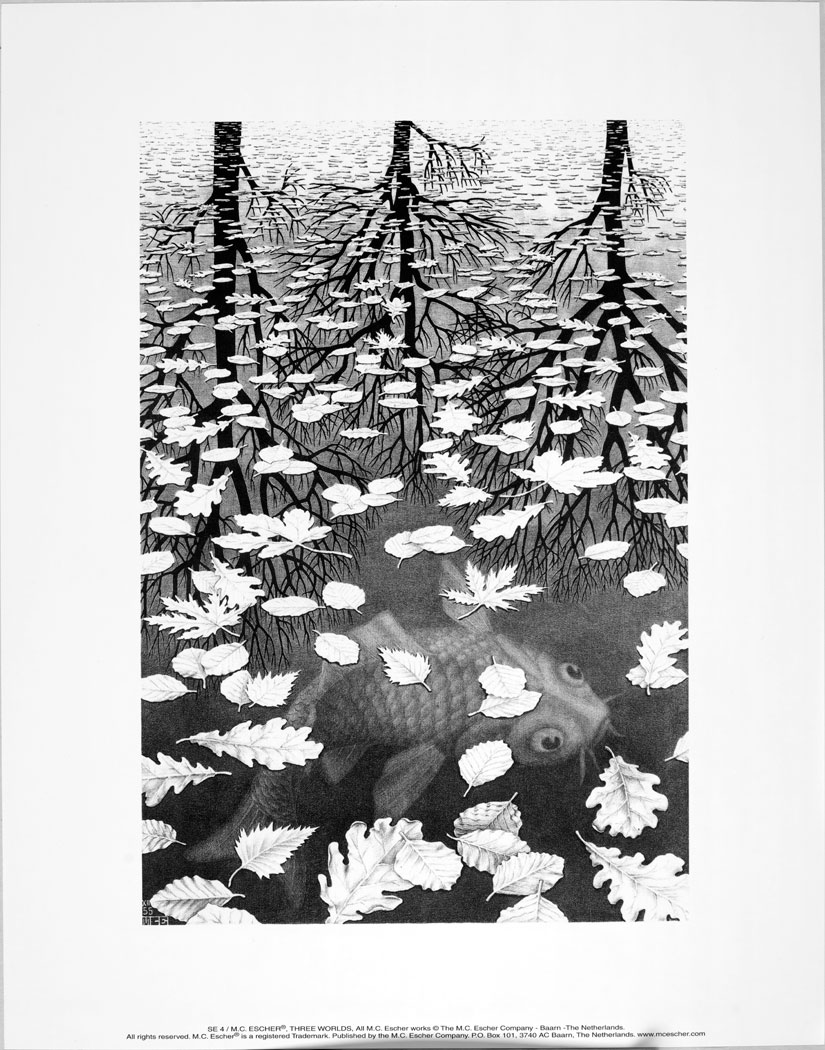
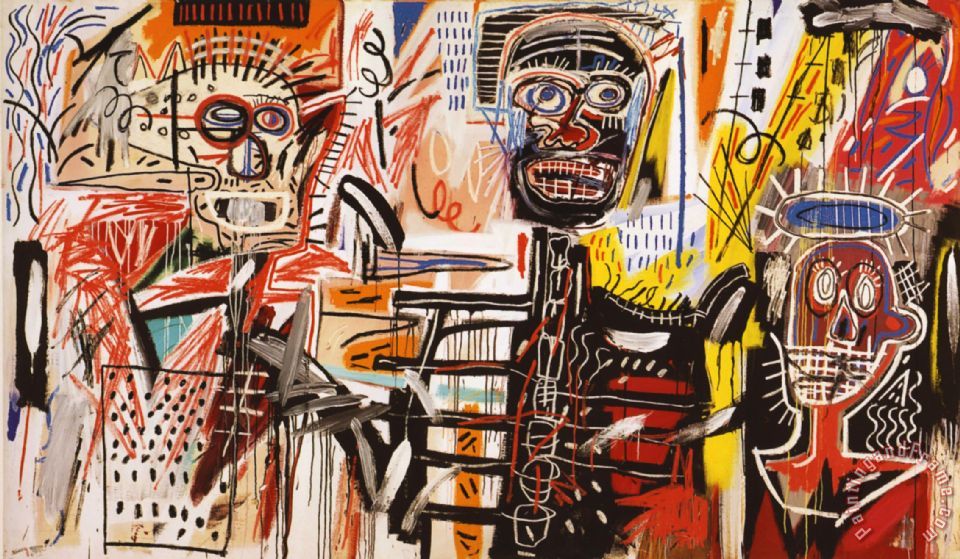
Yeah. The "serious" art world has a big problem if it thinks Escher [1] is ugly but Basquiat [2] is beautiful.

[1] http://www.museumshoppers.com/product_images/g/518/SE4__9105...

[2] http://paintingandframe.com/uploadpic/jean-michel_basquiat/b...

I used to be into "serious" art, but now I'm more into illustration and concept art. There's tons and tons of great artists today, whose work is beautiful and expresses its themes clearly.

Re: M.C. Escher: An Enigma Behind an Illusion

#16

Earlier quoted context omitted.

My ex-wife Bonita Hatcher is an abstract video artist; that is, she doesn't make TV shows, she makes videos that often don't make a whole lot of sense to anyone. What you describe is "Didactic Art" that is, art whose message is plainly apparent. My take is that Didactic Art is in fact quite important, it serves society in many profoundly important ways. That Napoleon was eventually defeated was the result - in part -…

> Escher was reviled by the other artists of his day because they regarded his work as revoltingly ugly. I think this is still true, or at least aesthetic objections remain the principal rationalizations for deprecating Escher that I hear from the artists in my life. My wife and I live in The Hague. She's an illustrator and photographer from a family of artists: her mother, a painter and now an art therapist; her sis…

I really agree with all of this.

Small, related rant:

It is really sad to me that any artist that works primarily in a medium meant to be reproduced (printmaking, illustration, and probably now digital art), is immediately and automatically lowered to a lesser tier by the art establishment. It makes appreciating their actual art works, the actual form and content of their of their work, much more difficult. It is a categorization without any other distinction other than "I saw this in a magazine or a book, or on a computer screen. How can it have any merit as real art?"

Illustrators and printmakers are seen as "artists for rent" and their work is not taken seriously.

MC Escher was a great draughtsman whose work had a very distinct personality and outlook. He was a very skilled 2D designer, his work has "presence", which is a purposefully nebulous phrase by which I mean that it radiates a particular point-of-view. It vibrates with an energy in a way that pulls you into the work. It is a marriage of great skill, great execution and more importantly, great vision. Works with presence become a small world to you while you examine them. there are many, many artists whose works have this quality. It is a force that makes no distinction between "modern" (non-objective) art and "traditional" (objective) art.

MC Escher may not be one's cup of tea, or speak to everyone the way he speaks to me, but to write off and classify and entire world of images as inferior simply because they were meant to be reproduced is just short-sighted.

I know people will argue that there were great painters that also made prints and they are appreciated as fine art, and I agree that there are degrees to this prejudice. I think it has more to do with the perception of a particular artist's primary purpose. Escher was classified by the art establishment as "that guy who does those realistic illusion prints" and then was never taken seriously after that.

It may also be the old 20th century prejudice (now coming back around, I think) against objective art. The baby had to be thrown out with the bath water in order for everyone to feel good about not actually going to art school and working hard at a craft.

(Jeez, sorry for the wide-ranging bitterness there! You never know what's going to come out!)

Re: M.C. Escher: An Enigma Behind an Illusion

#17

Earlier quoted context omitted.

My ex-wife Bonita Hatcher is an abstract video artist; that is, she doesn't make TV shows, she makes videos that often don't make a whole lot of sense to anyone. What you describe is "Didactic Art" that is, art whose message is plainly apparent. My take is that Didactic Art is in fact quite important, it serves society in many profoundly important ways. That Napoleon was eventually defeated was the result - in part -…

That Napoleon was eventually defeated was the result - in part - of a painting that depicted a giant, rather inattentive, absent-minded giant eating a human corpse like a candy bar. If you are referring to Goya's "Saturn Devouring His Son" then I don't think it was even painted before Napoleon's defeat. In any case, suggesting Napoleon's defeat was "the result" of a painting is hyperbole to the point of absurdity. Th…

If you are interested in art and Napoleon (especially satirical prints and their effect on the politics and war of that time) then the British Museum has a temporary exhibition on "Bonaparte and the British" showing many cartoons from the period.

http://www.britishmuseum.org/whats_on/exhibitions/bonaparte_...

Re: M.C. Escher: An Enigma Behind an Illusion

#18
post #16

Earlier quoted context omitted.

> Escher was reviled by the other artists of his day because they regarded his work as revoltingly ugly. I think this is still true, or at least aesthetic objections remain the principal rationalizations for deprecating Escher that I hear from the artists in my life. My wife and I live in The Hague. She's an illustrator and photographer from a family of artists: her mother, a painter and now an art therapist; her sis…

I really agree with all of this. Small, related rant: It is really sad to me that any artist that works primarily in a medium meant to be reproduced (printmaking, illustration, and probably now digital art), is immediately and automatically lowered to a lesser tier by the art establishment. It makes appreciating their actual art works, the actual form and content of their of their work, much more difficult. It is a c…

The art world is a social game played by rich people who want valuable objects. Art is used as a store of value and conspicuous wealth, and to show that the owner is someone who can afford to pay for an artist's time.

You can't do that with a digital file that can be reprinted and copied ad lib.

But you can try. There's a new project which uses the blockchain to deal with the issue of provenance, so that art world people can be sure that their copy of a digital file is the valuable one that matters.

This is useless madness. It's using a 21st century technology to solve a 19th century problem. But it's run by art world people who used to work at big auction houses, and they're not thinking about art like normal people do.

Re: M.C. Escher: An Enigma Behind an Illusion

#19

Earlier quoted context omitted.

My ex-wife Bonita Hatcher is an abstract video artist; that is, she doesn't make TV shows, she makes videos that often don't make a whole lot of sense to anyone. What you describe is "Didactic Art" that is, art whose message is plainly apparent. My take is that Didactic Art is in fact quite important, it serves society in many profoundly important ways. That Napoleon was eventually defeated was the result - in part -…

> Escher was reviled by the other artists of his day because they regarded his work as revoltingly ugly. I think this is still true, or at least aesthetic objections remain the principal rationalizations for deprecating Escher that I hear from the artists in my life. My wife and I live in The Hague. She's an illustrator and photographer from a family of artists: her mother, a painter and now an art therapist; her sis…

I think that's all true. Escher's art is accessible, it has very fine technical control, superficially it's a one trick pony.

Isn't real art messy? Escher isn't messy.

But it's one hell of a trick. The math is more complicated than it looks, the draughtsmanship is incredible, and there's real mood and atmosphere.

I wouldn't say it's ugly or revolting. I would say it's unique. It's a new visual language, and no one has ever copied it successfully.

But I could be biased. I'm an artist, I work with code and math, and I can appreciate the technique and the content.

Artists who hate code and math probably don't get it at all. If all they see is some monks climbing an infinite staircase then yeah - that's going to seem gimmicky and boring.

Re: M.C. Escher: An Enigma Behind an Illusion

#20

Earlier quoted context omitted.

> Escher was reviled by the other artists of his day because they regarded his work as revoltingly ugly. I think this is still true, or at least aesthetic objections remain the principal rationalizations for deprecating Escher that I hear from the artists in my life. My wife and I live in The Hague. She's an illustrator and photographer from a family of artists: her mother, a painter and now an art therapist; her sis…

I think that's all true. Escher's art is accessible, it has very fine technical control, superficially it's a one trick pony. Isn't real art messy? Escher isn't messy. But it's one hell of a trick. The math is more complicated than it looks, the draughtsmanship is incredible, and there's real mood and atmosphere. I wouldn't say it's ugly or revolting. I would say it's unique. It's a new visual language, and no one ha…

It reminds of a conversation R.P. Feynman had with an artist friend that goes like Artist:"When I see a flower, I see beauty; you scientists pick it apart, examine meticulously and it ceases being so beautiful.", while it seemed Feynman had a hard time explaining that he saw other, (sometimes) more profound beauties, not just the one arising from it's color and immediate looks. It's probably because the artist didn't even know what he was missing, so the discussion is very asymmetrical in a way.
Post reply on HN