Part of the preference for trains is that the sunk investment in right-of-way is a strong disincentive to move or discontinue service. This allows people to feel confident that they can depend on the service to stay there, and invest in the areas around these transit corridors. Anecdote: I lived in Seattle for 10 years without a car. (A city with surprisingly high transit ridership considering the lack of any sort of…
Preferences for Trains vs. Buses
41–50 of 60 posts
Re: Preferences for Trains vs. Buses
#42Re: Preferences for Trains vs. Buses
#43Earlier quoted context omitted.
I've had to wait in a train for over 30 minutes due to another train passing by. I guess it depends where you're at.
Sounds like Amtrak, lower priority than freight and using ancient tracks.
It's not a common occurance, but it happens often enough that people who use trains regularly can remember a time it happened to them.
(I tend to like trains, but I use buses and coaches more often because price and convenience.)
Re: Preferences for Trains vs. Buses
#44Earlier quoted context omitted.
Boses have traffic. People don't like traffic. Trains don't have traffic.
Trains also sometimes have lounge cars, dining cars and theaters. Buses confine you to a cramped seat and if you're lucky there's a tiny bathroom on board.
Some buses have WIFI.
Re: Preferences for Trains vs. Buses
#45Most train systems I've taken don't have to stop at stop lights, but the buses I've ridden, even with a dedicated lane, still stop at the lights. This means twice as many stops and starts. Big negative in my mind. But then again, maybe this is another small improvement which could be made.
The stop lights for a train are scheduled such that the train doesn't need to stop if it is keeping to the schedule. This works on both smaller and larger lines. The stop lights for a bus are scheduled in line with the general car population, so it's pretty hard for the bus to keep to its schedule. There's a lot of work goes into timing traffic lights (for cars), how much of that thought process involves keeping the…
True, there is a separate signal for the train, though it's more if the train(s) ahead of it are keeping to schedule than the train itself. (Rush-hour trains here are regularly delayed due to the train ahead of the one I tend to ride being so delayed.)
Re: Preferences for Trains vs. Buses
#46Can only speak from the experience of my own country, but in Ireland This is the inside of a bus: http://www.cityswifty.com/SC241interior1.JPG This is the inside of a train: https://c3.staticflickr.com/3/2831/9337782850_41264e4fd4_b.j... That should say it all as to why people like trains more.
Re: Preferences for Trains vs. Buses
#47People do in general prefer trains over buses. This article is basically just saying that as you make the buses more train-like by giving them dedicated lanes and more reliability, people start to like buses more. Make them longer (articulated), faster, with dedicated lanes, and basically they start to become like a train with rubber tires. I think that is in fact, confirming people like trains better. Titles do matt…
Re: Preferences for Trains vs. Buses
#48Re: Preferences for Trains vs. Buses
#49Can only speak from the experience of my own country, but in Ireland This is the inside of a bus: http://www.cityswifty.com/SC241interior1.JPG This is the inside of a train: https://c3.staticflickr.com/3/2831/9337782850_41264e4fd4_b.j... That should say it all as to why people like trains more.
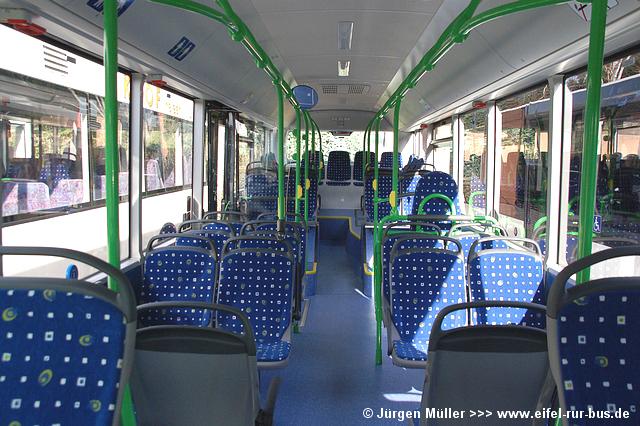
Are those both public transit? Both of those, but particularly the bus, put anything I've seen here in America to shame. (Even private bus transit doesn't look that nice…)
http://www.bahnreiseberichte.de/050-Rottalerland-Thueringen/... http://www.eifel-rur-bus.de/seiten/nachrichten/2007/nachrich...
Re: Preferences for Trains vs. Buses
#50Most train systems I've taken don't have to stop at stop lights, but the buses I've ridden, even with a dedicated lane, still stop at the lights. This means twice as many stops and starts. Big negative in my mind. But then again, maybe this is another small improvement which could be made.
The stop lights for a train are scheduled such that the train doesn't need to stop if it is keeping to the schedule. This works on both smaller and larger lines. The stop lights for a bus are scheduled in line with the general car population, so it's pretty hard for the bus to keep to its schedule. There's a lot of work goes into timing traffic lights (for cars), how much of that thought process involves keeping the…