Live data from Hacker News

Against Productivity

medium.com

41–50 of 110 posts

Re: Against Productivity

#41
post #16

This post is full of mistakes and unclear thinking. I can't figure out what the author is arguing against or for. Is she against quantifying wealth? I'm not sure. Is she against working hard? Maybe. Does she think it impossible to quantify happiness and well-being? I get the impression she does. First, the author made a huge mistake when talking about GDP. Her comparison used absolute instead of per-capita values. In…

If you're attempting to find a productive rhetorical truth in a piece about shedding productivity as a focus, you're missing the point. In fact, you're arguing that she should 1) be able to quantify happiness, 2) consider life-expectancy as a proxy for life quality, and 3) pursue optimizing life by quantifying and measuring it. I think you're missing many points. The whole idea—the wisdom, if you will—is that you los…

> And this is when you begin looking into Zen, and things become clearer and muddier at the same time [...]

I hope you take this the right way, but this position is very California-ized pseudo-Zen. Many of the most well-regarded Zen practitioners and teachers very much would have savaged it, EX:

http://en.wikipedia.org/wiki/Hakuin_Ekaku

http://en.wikipedia.org/wiki/Hakuin_Ekaku#Opposition_to_.22D...

> "One of Hakuin's major concerns was the danger of what he called "Do-nothing Zen" teachers, who upon reaching some small experience of enlightenment devoted the rest of their life to, as he puts it, "passing day after day in a state of seated sleep". Quietist practices seeking simply to empty the mind, or teachers who taught that a tranquil "emptiness" was enlightenment, were Hakuin's constant targets. In this regard he was especially critical of followers of the maverick Zen master Bankei. He stressed a never-ending and severe training to deepen the insight of enlightenment and forge one's ability to manifest it in all activities. He urged his students to never be satisfied with shallow attainments, and truly believed that enlightenment was possible for anyone if they exerted themselves and approached their practice with real energy."

Hakuin, who is pretty damn amazing and certainly lived an amazing life by almost anyone's standards, wrote that after achieving some basic glimpses enlightenment, you ought to be out helping people and doing good things.

You'll see that in non-priest Zen practitioners, too. Miyamoto Musashi's ink paintings show such a depth of clarity and a sort of both sad and beautiful aliveness:

http://upload.wikimedia.org/wikipedia/commons/0/00/Kobokumei...
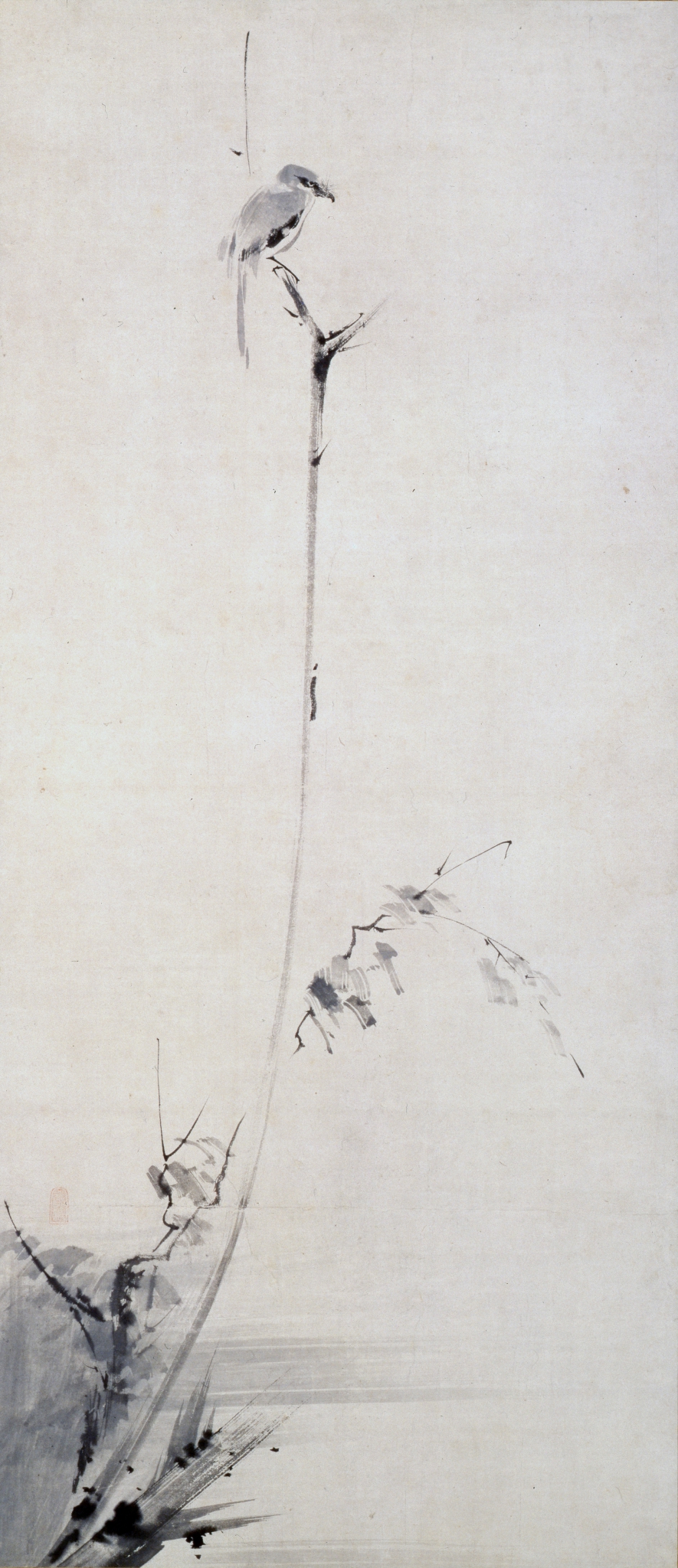
In any event -- I think Hakuin, Musashi, Dogen, etc all would reject "clearer and muddier" intellectualism in favor of actually practicing and doing worthwhile things:

Dogen: "To practice the Way singleheartedly is, in itself, enlightenment. There is no gap between practice and enlightenment or zazen and daily life."

http://en.wikipedia.org/wiki/D%C5%8Dgen

Anyway, I mean this with all the most respect. The Zen practitioners that really stand the test of time and made a difference in their communities are ones that saw it less as an intellectual orientation, and much moreso as a very actionable way of life.

Re: Against Productivity

#42
"Above all we become interesting [sic] in measuring ourselves. Word count/day, lines of code/day, hamburgers served/hour, steps taken/day, test questions/100, money earned/field’s average salary. We got quarterly reviews, job evaluations, and tested certifications."

I've a dilemma:

I've come to believe that this really is a bad thing, not just because we're suboptimizing output at the expense of quality of life, but also because you get what you measure: you can totally get more LOC/day without actually getting anything useful.

BUT, what's the alternative? People need to be rewarded for output; different individuals' outputs are different; still, should we reward them the same? Or should we make it dependent on output (therefore, reward merit, not need)? If so, should the measure be subjective or objective? Can you make it objective without turning it into what the author is talking about? Can you make it subjective while keeping it fair? No matter how much I try, when I try to be fair in rewards/compensation, I find metrics raising their ugly head.

Re: Against Productivity

#43
I may somewhat agree with the author's case against productivity, but I think it's important not to confuse it with a case against production. At the end of the day (or life) I think you do want to look back and think of what you've produced (rather than consumed), and how you did it. Was it fun? Satisfying?

I think it's fair to want to rebel against production/time. It's not bad to think instead of something along the lines of satisfaction/production.

Re: Against Productivity

#44
Why am I productive? No other reason than I dislike boredom. I had the unusual situation growing up of having completely free summers (including college). To do absolutely and whatever I wanted. Well, long story short, I basically wasted them and didn't get anything accomplished. And I definitely wasn't happy with that much useless free time.

So now I do things because I find them interesting. I "measure myself" and try to improve at things because it's a fun game for me. The results don't really matter in the end, but it keeps me entertained.

Re: Against Productivity

#45
Why am I productive? No other reason than I dislike boredom. I had the unusual situation growing up of having completely free summers (including college). To do absolutely and whatever I wanted. Well, long story short, I basically wasted them and didn't get anything accomplished. And I definitely wasn't happy with that much useless free time.

So now I do things because I find them interesting. I "measure myself" and try to improve at things because it's a fun game for me. The results don't really matter in the end, but it keeps me entertained.

Re: Against Productivity

#46
post #31
post #22

I liked this essay, but it's also important to point out that GDP is very strongly correlated with health outcomes like life expectancy. It might be that we are starving our souls, but let's not forget about the fairly serious consequences of starving our bodies. I don't mean to say that I disagree with the conclusion, just that I think the historical context is missing something. We didn't become productive out of g…

Then how you explain the fact that USA has one of the lowest life expectancy among the developed world? I think that what the author tries to explain is that, in some places, societies have gone too far in the seek of productiveness and, ironically, people there is less happy and healthy. I guess finding the good balance is more important than trying to be the number one.

Why is this downvoted? Given that the US is as economically powerful as it is, why _is_ life expectancy lower [0], compared to other _developed_ nations? Check out Canada, Australia, Japan and West-Europe on the map.

[0] https://upload.wikimedia.org/wikipedia/commons/d/d8/Life_Exp...

Re: Against Productivity

#47

Even though some valuable ideas are expressed in this piece, there's a lot of conflation of highly distinct social phenomena that goes on. The author looks at the notion of "productivity", judges that people blindly rush from birth straight to the grave in the pursuit of being "productive", somehow lops that in with GDPs (not per capita, not at PPP?) and the weird way in which we have industrialized pleasure, and con…

"and concludes... what, exactly?"

Use your own imagination.

Re: Against Productivity

#48
Okay we should spend more time wasting more time. But how to pay your bills in that time? As long as this question is not answered all this discussion is meaningless in my eyes.

Re: Against Productivity

#49
post #9

Earlier quoted context omitted.

"A decade in the lab will save you an afternoon in the library."

Do you know who this quote is attributed to?

Frank Westheimer seems to be the one who popularized the expression.

http://en.wikiquote.org/wiki/Frank_Westheimer

Re: Against Productivity

#50
The article states that Karoshi is death by productivity. This is generally not correct. Karoshi is death from over-work.

The distinction concerns quantity of output. Many Japanese will work long hours with little impact on output. Such people are therefore hard-working yet unproductive.

Japanese business culture tends to respect effort more than result.

Post reply on HN