Live data from Hacker News

Employees That Stay In Companies Longer Get Paid Less

forbes.com

101–110 of 207 posts

Re: Employees That Stay In Companies Longer Get Paid Less

#101
post #97

Switching jobs works well when developers are in their 20's. But I've found in the 30's that a number of factors combine to make it much less attractive: 1) Each jump becomes less and less. There's an invisible salary cap for software engineers. By the time a software engineer is in their 30's, they've jumped a few times and are already close to the maximum. 2) There are costs associated with switching jobs. There's…

A subtler effect is the income vs cost disparity. Suppose you make 60k and consider 50k to be a minimum income to live comfortably well a 70k job doubles your disposable income which is a big deal. Now suppose you make 120k and get a similar percentage bump to 140k. Except your minimum standard of living is still 50k. Sure, it's a larger Monitary increase but it's no where near doubling your disposable income and wou…

[deleted]

Re: Employees That Stay In Companies Longer Get Paid Less

#102
The article alludes to data backing up what they're saying, but (as far as I can tell) doesn't actually reference any. It is just a collection of anecdotes.

I have found that as I've been at companies longer, I'm more able to make certain things happen and I'm more capable of making a difference. That ability corresponds to an increase in my pay.

Re: Employees That Stay In Companies Longer Get Paid Less

#103

Switching jobs works well when developers are in their 20's. But I've found in the 30's that a number of factors combine to make it much less attractive: 1) Each jump becomes less and less. There's an invisible salary cap for software engineers. By the time a software engineer is in their 30's, they've jumped a few times and are already close to the maximum. 2) There are costs associated with switching jobs. There's…

For 5. having a lot of experience interviewing the kids coming out of college can outweigh the fact that college was a long time ago. If you interview 1-2 candidates per week for 10 years, that's 500-1000 interviews!

Or spend an hour a week toying around with basic data structures and algos.

Re: Employees That Stay In Companies Longer Get Paid Less

#104

Having worked for a number of years in the Valley, I can say that the salary part is true. However, now that I work at a large tech company that's public, the big thing that's missing from this is stock / RSUs. After doing my taxes, I realized how much of my compensation came from them and it makes a difference in a couple percentage points for base salary look small. On top of that, companies give refresher stock so…

This is only true for those rare positions (senior/upper management) that offer such equity grants, or if you lucked into one of those one-in-a-million rocketship growth companies. I've been in the tech industry as an engineer and lower/middle manager for 15+ years and equity has never ended up making up even a tiny fraction of my compensation. Often it ends up being worthless (underwater options). I suspect my situation is the more common one.

Re: Employees That Stay In Companies Longer Get Paid Less

#105

Switching jobs works well when developers are in their 20's. But I've found in the 30's that a number of factors combine to make it much less attractive: 1) Each jump becomes less and less. There's an invisible salary cap for software engineers. By the time a software engineer is in their 30's, they've jumped a few times and are already close to the maximum. 2) There are costs associated with switching jobs. There's…

"Unfortunately, the interview skills required to get into the top tech companies is biased against older software engineers"

Maybe that's a good thing. A "top tier company" will squash you like a flea if they don't need you or if profits need to be boosted for stockholders and heads need to be cut.

For sure any company can do this. But my feeling, observing business over many years, is that a company that is extremely attractive to job seekers has less to loose by doing so. They will always have talent lining up at the doors wanting to work there no matter how tight the labor market is later on.

Re: Employees That Stay In Companies Longer Get Paid Less

#106
post #83

Earlier quoted context omitted.

Impact of architectural and design decisions. How hard to decipher certain code parts you are so proud about today are a year later - my experience is that people used to work on small projects or who change projects a lot generate hard to maintain/understand code. Learning non-trivial codebase often takes much more time. I worked on bigger projects and someone who worked there only six months would not be allowed to…

Most of the things you describe are deep, but also very narrow and domain-specific; frequently it is also very company-specific. Such knowledge is far less transferable than one might imagine.

"Most of the things you describe are deep, but also very narrow and domain-specific; frequently it is also very company-specific. Such knowledge is far less transferable than one might imagine."

Agreed. It is the quickest way to become a 10x employee but unfortunately your current company won't give you a substantial raise for knowing their product and domain well and it is not transferable to other workplaces.

Re: Employees That Stay In Companies Longer Get Paid Less

#107
post #29

Earlier quoted context omitted.

>Autonomy >Mastery >Purpose That's great. Really. Then you get invited to the company holiday party at the CEO's house. Meet his six children who are in college and traveling the world. Then you realize you and hundreds of others paid for that by living in a rental townhouse. True story. There's no amount of motivation for me that will make up for a raw deal in pay.

One is not likely to get to the same place in life as that CEO by job-hopping as a software engineer.

One is not likely to get to the same place in life as that CEO. You can stop the sentence there. The rest of your statement makes you sound judgmental against job-hopping.

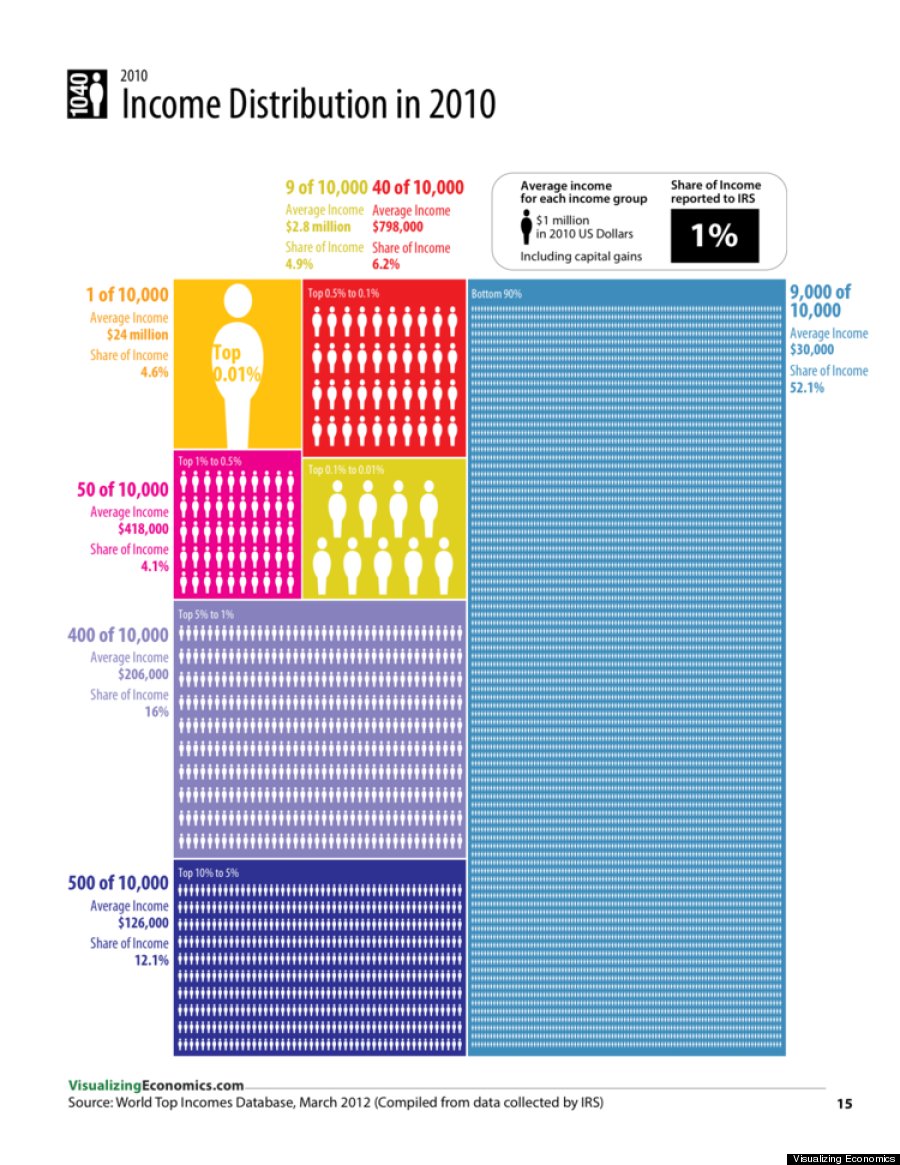
Capital distribution in the US is a Paretian/long tail distribution. It is statistically very unlikely for anyone, regardless of their actions, to get to the same place in life as that CEO if they are from anywhere in the bottom 90%.

http://i.huffpost.com/gen/1077681/thumbs/o-INCOME-DISTRIBUTI...

Re: Employees That Stay In Companies Longer Get Paid Less

#108
post #64

Earlier quoted context omitted.

Sure, you learn the most in your first 6 months by quantity but that doesn't mean you learn the most valuable things. You won't learn anything of depth in half a year.

Can you give some concrete examples of in depth learning that one can't learn in a year?

Working on a big/long running project end to end. If you jump ship after a year you won't really understand the impact of a lot of the decisions you made months ago.

Most companies wont let you make any high risk or big impact decisions in your first year of employment with them (regardless of whether you get hired at a junior or senior or tech lead level).

Experience in solving the more difficult problems that require expertise with the companies particular stack and internal architecture.

And many more. There are ways to mitigate these problems but few do.

Re: Employees That Stay In Companies Longer Get Paid Less

#109
post #98

Switching jobs works well when developers are in their 20's. But I've found in the 30's that a number of factors combine to make it much less attractive: 1) Each jump becomes less and less. There's an invisible salary cap for software engineers. By the time a software engineer is in their 30's, they've jumped a few times and are already close to the maximum. 2) There are costs associated with switching jobs. There's…

Young developers should save 50% of their after tax income. In some ways, this industry is awesome: to be able to make six figures in your early 20s is an incredible benefit and potential head start on financial independence. In other ways, this industry is incredibly cruel: you will run into age discrimination and the other headwinds mentioned in your mid 30s, if not earlier. I tell the folks I mentor to think of th…

"I tell the folks I mentor to think of themselves as professional athletes with a 15, maybe 20 year career."

what terrible advice! Please stop "mentoring"

"Young developers should save 50% of their after tax income." I wonder how long it's been since you were young. While saving early is likely a good idea, it's also the time that student loans, young families, buying houses etc are all huge costs that very likely making saving much impossible. It's also a time to have fun, travel, enjoy life.

I've been a software developer for 27 years and have encountered none of the "incredibly cruel" discriminations you suggest. It's definitely true and I see this often that many as they age don't bother to stay current, they get stuck in old ways and don't want to keep up to date. But for those that do, those that stay at the forefront of their field there's no discrimination. You just have to be better than the rest, whether you're 20 or 50.

please please stop telling people this nonsense.

Re: Employees That Stay In Companies Longer Get Paid Less

#110
post #86

Earlier quoted context omitted.

You become senior developer not by advancing technically. You just request salary that's too high for junior developer on your next job hop. If they want to hire you (and some will want to) they have to hire you as developer or senior developer. Also being older helps. Once you are senior developer no one even dreams of offering you position of developer or junior developer.

I've been told that I would be in a entry-level position because I hadn't professionally worked with Python before, even though I had masses of experience in Perl, with Python being my free-time/side project language. Apparently I would be a "Senior Perl developer" but a "Entry-Level Python developer." (and this was at a start-up, not some big corp with an HR department)

in your case, the right answer is, "k, good luck with that"
Post reply on HN