Live data from Hacker News

Midjourney Medical

midjourney.com

261–270 of 927 posts

Re: Midjourney Medical

#261

Earlier quoted context omitted.

> it's _git gud_ There are physical limits to detection and technical parameters that make some situations indeterminate even for the best of the 'gud'. It is frustrating that, hearing an argument from many different individuals over a long time, you assume that each speaker is missing the critical insight that you possess. > but the tools to make scalable, calibrated risk estimates based on large data dumps is getti…

I go to the doctor every year for a checkup without symptoms. Why a year? Why not every six months? Two weeks? Day? If the false positive rate is demonstrably low, I can't see the risk. People who think they need a doctor will go to a doctor with or without a fancy scan. People who want to play armchair physician will play armchair physician with or without a fancy scan.

> If the false positive rate is demonstrably low, I can't see the risk

The false positive rate is the entire risk.

When you go to the doctor for a physical they don't run all of the blood tests they can. They only run them for specific symptoms and for specific preventative measures where we've calculated that the benefits outweigh the risks of a false positive.

Some tests have been removed from routine exams, or at least discouraged, because they were producing more false positives and harm than what they were saving.

Full body scans are deep on the end of the spectrum of tests with high false positive rate when ordered without supporting symptoms. That's the risk.

> People who think they need a doctor will go to a doctor with or without a fancy scan. People who want to play armchair physician will play armchair physician with or without a fancy scan.

Not really how it works in real life. When you get a full body scan, especially with ultrasound, there are a lot of benign things that can show up that vaguely look like non-benign things. Even if the interpretation is "probably nothing", many people start worrying and think they need to get more tests just to be safe. Even people who don't see themselves as "armchair physician" will start thinking that they should at least rule out the worst case because they wouldn't want to die of cancer having known that something might have been there.
Re: Midjourney Medical

#262

So, on the one hand, this is interesting! Reducing radiation from CT scans is a noble cause on its own. If on top of that it could make tomography cheaper and easier, you could imagine getting earlier detection of aneurisms, fibrosis, cirrhosis, thrombosis, stenosis, even plausibly cancerous masses (along with plenty of over-detection). On the other hand, nothing here substantiates this promise. We've got a video ren…

> Reducing radiation from CT scans is a noble cause on its own Is it? Linear No Threshold has largely been rejected at this point. https://jnm.snmjournals.org/content/early/2024/06/21/jnumed....

We have no evidence in favor of the linear no threshold model. That is not the same as saying that we have evidence against it.

Re: Midjourney Medical

#263

I think a lot of medical diagnosis could be solved with mass data collection if it was cheap enough. Right now, blood draws are somewhat routinely done because they provide a lot of human-interpretable indicators from a small number of values, and there is some evidence that e.g. "dogs can smell cancer" etc. (i.e. some diseases cause detectable odors). With a big enough data set of [all kinds of bio values, including…

> pee into it, give it a swab, and have it come up with an accurate diagnosis without invasive testing.

Somebody should make a startup based around the idea of diagnosing diseases through eg. a drop of blood. Probably need a bunch of big name investors though

Re: Midjourney Medical

#264

Earlier quoted context omitted.

How brainwashed by the healthcare machine do you have to be to think that catching asymptomatic medical issues is a bad thing? The argument against is literally: - patients will worry too much, and - it will cost time and money to investigate. Both spurious rationales cooked up by an industry that is at least as hostile to humanity as it is helpful.

Yes, it's the healthcare industry's fault, they're brainwashing me into not getting more procedures. Sounds very plausible.

Insurance companies dislike paying for procedures instead of passively collecting premiums. Not sure how you missed that.

Re: Midjourney Medical

#265

Earlier quoted context omitted.

You can get scans without your normal doctor recommending them. The point is that there is evidence that scans obtained ‘just because’ are harmful as they lead to unnecessary procedures at the population level

But does it also catch more issues early?

Rarely.

More often it leads to people thinking they have issues when they don't.

The same thing happens with blood tests: You can order all the blood tests you want if you're willing to pay for them. If you order enough, you will get some that show up as abnormal. You can start spending tens of thousands of dollars ruling things out and never catch any real issues.

Re: Midjourney Medical

#266

I think a lot of medical diagnosis could be solved with mass data collection if it was cheap enough. Right now, blood draws are somewhat routinely done because they provide a lot of human-interpretable indicators from a small number of values, and there is some evidence that e.g. "dogs can smell cancer" etc. (i.e. some diseases cause detectable odors). With a big enough data set of [all kinds of bio values, including…

The problem is: Since we don't regularly full-body scan healthy people, we don't know how healthy, or say, still ok, looks like. This will create a lot of false positives and potential harm from unneccessary follow-up procedures and treatments.

Re: Midjourney Medical

#267
post #133

They've lost the plot, especially with the spa. And a billion scans a month is absurd. Is this some AI hallucination post?

> They've lost the plot, especially with the spa. Yeah, that's not just 'cart before the horse', it's more like cart before the wheel. They make a bunch of extraordinary claims yet offer zero evidence, info or even a plausible hypothesis on how those claims might be possible at the scale, timeframe (2027) and unit economics implied. Thank goodness they really thought through the accent lighting for a calming user exp…

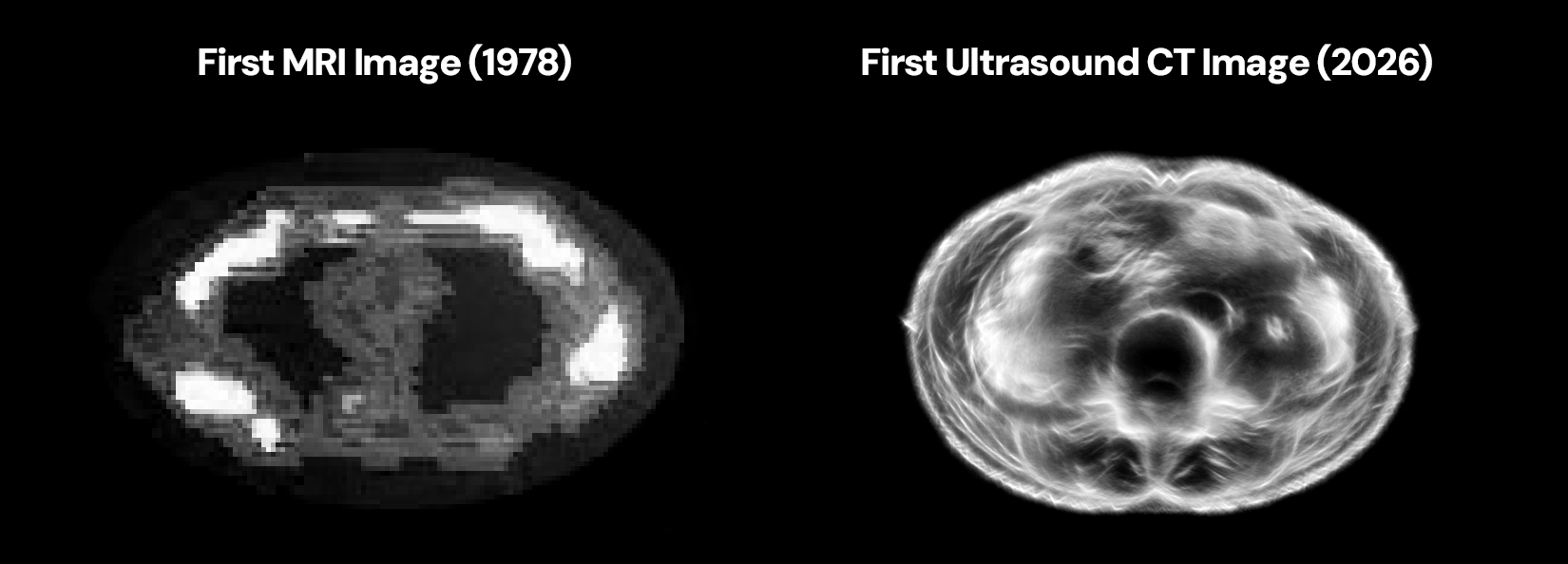
But they have a picture showing a higher resolution Ultrasound CT result than a 1978 MRI! Surely that's important and useful information by which we can judge their product.

https://cdn.midjourney.com/static/medical/media/first_mri_vs...

From: https://www.midjourney.com/medical/scan_gallery

Re: Midjourney Medical

#268

radiologist here - example images don't look great

Instead of the value of evaluating a single scan, what about determinations made from evaluating regular deltas between images?

As a layperson, I'm mostly familiar with the concept of "get scanned, and a professional evaluates it"... are there scenarios where the approach of "imaging every few weeks, to make decisions based on trends" is currently done?

(From reading other comment threads here, I suspect the general answer is: other body-scanning startups have proposed the same thing, and it hasn't made sense)

As an aside, I could probably benefit from allergy shots, but the idea of having a regularly scheduled errand to do during the workweek is pretty unappealing, so I never seriously consider it.

Re: Midjourney Medical

#270
post #224

So, on the one hand, this is interesting! Reducing radiation from CT scans is a noble cause on its own. If on top of that it could make tomography cheaper and easier, you could imagine getting earlier detection of aneurisms, fibrosis, cirrhosis, thrombosis, stenosis, even plausibly cancerous masses (along with plenty of over-detection). On the other hand, nothing here substantiates this promise. We've got a video ren…

I'm not putting my head under. How do we know this won't cause aneurysms? Damage eyes and ears? Getting a medical device approved takes time because of concerns like this.

It might not actually cause harm or strange effects to people's bodies, but I'd certainly feel better if it was tested and used by doctors in a hospital and not some "spa" since those tend to be poorly regulated and where all kinds of quackery takes place (https://www.aafp.org/afp/afp-community-blog/med-spa-industry...).

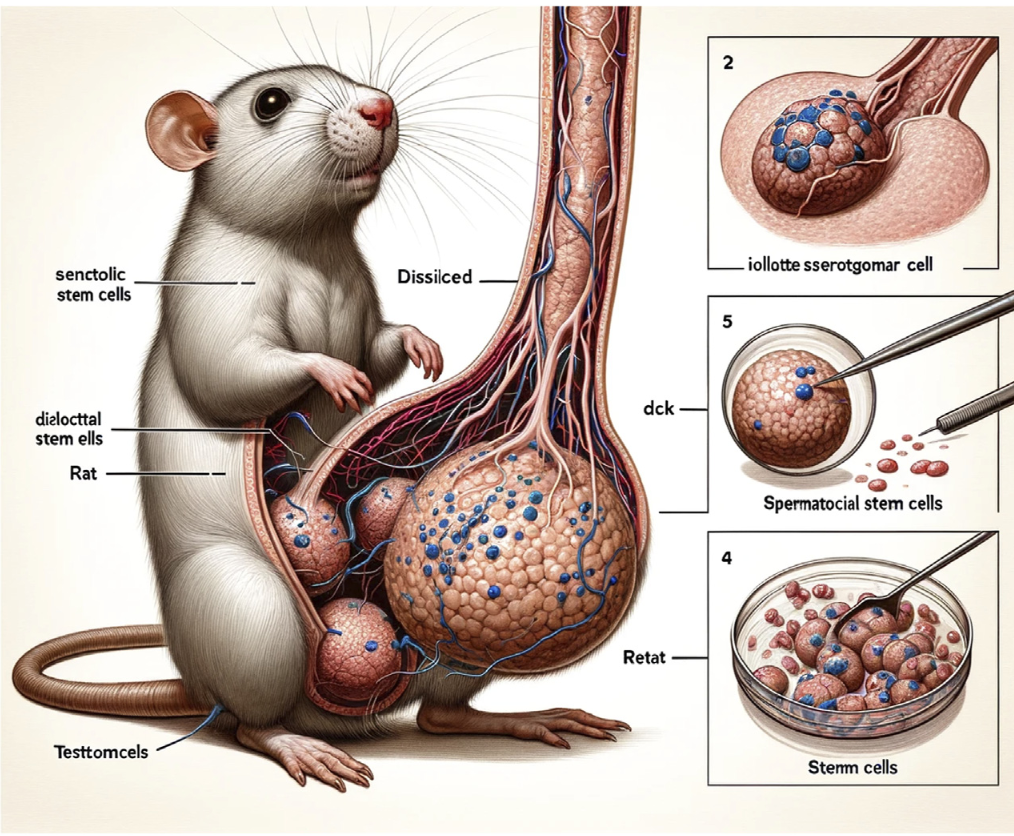
The safety of the device itself is a concern, but so is the trustworthiness of the output. Midjourney already has some very questionable history with medical imagery (like this totally legit image of rat testicles published in "Frontiers in Cell and Developmental Biology" https://upload.wikimedia.org/wikipedia/commons/c/cc/AI_gener...)

Post reply on HN