We have effectively managed to demonize factory made houses by referring to the people that live in them as trailer trash. I honestly think 3-D printed concrete houses at some point will be how most things are built you’ll get tons of Americans talking about how do you can’t access the wires/plumbing and stuff and it basically just comes down to having enough windows or access points into the inner wall. Not to menti…
3D printing isn’t going to make houses hugely much cheaper. The lion’s share of the cost of a house is fit-out. Doors, windows, lighting, plumbing, cabinets, tiling, painting. What needs to happen is modular designs where the house is made out of standardised ready-made components that are mass produced in a factory and plug together to form a finished house.
Where are the economies of scale in homebuilding?
101–110 of 149 posts
Re: Where are the economies of scale in homebuilding?
#102A question about prefab construction came up at a talk this year in Sydney with Lucy Turnbull (Former Sydney Mayor) and Alain Bertaud (planner and author order without design), Lucy mentioned someone tried this in Sydney and went under and they never heard from them again despite promising the world. Alain mentioned that tastes (think in terms of from finishes to floor plans) change often enough where prefabricating…
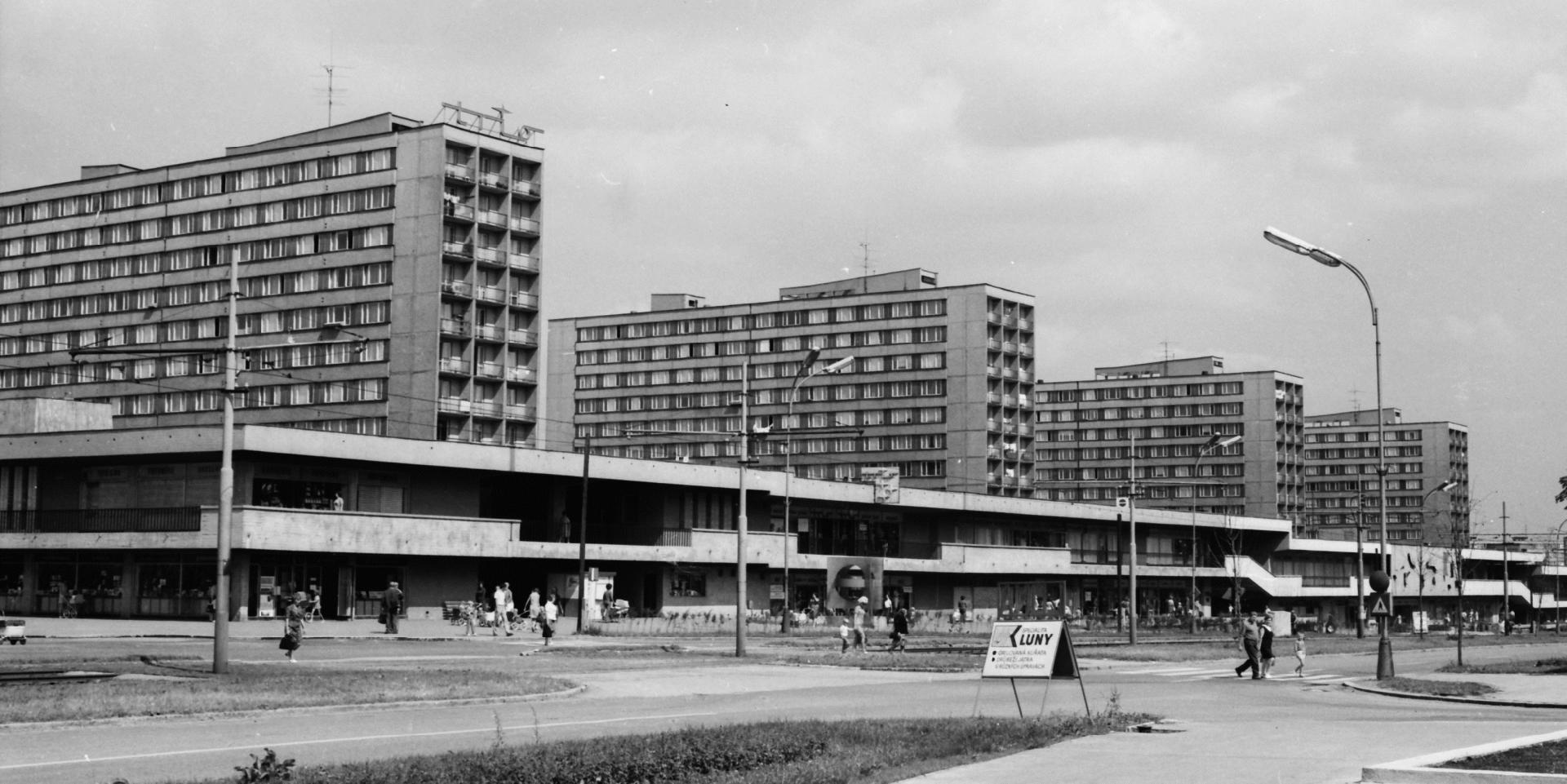
communist countries before 1989 did this en masse producing large concrete panels with each wall being basically one, they could erect apartment blocks very fast and build thousands of apartments, they also used unified prefab "core" for bathroom/toilet but it's difficult to say how economical it would be in market economy since they did it in centrally planned economy use translate https://panelaky.info/vyvoj_panela…
> At the time, the intention to build one million new homes in a nation with a population of eight million made the Million Programme the most ambitious building programme in the world. In contrast to the social housing proposals of many other developed countries, which is targeted at those with low incomes, the Million Programme was a universal program intended to provide housing to Swedish people at a variety of income levels.
I currently live in a townhouse built during that period, the house is from 1974, around me in the same neighbourhood there are many houses of the exact same floorplan. Each row has 4-5 townhouses, 3-4 rows are built around a central playground where each row faces each other, this pattern repeats spreading across a 2km stretch between two lakes and a forest, there are around 200-300 of these townhouses in the neighbourhood. Closer to the metro station there are higher density buildings, the low-density ones (like mine) are built on the edges of the suburb, still a short 10-15 min walk to the station.
They are all based on pre-fabricated concrete structures, the finishing varying a bit (wooden panels, different colours). Also they were built in a way to make renovations and reconfigurations easy, accessing utilities is straightforward and it was easy to upgrade my house's electrical systems to have many more outlets in different rooms than it was originally planned for.
I wish similar programs would be discussed these days, it was an effective way to improve the housing stock in a short period of time.
Re: Where are the economies of scale in homebuilding?
#103Earlier quoted context omitted.
All but the cheapest new residential construction has moved to 9'+ walls. Buyers like higher ceilings.
I wonder if someone explained to them difference in heating/cooling expenses + how much the extra 30-50 cm adds also to construction materials
Re: Where are the economies of scale in homebuilding?
#104Lots of interest comments on the efficiency of building homes. The bigger issue is the cost of land. The differential for land to build is often 10:1. So even if the prefab shave 10-20% the price for a custom build, it's still not making much of a difference for the normal buyer. unless a develop or government was opening up mutiple parcels of land well below the costs to build a house, prefab is not really going to…
With what size housing unit though? If we're trying to make livable dense housing, the developer is going vertical and getting much better than 10:1.
Re: Where are the economies of scale in homebuilding?
#105A question about prefab construction came up at a talk this year in Sydney with Lucy Turnbull (Former Sydney Mayor) and Alain Bertaud (planner and author order without design), Lucy mentioned someone tried this in Sydney and went under and they never heard from them again despite promising the world. Alain mentioned that tastes (think in terms of from finishes to floor plans) change often enough where prefabricating…
https://www.rdrymarov.cz/en/all-about-building
I witnessed this process with a friend, a freshly-happily-divorced doctor who moved away with her two kids and wanted a fast solution. Damn, they were quick. It took a few months to produce the components (they have a backlog), then something like 4 days to put together.
And the house is genuinely nice to be in.
Re: Where are the economies of scale in homebuilding?
#106A question about prefab construction came up at a talk this year in Sydney with Lucy Turnbull (Former Sydney Mayor) and Alain Bertaud (planner and author order without design), Lucy mentioned someone tried this in Sydney and went under and they never heard from them again despite promising the world. Alain mentioned that tastes (think in terms of from finishes to floor plans) change often enough where prefabricating…
communist countries before 1989 did this en masse producing large concrete panels with each wall being basically one, they could erect apartment blocks very fast and build thousands of apartments, they also used unified prefab "core" for bathroom/toilet but it's difficult to say how economical it would be in market economy since they did it in centrally planned economy use translate https://panelaky.info/vyvoj_panela…
Some comments from the Commie era, though:
* quality of work used to be shoddy in a legal environment where firing a drunkard was illegal and there were no competing firms. In a competitive market, this can only work if the people doing the building are reliable and competent,
* some level of personalization, if only decorative, goes a long way. If all the buildings look identical, it wears down on people:
https://historie.ovajih.cz/wp-content/uploads/2019/02/G-OS-K...
* you really, really have to think about how people will use the resulting architecture. Some such buildings had a lot of various empty corners and dead ends where people would piss and worse, thus developing an extremely disgusting smell.
Re: Where are the economies of scale in homebuilding?
#107Key statement: "The fact that the ratio between costs of constructing a home and the costs of the various materials is already so low is fundamentally what makes achieving substantial economies of scale difficult." That's striking. Building houses looks labor-intensive, but, if that's correct, labor cost isn't that large a fraction of the final cost.
It's a strange way to analyze the situation. By that logic, building from premium materials makes economies of scale more difficult, and building from cheap materials makes it easy. Also, labor inefficiencies clearly exist, as protectionism by definition creates artificial inefficiencies, and it is rampant in all aspects of construction. It's easy to buy an off-the-shelf and cheap window air conditioner that uses a f…
In practice, the single stage condensing units tend to be significantly more reliable. Inverter units require specialized control boards and semiconductors. The most advanced piece of logic in my condensing unit is a macro-scale electromagnet that keeps a circuit closed. I have several replacements sitting around my garage somewhere in a box. These components are brand agnostic so I could probably help my neighbors out too (or vice versa).
A single stage condenser can often survive things like a direct lightning strike. Also, if you live in a place like Texas gulf coast region, there isn't really a point to having a speed lower than 100%. You'd have 2-3 weeks out of the year where that would actually be useful.
Re: Where are the economies of scale in homebuilding?
#108Earlier quoted context omitted.
This is not universally true. There are vast swathes of the country where you can explode all the supply you want, the people who live there will be simply unable to afford them. As in they can not afford the cost of material and labor, even assuming supply drops profit to zero. Supply is not magic. It can't reduce the cost of something below the cost of material and labor.
> Supply is not magic. It can't reduce the cost of something below the cost of material and labor. I'll agree it's not magic, but supply can drop the cost of something below the cost of materials and labor, if you equivocate a bit. If new houses are going for $250k in your area, old, used, smaller houses should be going for less .
What we need is LVT or better public transport to either give money back to the people who create the value (average citizens) or to create an increase in desirable places to live (as in can get in Unfortunately the nimby's on average are most home owners (60%) and close to be home owners... ~ "temporarily embarrassed millionaires" ~ "everyone starts of libertarians and ends up conservative" aka first you fight for more housing then when you have it you become like the average homeowner...
Re: Where are the economies of scale in homebuilding?
#109Earlier quoted context omitted.
communist countries before 1989 did this en masse producing large concrete panels with each wall being basically one, they could erect apartment blocks very fast and build thousands of apartments, they also used unified prefab "core" for bathroom/toilet but it's difficult to say how economical it would be in market economy since they did it in centrally planned economy use translate https://panelaky.info/vyvoj_panela…
Paneláks work, in the sense that after the necessary fixes and improvements, plenty of people still live in them happily. Some comments from the Commie era, though: * quality of work used to be shoddy in a legal environment where firing a drunkard was illegal and there were no competing firms. In a competitive market, this can only work if the people doing the building are reliable and competent, * some level of pers…
I have good examples, we had vote in our building who will upgrade our roof, we had offers for like 1.2M CZK, 1.8M CZK and 4-5M CZK, while they all had space specs, same warranty, I was the only one who voted for cheapest option, the rest of the people used logic "won't vote for the cheapest" option and the result was exactly as I expected, instead of the cheapest Ukrainians we paid 50% extra for very same Ukrainians doing the job under different company with bigger margin. Of course the roof which didn't leak before "upgrade" started to leak in my apartment, so much for the quality of work. When we asked them to fix it, they claimed it's leaking because of my A/C on the roof (which didnt leak for years before their "upgrade"), but 3rd party inspection confirmed they glued insulation wrong and surprise surprise after fixing it stopped leaking while nothing was done about my A/C. There was not a single Czech speaking person working on the roof since I could hear them shouting until very late and had to climb to roof at one instance when they kept working still around 9PM, why would they care when they go to dormitory without families...
Building across the road was fixing the roof as well, done by usual non-local suspects as well and the quality? Immediately after they "finished" their job I could see objects slowly falling from under the roof, which is now going on for years, but most of the residentof the building seem to not care or are unaware of this since it's empty wall without windows, which my kitchen window faces.
So yes, quality of work on panelaks was very inconsistent (there was no 90 degree corner in my bathroom/toilet when I was remodeling, my panelak has even concrete walls in toilet/bathroom unlike the cheaper prefab core in most newer panelak buildings, prefab with 90 degree corners would be in this aspect improvement), but so is quality of the work on new buildings by my experiences and I could add more.
Re: Where are the economies of scale in homebuilding?
#110Earlier quoted context omitted.
The vast majority of the boards and carpenters gets come pre-cut to 92 and 5'8". That is exactly the size you need for an 8' wall. It is only a tiny minority of borders that the carpenter is actually cutting on site. The majority are already pre-cut to the exact size needed. It would be possible to cut boards to the exact site in a factory. However, you would lose more in the logistics cost of managing all the differ…
All but the cheapest new residential construction has moved to 9'+ walls. Buyers like higher ceilings.