Live data from Hacker News

In Europe, wind and solar overtake fossil fuels

e360.yale.edu

501–510 of 809 posts

Re: In Europe, wind and solar overtake fossil fuels

#501

Earlier quoted context omitted.

Yes, existing installations get 20 years of grandfathered rates [1]. Which makes it more of a ladder pull than a rug pull... [1] https://www.sce.com/clean-energy-efficiency/solar-generating...

That's fine. If we have enough X then stop paying people to build more X.

Late thought: we continue to reward those who built more X when we needed more X, and that's fine too.

Re: In Europe, wind and solar overtake fossil fuels

#502

Earlier quoted context omitted.

How much did Russia's recent invasion of Ukraine and nat gas price and supply changes accelerate things?

Sadly we got a warning in 2014 with Crimea being seized and fossil apologists like Bjorn Lomborg argued against rolling out wind and solar faster in response. Because he's so "reasonable" and "pragmatic", he didn't say we shouldn't phase out Russian gas, he just said solar and wind don't work and so we should invent some totally new type of energy for this purpose. It's only with a few years hindsight that he's obvio…

This is just a conspiracy theory of mine, but how credible is the notion that in Germany, the Greens who campaigned (successfully) for nuclear shutdown were in fact funded by Russia?

Re: In Europe, wind and solar overtake fossil fuels

#503
post #19

Earlier quoted context omitted.

If Europe were a big customer for Russia energy, it seems like Russia would have an incentive to not antagonize it. Oh, see how well it went.

Europe was a bit customer for Russia energy, and Russia invaded an EU neighbor nonetheless. After which it stopped being the customer. So it seems like that incentive didn't really work.

Wasn't it the sabotage of the pipeline that was the immediate cause of the switch?

A practical demonstration of how reliant Europe was on Russian gas, by switching it off.

Re: In Europe, wind and solar overtake fossil fuels

#504
post #47

Every time, over the years, that there has been some kind of headline saying renewables have overtaken fossil fuels, when you look at it a bit more closely there is always a big 'but'. For example, it was compared to coal (not taking into account electricity from gas), or it was for one day, or it was a percentage of new installations, or it excludes winter, includes nuclear etc. This time, however, it looks like it'…

How much did Russia's recent invasion of Ukraine and nat gas price and supply changes accelerate things?

The problem is that it lead to investment on the expectation of high electricity prices in the future. Oil companies went and overspent on offshore wind concessions. When the prices dropped they were back to relying on strike prices that didn't offer enough profit and cancelled schemes. At least in the UK offshore wind has been somewhat stalled by that and by delay to grid connections.

Re: In Europe, wind and solar overtake fossil fuels

#507

Earlier quoted context omitted.

I mostly agree. Certainly transportation is an obvious one. But of course there are still some losses; when you include all the losses in the system and cold weather you can easily get ~80% for EVs vs. ~30% for ICE cars. Heat pumps can be very efficient, but 5x more efficient than combustion/resistive heating (which is near 100%...) is not common in practice. 3x, sure, plenty of installations that get that or better…

> Road transport represents ~26% of global energy use Does that 26% include the energy that's involved to ship the fuel in tankers? Something like 50% of marine fuel usage is shipping fossil fuels around the world

> Something like 50% of marine fuel usage is shipping fossil fuels around the world

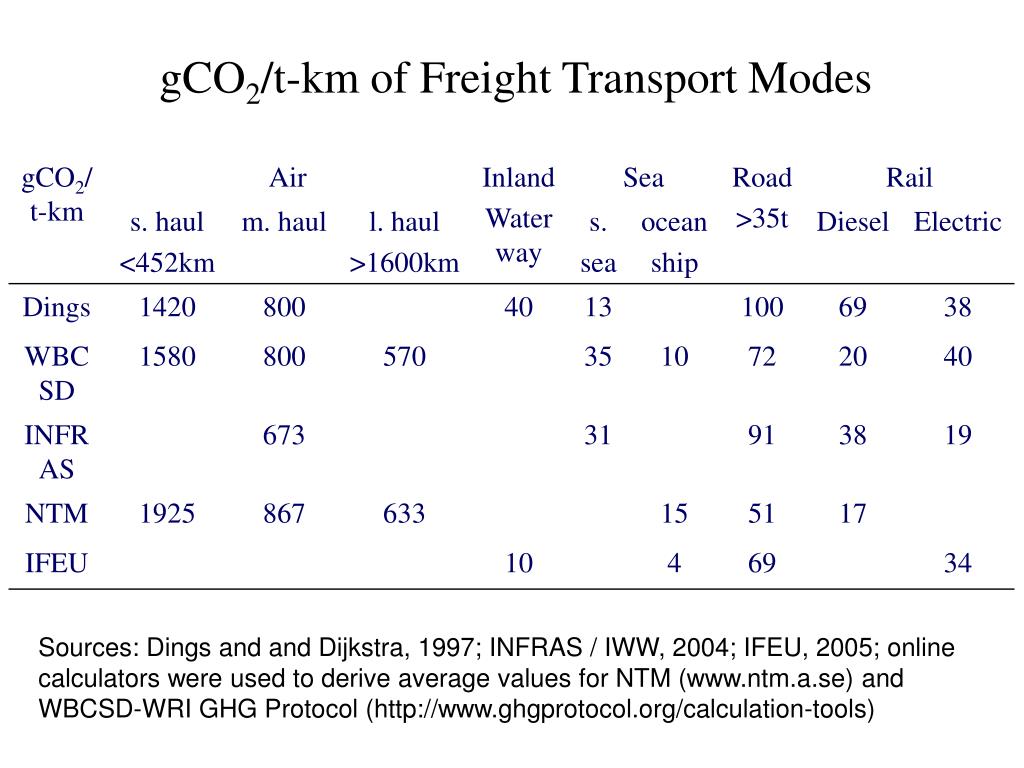
Note that marine shipping is extraordinarily fuel efficient (from a gCO2/(t*km) basis), so I doubt that it adds a lot on a per ton of fuel basis. We just ship a lot of fossil fuels.

This [1] graph looks to be in the right ballpark from what i remember in school 15 years ago, i didn't verify it in depth but +- an order of magnitude better than the next best method is roughly right

https://image2.slideserve.com/4166134/gco-2-t-km-of-freight-...

Re: In Europe, wind and solar overtake fossil fuels

#508

Earlier quoted context omitted.

You absolutely do not want them sharing the excess with neighbors during a power outage, this is how you get dead linemen. Solar panel grid tied inverters generally will refuse to function if there's no external power coming in. The benefit from the distributed generation means that if your local area has large loads added you don't necessarily need to upgrade the HVDC lines from the power plant to accommodate.

This is not as big a problem as it sounds - you cannot provides enough power for you neighbors and so your breakers (fuses) will cut power long before the lineman gets there. though linemen are trained that they are working on a live line unless they have personally shorted it out. There are many other ways a seemingly dead line can be live so they don't take a chance.

That's not how that works. Your breakers are sized to support your panel size. If you have 10kW panels that can push 10kW onto the grid when the grid is live, they can push 10kW when the grid is down. The limiting factor is the power your panels produce which in this case is also...10kW.

You're probably right about linemen but there are a lot of other reasons not to feed power onto a dead grid.

Re: In Europe, wind and solar overtake fossil fuels

#509

Earlier quoted context omitted.

Largely agree, with one big nitpick. Canada is a massive exporter of electricity to the USA. The more clean energy CND produces the more there is to displace North East's coal. Of course, solar on Canadians' roof is a joke. A proper regulatory regime would encourage solar in Arizona and encourage lettuce Canada; not vice versa.

I don't disagree but the major energy being exported is from hydro or nuclear. It isn't coming off rooftop even at the margins. Rooftop solar is purely residential play. If you are trying to argue that in aggregate the demand for energy in canada drops because of high adoption of residential solar which then passes off clean energy to the US - its a reach. Also the amount of individual infra for each small residentia…

Don't get me wrong, I think solar in Canada is stupid. Given a limited supply of panels, they should be installed in Arizona.

"If you are trying to argue that in aggregate the demand for energy in canada drops because of high adoption of residential solar which then passes off clean energy to the US"

Well... ya. If on sunny day 10 000 homes in the GTA offset 1000W of energy, that'a 10MW more power that CND can export. Furthermore, the GTA has massive energy storage capacity from an artificial lake by the falls so the 10 MW doesn't become a rounding error.

.... but 10 MW is piss. Solar in CND is piss.

Re: In Europe, wind and solar overtake fossil fuels

#510

Earlier quoted context omitted.

It can be rather misleading to to talk about renewable energy generation versus total energy usage. Most uses of fossil fuels are very inefficient. For instance, when you step on the accelerator in your car, only around 30% of the energy in the fuel you use actually is being used to propel you forward. The majority of the energy is wasted as heat. In a power plant that's more like 70% being captured and going towards…

I mostly agree. Certainly transportation is an obvious one. But of course there are still some losses; when you include all the losses in the system and cold weather you can easily get ~80% for EVs vs. ~30% for ICE cars. Heat pumps can be very efficient, but 5x more efficient than combustion/resistive heating (which is near 100%...) is not common in practice. 3x, sure, plenty of installations that get that or better…

Resistive heating is indeed almost 100% efficient, but combustion is only about 90% efficient and that's using modern technology to scrape almost everything we can, which has a cost in terms of the product upfront cost and maintenance. The reason it's not much higher is that we must vent the exhaust gases. If you were OK with the burned gas vapours in your home you could get close to 100%, but they're poisonous and so they must be vented to the atmosphere where they only cause global warming. Venting those gases means losing heat, so that's inefficient.

For the EVs in particular, because motion electrical energy is almost the same either direction (a dynamo and an electric motor are almost identical) we get regenerative braking in most applications. This isn't anywhere close to 100% effective, and of course we net losses from resistance which gets much worse as speed increases - but it's not nothing.

The big win is that global warming problem. Electrifying consumption means fungibility. In my lifetime the UK went from mostly coal electricity, to no coal at all. But few cared because to the end users it's the same electricity regardless of how it was made, and most people probably didn't even notice. So if you move consumption to electricity then the generation problem is de-coupled and can be addressed separately.
Post reply on HN