Live data from Hacker News

Beyond Meat fights for survival

foodinstitute.com

581–590 of 645 posts

Re: Beyond Meat fights for survival

#581

Earlier quoted context omitted.

Tempeh is easier to digest: the soy (fibers and amino acids) is pre-eaten by the mold. I can drink milk but feel the same as you do with beans. When it’s fermented cheese I’m totally fine. Can you eat falafels, tofu or slip peas? If so the hull may be the cause. Also beans trigger gaz on many people because they don’t eat much insoluble fibers, but after a while of regular consumption it comes back to normal. Don’t h…

I can eat maybe one serving every few days regardless of the source. I can eat a lot of various fruits without issue(high fiber too). tofu is mostly ok. I have tried about once a year for 15-20 years. I can eat a block of cheese a day and feel great. same with extremely lean chicken. When I try plants only without the problem foods, my energy and recover drops. I get depressed and I have huge protein cravings. If I t…

Fruits mostly contains soluble fibers, only their peel contains a bit of the insoluble one. For your next try consider instant mashed lentils/slip peas (flakes) or lots of mushrooms if you're rich enough. Adding a fair portion of hemp or nutritional yeast also increase the protein ratio. And tempeh is really a game changer. I wish the best for you.
Re: Beyond Meat fights for survival

#582

Earlier quoted context omitted.

> That’s not really how the world works. Most governments already massively subsidises their agricultural sectors to create some desired eating habits in their population. The market just adjusts prices around those subsidies. By global average, under 15% of farm revenue is derived from government subsidies. USA is below that, at about 10%. Not sure if I'd call that massive, but that's semantics so it's a little hard…

Given that most farms globally have profit margins below 10%, a 10-15% subsidy is what I'd consider "massive". Definitely enough to influence growing decisions. If your farm is the recipient of a 15% subsidy, and your margin is only 10%, then the subsidy disappearing means you cannot continue producing the same stock going forward, as you'll be making a 5% loss.

Still, getting rid of them would not move major calorie consumption from meat to vegetable. The context here is price of food for consumer, not farmer's margins. Removing farm subsidies would cause one component of consumer food costs to rise a small amount.

Re: Beyond Meat fights for survival

#584
post #175

Earlier quoted context omitted.

> cheese is worse than pork, for example Such figures are usually "per gram of protein", in which case, sure. Thing is, it's very common for people to eat 200+ grams of pork in one meal, whereas e.g. grated cheese on a pasta dish is <10g. A big slice of cheese is 25-28g, and half the time it's significantly less than 100% actual cheese, with a good amount of filler. The only cheeses that one might eat 50g+ of in one…

You are definitely from a culture that doesn't guzzle cheese like Americans. So out of curiosity I went to your comment history and your previous comment was "Here in Korea". Yeah, growing up in the US I ate more cheese than meat which is probably super common among US kids. I'd devour the whole bag of cheese sticks if I could. And you can look at restaurants like tex mex where the enchilada sits in a lake of cheese.…

I did spend more than a decade living in a European country famous for its cheese - your nearby supermarket will have some cheese from there :) Was talking about it in that light; Korea is a completely different story.

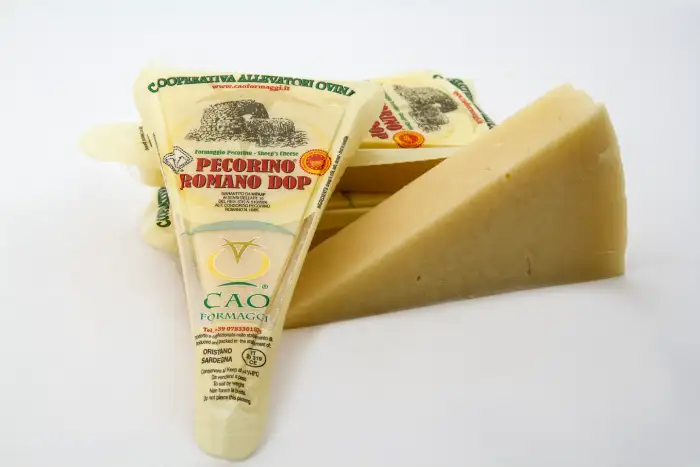
What you're saying could be true for the US, but in Europe people tend to put 1-2 slices of cheese on their bread, or grate it over something. Even if had as part of a platter with crackers, like with brie, it's nowhere near that much. For cacio e pepe, where the whole sauce is cheese, you only use maybe ~25g per person. This [1] is what 200g of pecorino romano looks like. Good luck eating all of that in one sitting - or don't, as you'll 100% regret it!

> I'd devour the whole bag of cheese sticks if I could.

If we take all cheese sticks that have been sold across the world in the last 24h, I'd be surprised if more than half their total weight was actual cheese.

[1] https://gastronomica.co.uk/wp-content/uploads/2021/05/Pec.-R...

Re: Beyond Meat fights for survival

#585
post #145

Earlier quoted context omitted.

> When vegan parm and swiss cheese get as good as the real stuff, then I'd go vegan. Cheese I really doubt will get there any time soon. It's pretty doable to make milk-free cheese alternatives with eggs - at least in terms of taste - which is probably per gram a lot more sustainable than proper cheese, but there wouldn't be any market for it.

I feel like people who want milk-free cheese may not particularly want egg-based products either.

Hence why I said there wouldn't be a market :)

Re: Beyond Meat fights for survival

#586
post #448

Earlier quoted context omitted.

You can make vegan cheeses with nut milk. Here is a video for vegan blue cheese[1]. The basic idea is nut milk and the culture for the blue cheese. [1] https://m.youtube.com/watch?v=cxMAl_LiSUU&pp=ygUZR29ydW1ldCB... Channel is “Gourmet Vegetarian Kitchen”

Sorry, I wanted to know about the egg cheese

Caveat: This is only in terms of taste, not necessarily texture. And cheese of course has a massive range of styles on its own. Below targets something like a proper parmesan cheese.

Make soy sauce marinated eggs ([1] Korean version, but there's Japanese as well). Boil them a bit more so the yolks get crumbly rather than runny. Crumble those yolks. The result tastes similar to grated/powdered parmesan or grana padano, and the texture isn't too far off. Which makes sense given the similarities between fermented soy sauce and cheese, in their glutamates and fatty acids (see e.g. isovaleric acid). It doesn't work as well with tofu, there might be a food chemist here who knows their stuff and can explain why, I assume it's something inherent to the animal proteins.

Proper Thai fish sauce (nam pla) also shares quite a bit of its taste profile with cheese. It's no coincidence that all of these are fermented foods.

[1] https://tiffycooks.com/korean-marinated-eggs-mayak-gyeran-ea...

Re: Beyond Meat fights for survival

#587

Earlier quoted context omitted.

No. Humans have actually evolved to find the smell and taste of COOKED meat to be delicious because it is so energy and nutrition dense eating it gave a huge evolutionary advantage to people who ate it.

Just because something is evolutionarily advantageous doesn't mean everyone has to like it. Otherwise ace people would not exist at all…

This is the same kind of hardwired response that makes humans find the smell of rotten things disgusting.

Re: Beyond Meat fights for survival

#588

Earlier quoted context omitted.

The 70s/80s want their insult back. You can buy any quality you want in the US, when willing to pay for it. But we still have to listen to complaints that the only choices available are Wonder, Lipton, and Budweiser. Not true—literally for decades now.

> You can buy any quality you want in the US, when willing to pay for it. I didn't say you can't buy quality bread though. I know it's possible to find nice bread. I said it's mostly inferior, and it is . The vast majority of bread in America is stuff that I would rather go hungry than eat. ... Thanks for proving my point about getting weirdly defensive.

And thanks to whoever flagged my initial comment for proving it even more, lol.

Re: Beyond Meat fights for survival

#589
There are multiple companies that went public in that 2019 - 2021 time frame that have negative EBITDA and are hard to price because of it.

Ginkgo Bioworks, IPO Date: Sept. 2021, EBITDA: -$325m Rivian, IPO Date: Nov. 2021, EBITDA: -$455m

Beyond Meat has seen less growth than their some of these examples, but my conclusion is still the same: it would have been better for them to find their footing as a private company, then use the IPO money to expand, rather than to pour the IPO money into R&D. Publicly trading stock causes more overhead and restricts the companies ability to pivot. Investors, founders, and employees are able to cash out before the real value has been created. The money generated does not guarantee longer term success or better long term investments as much as they thought it would.

I am still bullish on many of these companies but if I were to get in my time machine back to 2019, I would have avoided investing.

Re: Beyond Meat fights for survival

#590
post #397

Earlier quoted context omitted.

I think the idea was that Beyond Meat would be a "transitional" product that would provide an ever growing vegetarian/vegan population an option that was familiar to them. For example, if you do not care about celebrating vegetables, and just want to end animal cruelty, but you miss the taste of meat, then a beyond burger was supposed to be for you. The biggest problem they have is the exhorbinant prices, which releg…

> just want to end animal cruelty, but you miss the taste of meat Does that actually describe a commercially relevant segment of the population? Intuitively, having known a lot of vegetarians, I'd expect the people whose primary concern is animal cruelty to be specifically turned off by realistic fake meat.

Every single vegetarian I have known admits they miss meat to some degree, especially bacon.
Post reply on HN