Live data from Hacker News

Finland's zero homeless strategy (2021)

oecdecoscope.blog

281–290 of 660 posts

Re: Finland's zero homeless strategy (2021)

#281
post #220

They also do a lot of compulsory psychiatric detention: https://www.cambridge.org/core/journals/psychiatric-bulletin... > Finnish mental health legislation takes a medical approach to compulsory measures, emphasising the need for treatment of psychiatric patients over civil liberties concerns... Finland has the highest rates of detention per 100 000 inhabitants, about 214 compared with 93 in the UK and 11 in Italy. >…

Just for comparison, some data (2011-2018) for some USA states [1], show an even higher number:

> In 24 states-accounting for 51.9% of the U.S. population-591,402 emergency involuntary detentions were recorded in 2014, the most recent year with most states reporting, a crude rate of 357 per 100,000.

Notably, California with 400/100k. Florida with 900/100k. I think the why would make these numbers more interesting. How many are drug detox/recovery?

[1] https://psychiatryonline.org/doi/epdf/10.1176/appi.ps.201900...

Re: Finland's zero homeless strategy (2021)

#282

This issue is very relevant for me since I have been homeless since May. It's been a bad run of being a target of criminal activity, unemployment and just running out of money during my job search. I cope with a mix of volunteering, overpriced housing (think $1200/month for a room in a rural area before I ran out of money for that), catsitting, house-sitting, staying with family and sleeping in my ancient car. Althou…

With all due respect, why volunteer? I notice this with a lot of homeless people I chat with (there's a lot here in Boulder) - many of them volunteer their time at various charities while being homeless. Wouldn't it be better devoting 100% of your spare time to getting back on your feet, and then volunteer, or donate?

When I was unemployed in Boulder during the last recession, I wasn’t homeless but spent a lot of time in the library applying for jobs and browsing the internet around homeless people. I think volunteering helps people have a sense of community and keep sane during an isolating period.

Re: Finland's zero homeless strategy (2021)

#283

Earlier quoted context omitted.

>and bringing too many people into the country via immigration. In a functioning economy, more immigration will just result in more housing being built , as long as the immigrants are working. Especially since the cost of housing construction is largely the cost of labor. Immigration is a distraction from the core inability to build more housing.

The continual drive for growth is a problem though. By definition it isn’t sustainable, yet we keep adding, consuming, growing.

Why is a drive for growth bad? Seems like the double-speak of saying growth is bad while happily profiting off of and simultaneously restricting it is whats bad.

Growing up in a prairie city I heard this sentiment from people who simply don't like other people constantly, and I'm like "When did you try growing, you stagnant deteriorated shithole!?", and sprawl doesn't count. They hate ambition, they hate people, they hate taxes, and have no interesting ideas. They hate traffic, but refuse to do anything but drive. Their healthcare system and infrastructure is failing, there is no new economic activity happening; get busy growing or get busy dying. It doesn't work though if you stop for 70 years and then try to catch up.

Re: Finland's zero homeless strategy (2021)

#284
post #170

"Building flats is key: otherwise, especially if housing supply is particularly rigid, the funding of rentals can risk driving up rents (OECD, 2021a), thus reducing the “bang for the buck” of public spending." So, yes, if you want low homelessness, you build a lot of housing and make sure that rents are low. This is true, and a good strategy.

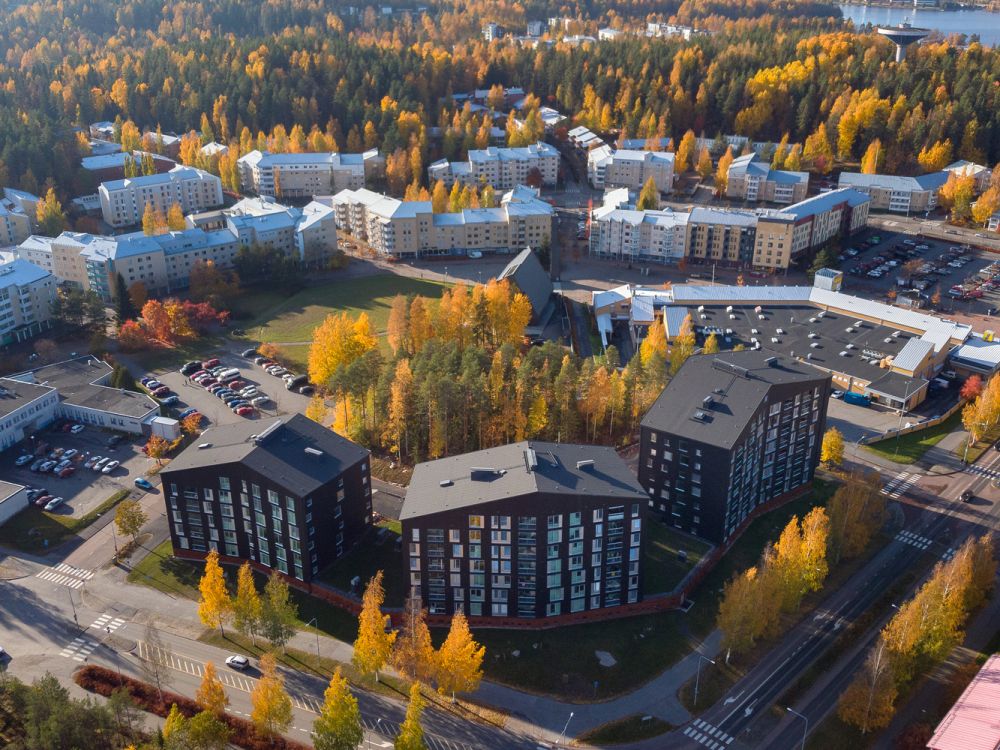
People hate om commie blocks but it was an excellent solution to mass produce affordable housing in war torn Europe. The free market is full of cheap mass produced stuff. Why can't housing be mass produced? Why are there not more economic options? It's almost always restrictive regulations that stops these solutions from happening.

>People hate om commie blocks

people tend to hate on the decades old, usually cheap because under heavily financial constraints Eastern bloc version, but Finland relevant to the topic of the thread to this day is heavily inspired by that kind of architecture, and a lot of modern neighborhoods being built are basically the same thing... just nice and with a bit more cash on hand.[1]

It's an eminently sane way to house people, and I'm pretty certain a lot of people everywhere would take a nice, central apartment if they could actually see that it cuts their rent and energy bills in half. In places that are used to sprawl and high costs there's just too much inertia.

[1] https://cdn.thedesignstory.com/editor/editor-fflo-1645278651...

Re: Finland's zero homeless strategy (2021)

#285
post #281
post #220

They also do a lot of compulsory psychiatric detention: https://www.cambridge.org/core/journals/psychiatric-bulletin... > Finnish mental health legislation takes a medical approach to compulsory measures, emphasising the need for treatment of psychiatric patients over civil liberties concerns... Finland has the highest rates of detention per 100 000 inhabitants, about 214 compared with 93 in the UK and 11 in Italy. >…

Just for comparison, some data (2011-2018) for some USA states [1], show an even higher number: > In 24 states-accounting for 51.9% of the U.S. population-591,402 emergency involuntary detentions were recorded in 2014, the most recent year with most states reporting, a crude rate of 357 per 100,000. Notably, California with 400/100k. Florida with 900/100k. I think the why would make these numbers more interesting. Ho…

But by their own admission, other than for two states they don’t uniquely count people, it’s counting admissions. That could skew the numbers meaningfully.

Re: Finland's zero homeless strategy (2021)

#286
post #83

Earlier quoted context omitted.

The housing situation in Canada is insane and is so obviously due to not building enough housing and bringing too many people into the country via immigration. The fact that it costs 1200$/month for a room in a rural area is incredibly damning. I went to college in Ottawa, and now I live in Austin Texas. It's similar in size, although Austin has been growing more lately. Curiously, they are also both capitols, colleg…

> The result? I'm looking at 2 bedroom apartments, and they are 1000$ cheaper than they were 3 years ago when I first moved here. Rent has gone down and continues to go down. I'm seeing studio apartments in the middle of the city renting out for 800$ now! That's not a result of new construction. It's a result of the Austin population declining in absolute numbers: 978,763 in 2019, 975,418 in 2022. It bounced back a b…

Honey, you can't math.

That 2023 number is roughly a thousand larger than that 2019 number. The changes to all of the numbers you're quoting are in the noise as far as considering changes to the cost of housing.

Re: Finland's zero homeless strategy (2021)

#287

Earlier quoted context omitted.

"Life, liberty, and the pursuit of happiness" does not automatically mean "good, moral, and upstanding lifestyle." To the extent that people have a natural right to exist and society does not I think it should be contingent on administrators to prove the standard they're applying is actually reasonable and non discriminatory.

What about babies and children? What about enfeebled old people? Clearly some people can't take care of themselves. Presumably you don't think babies and alzheimers patients should be left to roam free. Why are severely mentally ill people any different?

I might be misunderstanding what timewizard is saying, but it seem to me that they're saying "One doesn't need to lead a good, moral, and upstanding lifestyle to qualify for life, liberty, and the pursuit of happiness. That's just what you get for being alive.".

Re: Finland's zero homeless strategy (2021)

#288
post #145

Earlier quoted context omitted.

I'm happy to read evidence I'm wrong (I want to be wrong - it would make me much more optimistic about a fix), but my own life and everything I've read suggests the opposite - once someone develops a serious drug or alcohol addiction it leads to them destroying everything good in their lives and inevitably they either sober up or end up homeless. Nearly all of the people who stay homeless in the long term have some s…

A stable environment is certainly going to dramatically increase the chance of overcoming an addiction. It obviously does not guarantee success but it's a crucial first step in the process. As pointed out in the article the housing first approach is actually saving money in the long run by reducing subsequent costs incurred by social services, so the "everyone else is paying for their addiction" argument does not rea…

do people really believe this claim up front?

providing active junkies:

1) completely free units to destroy 2) 24/7 emergency care teams 3) completely free healthcare and mental healthcare 4) no sobriety expectations of any sort 5) no possibility to be kicked out of the program for any reason

is going to be cheaper than putting them in jail or an institution? wow sounds almost too good to be true

it would be interesting (or funny) to get a summary on exactly how they are deriving the cost metric for this. i would just about guarantee they've taken creative liberties to make the numbers fit.

according to HUD[0] infestations, flooding, and fires are "typical behavior problems" in housing first programs. only in "extreme circumstances" does this warrant switching them to another unit. there is no way these are cheap damages to fix.

housing first programs are often mixed into ordinary developments too. i bet families living near or adjacent to these units really enjoy living next to completely unstable addicts. housing first programs explicitly prioritize the least stable, most mentally ill addicts too. but it's the humane thing to do at everyone else's expense.

a lot of cities in the US have a housing first program, among many other programs in a similar vein (ie safe injection sites). take san francisco for example. they spend billions of dollars every year on programs for the homeless. from what i hear the situation is still terrible. there are even businesses moving out of SF directly citing quality of life.

the cost of living in my city is so expensive that there are adults that work full time who have to have roommates to live at subsistence level. there are also housing first programs here that give junkies units for free to continue getting high in indefinitely. this is a ridiculous situation. either way i would rather it cost more to have people institutionalized or put in jail for breaking the law. this would also do good for actually having resources to help the ones who are actually down on their luck.

[0]https://www.huduser.gov/portal/publications/hsgfirst.pdf
Re: Finland's zero homeless strategy (2021)

#289
post #71

Earlier quoted context omitted.

>>which is a polite way of saying "we don't want apartment-dwelling poor people coming to live near us". NO, it is most definitely NOT that. It is overwhelmingly exactly what people say it is — maintaining the character of a neighborhood that everyone there has paid higher cost of entry, cost of taxes, and cost and time of maintenance and upgrades to maintain. Don't make claims in areas where you have zero knowledge…

The groceries and convenience stores and so on will naturally appear once density increases if they are allowed to. It's a non issue. I'm sympathetic to your plight seeing the character of your neighborhood change if public housing is built, but society has to balance it against the plight of people who are forced to change their neighborhood due to poverty, and on the balance their plight is simply worse than yours.…

> groceries and convenience stores and so on will naturally appear

I'm sorry, but that's not how that works. not if you really want it to happen. There's conversations between high level government officials and corporate execs to make things happen. negotiations are had, and contracts are signed. theres a city planning agency that has a CPC.

All of that is to say, there's entire industry just in the planning of cities. while we're building housing for the homeless, let's also engage them and build a viable town and start with that, and not just build the center square with hope and wishes. (Hope is not a strategy.)

Re: Finland's zero homeless strategy (2021)

#290
Almost nothing from mainland Europe, Scandinavia, Japan and other places (often, even Canada!) is transplantable to the USA. Yet these articles keep cropping up.

> national strategy, driven by a “Housing First” approach, which provides people experiencing homelessness with immediate, independent, permanent housing, rather than temporary accommodation

Homeless --- pardon me, unhoused --- from America, would trash that shit faster than you can "vodka, tar and sauna".

Post reply on HN