Earlier quoted context omitted.
> Twisting is not afaik a requirement, but it's common, and adds to the security of it. Not clear what sort of connection you are referring to here? And how twisting improves it? But I'd be surprised if there wasn't better option available
To a single point as I said, I'm not really sure how else to describe. Could be ring terminals crimped on and under a single screw, that would be better. But twisted cores under screw beats not twisted under screw - even just twisted and no screw (as is common especially in say light fittings that are double insulated/no metal to begin with, no Earth point) is probably better.
Idea for a new hand tool: Automatic Wire Twisting Pliers
51–60 of 65 posts
Re: Idea for a new hand tool: Automatic Wire Twisting Pliers
#52Earlier quoted context omitted.
To a single point as I said, I'm not really sure how else to describe. Could be ring terminals crimped on and under a single screw, that would be better. But twisted cores under screw beats not twisted under screw - even just twisted and no screw (as is common especially in say light fittings that are double insulated/no metal to begin with, no Earth point) is probably better.
So screw/stud termination. Yes, ring or spade(/fork) lug would be much better than bare wires, twisted or not. As I understand it, crimping is almost always the preferred way to terminate/connect wires.
It was just an example of when it's done, I was never trying to say it's the absolute best, no other way.
Re: Idea for a new hand tool: Automatic Wire Twisting Pliers
#53Earlier quoted context omitted.
Yeah but they they're usually too big for the work I have in mind, and not nearly as smooth as a potential pump-action equivalent.
Yea one of the flaws of traditional safety wire twisting tools is their size and inability to get into really tight spaces. The solution in the article still seems too big. I'd buy something like it but only if it was the size of a small ratchet.
Re: Idea for a new hand tool: Automatic Wire Twisting Pliers
#54Earlier quoted context omitted.
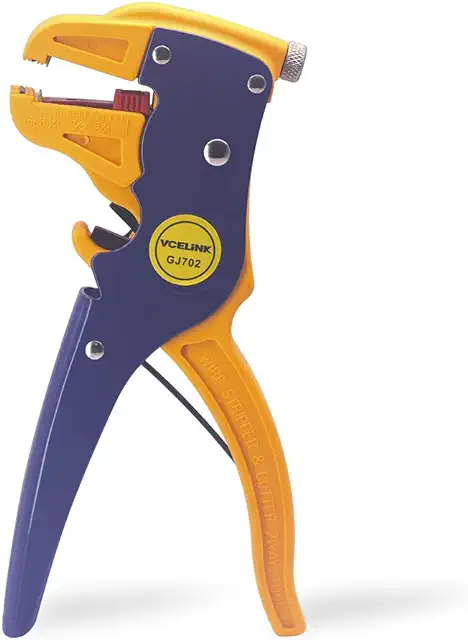
As mentioned in other comments below, the whole point is that I don't want a big unwieldy tool, it should be the size of the gun-type automatic wire strippers.
You can get very small drills, I have a USB powered one with enough torque to twist wires.
[1] Like this: https://docs.monadical.com/uploads/88cd3519-84a4-413e-b266-1...
Re: Idea for a new hand tool: Automatic Wire Twisting Pliers
#55Earlier quoted context omitted.
> There's places where you can substitute wago, but often not, e.g. when working with limited space, e.g. repairing a broken wire harness in a car, or similar. Don't fear! The wago inline splicing connector is here! https://www.wago.com/global/electrical-interconnections/disc...
I knew about that, actually. It's way too big still for some uses, and I'm guessing won't deal well with anything that repeatedly lightly pulls on the wire (e.g. a trunk hinge). But for some other cases it's great.
https://www.amazon.co.uk/-/dp/B073RMRCC3
Waterproof, tension proof, will handle more current than the wire itself, hard to install wrong, and very reliable (ie. No fires)
Re: Idea for a new hand tool: Automatic Wire Twisting Pliers
#56Earlier quoted context omitted.
Why are you saying that wagos are for temporary connections?
This seems to be some sort of meme existing in the US electricians mindspace, which prefer use of cheaper wirenuts on twisted wire. Wagos are approved for permanent connections in the whole world.
Re: Idea for a new hand tool: Automatic Wire Twisting Pliers
#57Re: Idea for a new hand tool: Automatic Wire Twisting Pliers
#58Earlier quoted context omitted.
You're not twisting electrical wires together to make an electrical connection, it's just to keep a bundle of wires together.
The twisting is in fact part of the electrical connection. On a good wire nut connection the wire nut is just insulating the bundle and if it falls off the bundle is still secure.
All that having been said, I still pre-twist because it helps keep the wires together which makes it easier to put the nut on in the first place -- especially if you're connecting more than two wires.
Edit: One point I left out is that if you don't pre-twist, correct attachment means you should put the nut on with enough tension that the nut itself causes the wires to twist together. This hurts your fingers if you do it all day, so using a wire nut twisting tool is recommended.
Re: Idea for a new hand tool: Automatic Wire Twisting Pliers
#59Maybe use a small rebar wire twister with the hook replaced by pliers. Something similar to this https://m.youtube.com/watch?v=ExFB-mbvt9k These things need to be fast because it's usually done by piece workers. There are smaller versions used to tie up sacks also.
Re: Idea for a new hand tool: Automatic Wire Twisting Pliers
#60there are clicky box-end wrenches that you put over a nut, but something like that for an open ended wrench when you come in from the side.
Basically, a ratcheting or powered open ended wrench?