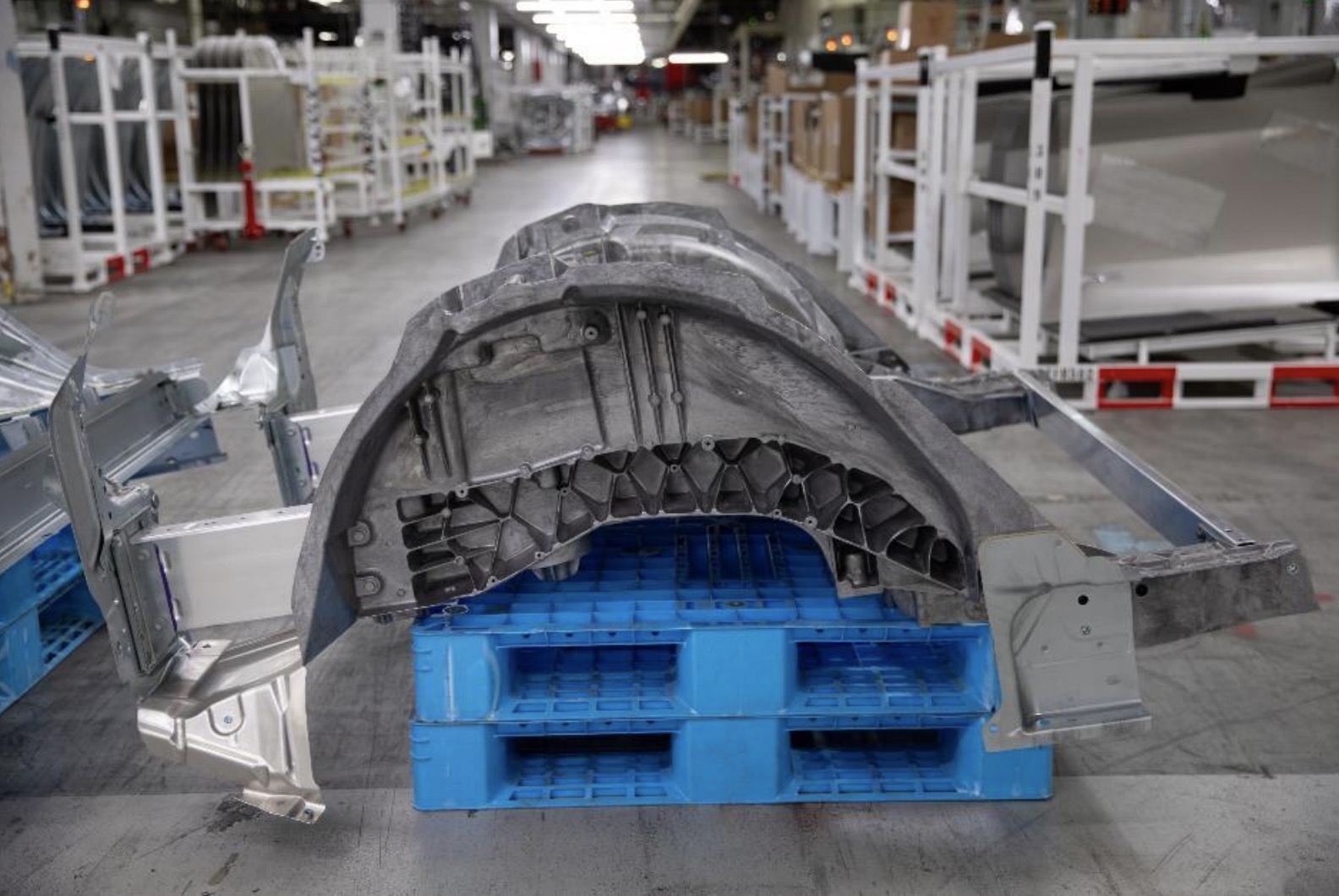
Cast metals are rather brittle, normally? Good for complex shapes that may be further refined by machining, and in compression loads, but not in shear or tension. I would think they would shatter in a collision rather than bend like steel.
Not all metals. The stronger aluminum alloys get their strength from precipitation aging, which gives a lot of similar benefits to forging (via different processes), and because of that cannot be forged very much. They do get stronger when forged, but only slightly, and they break apart if you form them too much.
Cast iron is already used in transmission cases etc, and it does indeed shatter. But it's not because its cast (although it can't be forged even a little; it breaks apart almost like sand), it's because it's actually just a name for an alloy. It's very high carbon (>1%) steel, which makes it very brittle but also very easy to cast. You can cast aluminum or low carbon steel and it will not be brittle at all, particularly if you let it cool slowly.