Earlier quoted context omitted.
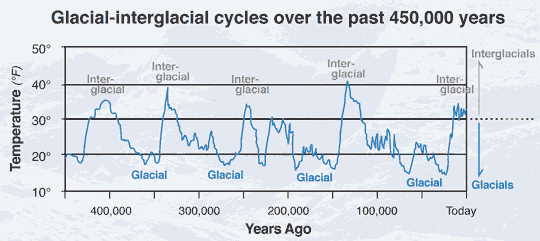
Iirc, the CO2 concentration now as been pumped up higher than it was then, which is in part what is worrying because temps might then potentially shoot even higher. Bottom line: we need large scale carbon capture quickly because even if we reach net zero CO2 will take millenia to drop back to the level it was pre-industrial revolution. Edit: I wouldn't focus on "pre-industrial levels" specifically, the point is that…
Why do we need to get back to the levels pre-industrial revolution?
Ice core scientists in East Greenland reach bedrock
141–150 of 356 posts
Re: Ice core scientists in East Greenland reach bedrock
#142Interesting: "Towards the base, the ice is more than 120,000 years old and dates back to the last interglacial period, a time when the atmospheric temperature above Greenland was 5°C warmer than today."
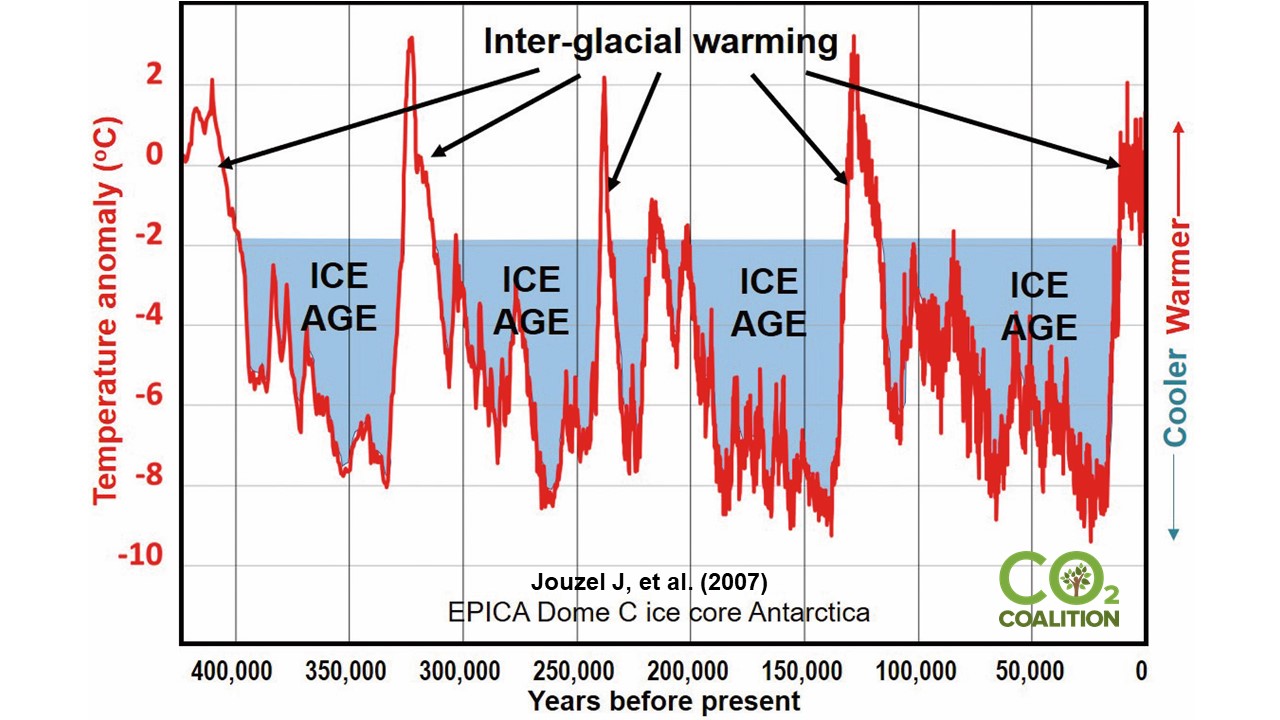
It also shows how crazy it would be if we get the projected 2-3 degrees average temperature increase. Even in a period where we'd expect to be going into a new ice age; instead shooting to a previously unseen high temperature.
Re: Ice core scientists in East Greenland reach bedrock
#143what is the risk of uncovering ancient viruses and bacteria from permafrost that we don't have immunity to
Jumping between species does happen, and when it happens it can be a big problem (see COVID-19, Swine Flu), but there is something like 100 million different virus species out there [1], and only 200 or so are able to infect humans [2]. Despite constant interaction between people and all other species of viral host all over the globe, and millions of brand new new virus exposures daily, jumps are still so rare that they are decade-defining when they happen.
1. https://virology.ws/2013/09/06/how-many-viruses-on-earth/
Re: Ice core scientists in East Greenland reach bedrock
#144Earlier quoted context omitted.
[flagged]
I’m not aware of any data that supports humans 120k years ago having a significant impact on the earths climate. I think even our ability to start fire at will is conclusively known to be only ~50,000 years ago.
https://en.wikipedia.org/wiki/Oklo_Mine
Fun to imagine the possibilities.
Re: Ice core scientists in East Greenland reach bedrock
#145Earlier quoted context omitted.
I don't think this is a factual response. This appears to be some cartoon?
Recent Netflix story arc about boxing a defrosted caveperson. I couldn't resist.
It's ridiculous and it's awesome.
Re: Ice core scientists in East Greenland reach bedrock
#146Earlier quoted context omitted.
"Claims for the earliest definitive evidence of control of fire by a member of Homo range from 1.7 to 2.0 million years ago " https://en.m.wikipedia.org/wiki/Control_of_fire_by_early_hum... You don't need to be able to start a fire, when you keep the fire burning all the time. And you can do that, once you control the fire and figure out the difference between dry and wet wood. Also humans are the dominating species…
People had fire in those times but it's extremely unlikely they produced enough CO2 to have an anthropogenic impact on the climate leading to large-scale temperature changes. I'm not sure what your perspective on this situation is but I think the case for modern anthropogenic climate change with deleterious effects is based on a wide range of different evidence, and a careful accumulation of facts and analysis. Simpl…
Re: Ice core scientists in East Greenland reach bedrock
#147what is the risk of uncovering ancient viruses and bacteria from permafrost that we don't have immunity to
If what she wrote holds true deep in these glaciers (which take a long time to form so they presumably weren't always buried so deep), then the answer to what the risk may be is "very remote". DNA and RNA disintegrates into very small tatters pretty easily, turns out, frustrating the reconstruction of ancient genomes. Bacteria are definitely dead on multiple counts and viruses will be shredded.
Re: Ice core scientists in East Greenland reach bedrock
#148Earlier quoted context omitted.
I'm not a scientist so I'm curious why this is interesting.
It's interesting because the whole ice cap as we know it is around 120k years ago which I don't consider the long ago on human development scale. This also appears to mean that in the past 120K there wasn't a polar ice cap. I read that as the worst case scenario we should be using for long term planning. This also may help determine how fast the ice was built and how fast it will melt. I'm completely an armchair pond…
It does make one wonder if any ancient sea fearing humans happened to carve a world map into a durable material such as granite which could have survived until the modern historic era. Maybe such a map, or other mythological artifact fueld the Roman idea of Terra Australis Incognita
/End rampant unsupported armchair speculation
Re: Ice core scientists in East Greenland reach bedrock
#149what is the risk of uncovering ancient viruses and bacteria from permafrost that we don't have immunity to
https://link.springer.com/article/10.1007/s42398-021-00184-8
From the conclusions: "... as shown by recent outbreaks of diseases caused by supposed to be extinct microbial pathogens immured in glacial ice for centuries, there is a serious risk for future epidemics (or even pandemics) to happen more often."
Re: Ice core scientists in East Greenland reach bedrock
#150Earlier quoted context omitted.
Why do we need to get back to the levels pre-industrial revolution?
Pre-industrial CO2 concentration is synonymous with the "natural concentration", at least in the recent past. We made a very large change that has thrown Earth's systems out of equilibrium. Returning to pre-industrial CO2 levels would undo that change and bring things back towards equilibrium.
1. https://energyeducation.ca/wiki/images/8/8f/Ice_ages2.gif