Live data from Hacker News

Unihiker, an $80 single-board PC with 2.8“ touchscreen, quad-core ARM Cortex-A35

unihiker.com

151–160 of 241 posts

Re: Unihiker, an $80 single-board PC with 2.8“ touchscreen, quad-core ARM Cortex-A35

#151

Earlier quoted context omitted.

If it can connect to the internet, it will need security updates.

Won't the firewall on most domestic routers stop any incoming connections?

Connections are only part of the danger. Browsers need to access the internet and they can have security bugs. Also, people download files and the programs that process them have bugs. People download programs and those can be dangerous.

For the kernel, it is important that it protect against dangerous programs running on the system to keep them isolated.

Re: Unihiker, an $80 single-board PC with 2.8“ touchscreen, quad-core ARM Cortex-A35

#152

As usual, looks good on papier but no ecosystem and the current stack that it comes with is dead on arrival. Boards need to come with mainstream distro support or with an ecosystem (or both), otherwise it will just die. And with internet connected devices, you can't set-and-forget, so it needs to have live support. Edit: a RockPi S (same SoC) can be had for $35 and a touch LCD for $11... Granted, it doesn't come with…

The bottom connector looks like a BBC micro:bit so there is an ecosystem at least on the hardware side

Re: Unihiker, an $80 single-board PC with 2.8“ touchscreen, quad-core ARM Cortex-A35

#154
post #93

Earlier quoted context omitted.

I purchased a few ARM boards in the past and won't do it again. All became e-waste. Rockchip notably, great hardware on paper. Try developing something that needs hardware acceleration and it's a paper weight. It's a common cycle of broken promises to provide drivers by manufactures, rinse and repeat. The exception being raspberry pi or expressif. Depending on the application.

I've had the same experience with non Raspberry Pi boards. They've become useless thanks to endlessly broken software and zero support. My rpi's have been useful for years and are still getting regular updates. I think I too was drawn in by the performance claims made by those other manufacturers. I realized though that raspberry pi are very powerful computers. We just take the scale of modern computing for granted a…

Even Raspberry Pi has struggled with GPU/HW acceleration, but at least its distro is maintained & updated.

Re: Unihiker, an $80 single-board PC with 2.8“ touchscreen, quad-core ARM Cortex-A35

#155
post #93

Earlier quoted context omitted.

I purchased a few ARM boards in the past and won't do it again. All became e-waste. Rockchip notably, great hardware on paper. Try developing something that needs hardware acceleration and it's a paper weight. It's a common cycle of broken promises to provide drivers by manufactures, rinse and repeat. The exception being raspberry pi or expressif. Depending on the application.

I've had the same experience with non Raspberry Pi boards. They've become useless thanks to endlessly broken software and zero support. My rpi's have been useful for years and are still getting regular updates. I think I too was drawn in by the performance claims made by those other manufacturers. I realized though that raspberry pi are very powerful computers. We just take the scale of modern computing for granted a…

Yup. It's RPi or nothing. It's the software that makes these valuable, not hardware specs. If I wanted to sell an ARM board I'd make it as Pi compatible as possible.

Re: Unihiker, an $80 single-board PC with 2.8“ touchscreen, quad-core ARM Cortex-A35

#156

"The built-in IoT service on UNIHIKER allows users to store data through the MQTT protocol and provides real-time data access via web browser." That reads as "comes with integrated backdoor you may not want." It may or may not be any good from a security standpoint, but it's a risk. > This is designed as an embeddable component for learning, prototyping, and OEMs. It's trying to be a lot of things at once. It has con…

>It has connectors on all four sides and no screw holes for mounting

There's three nuts soldered on the back: https://www.unihiker.com/wiki/dimension

>That layout started with Arduino, continued into Raspberry Pi

Pre-2010 Arduino boards had three 1/8 inch mounting holes, post-2010 ones had four: https://blog.adafruit.com/2011/02/28/arduino-hole-dimensions...

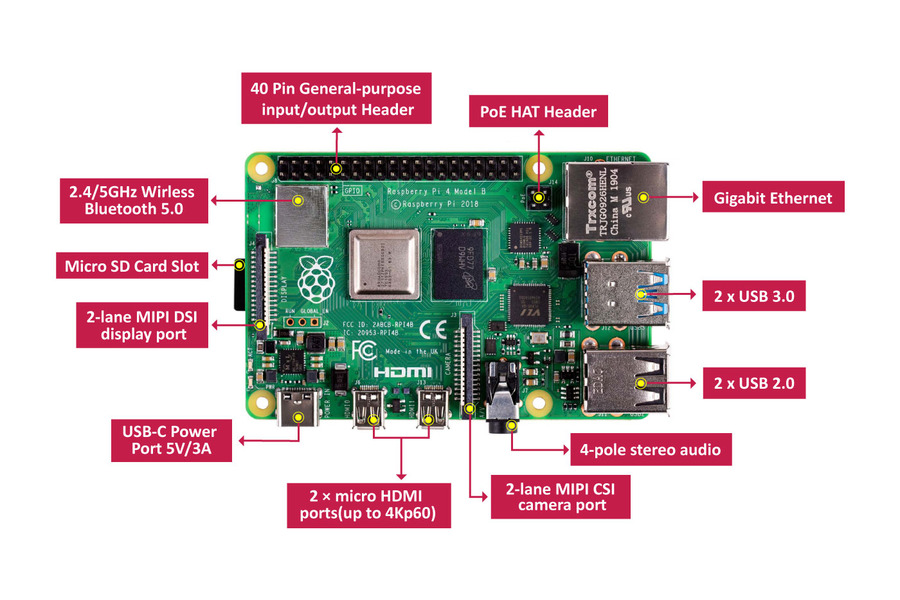
The Raspberry Pi 1 had two mounting holes located in stupid places, but the Pi 4 has four: https://www.robot-advance.com/userfiles/www.robot-advance.co...

>Note how vague the site gets when they talk about applications.

It's a DFRobot product. I used to work for a company that distributed DFRobot products in the US, and this is broadly consistent with their corporate philosophy. Their designers crank out thousands of products to keep ahead of other Shenzen companies who are fast-following them. (Notably Seeedstudio) You can view their full catalog here, and it's quite the sight to see: https://www.dfrobot.com/category-48.html

They generally take the OEM reference design, put it on a pcb, and add connectors. The API will be minimal. Compatibility is a joke. (For instance, they make no effort to avoid I2C address collisions-- how could they, when most of them are hard-coded by the device vendor, and they only make the PCB? You have to be careful when stacking several different Arduino shields, since they'll very often be talking on the same pins. There will be no warning of this on the product page, of course, so the end user must carefully examine the board schematic. Etc etc etc.)

When I was working with them, I had the impression there were maybe three people who spoke English at the company, and they spent most of their time writing product pages. Email support was hopeless, and their forums were the usual mess.

DFRobot products are best thought of as a convenient way to get a sensor or microprocessor without having to design and reflow your PCB. If you don't like reading manufacturer datasheets, then you won't like DFRobot. They're not legos, and they're far from the kind of integrated product family you'd expect from a US company.

The unihiker.com webpage has a California startup website aesthetic, so you might expect a small company built to support this one board, but DFRobot literally has dozens of SBCs just like this: https://www.dfrobot.com/category-184.html I would be surprised if they even have one person dedicated to this product. An easy guess is they're already moving on to the next board launch, with yet another small ARM chip from another vendor.
Re: Unihiker, an $80 single-board PC with 2.8“ touchscreen, quad-core ARM Cortex-A35

#157

Earlier quoted context omitted.

Image burning is certainly more involved than your run of the mill cross-platform Electron app. It likely uses lower-level system calls that might not even be possible in most cross-platform frameworks. Additionally, the screenshots make clear mention of a driver, something that would certainly be different depending on the OS. You simply assumed there is "no excuse" because you couldn't think of one, but you weren't…

> It likely uses lower-level system calls that might not even be possible in most cross-platform frameworks. So? I made a Qt-based low-level flashing utility at a previous job. Or do you consider C++ callign C functions not low-level enough?

I mean, my "so" was quite clearly outlined.

> You simply assumed there is "no excuse" because you couldn't think of one, but you weren't in the room when the decision was made, and don't know the reasonings behind it. My blurb above could certainly have been one of several reasons brought up.

Just because you did it doesn't mean everyone knows how to do it. And that was my entire point.

Maybe you should offer your services to them.

Re: Unihiker, an $80 single-board PC with 2.8“ touchscreen, quad-core ARM Cortex-A35

#158
post #154
post #93

Earlier quoted context omitted.

I've had the same experience with non Raspberry Pi boards. They've become useless thanks to endlessly broken software and zero support. My rpi's have been useful for years and are still getting regular updates. I think I too was drawn in by the performance claims made by those other manufacturers. I realized though that raspberry pi are very powerful computers. We just take the scale of modern computing for granted a…

Even Raspberry Pi has struggled with GPU/HW acceleration, but at least its distro is maintained & updated.

The pi4's GPU at least supports OpenGL ES 3.1 and Vulkan 1.2 now. That's decent even if not powerful.

Re: Unihiker, an $80 single-board PC with 2.8“ touchscreen, quad-core ARM Cortex-A35

#159
post #93

Earlier quoted context omitted.

I've had the same experience with non Raspberry Pi boards. They've become useless thanks to endlessly broken software and zero support. My rpi's have been useful for years and are still getting regular updates. I think I too was drawn in by the performance claims made by those other manufacturers. I realized though that raspberry pi are very powerful computers. We just take the scale of modern computing for granted a…

Yup. It's RPi or nothing. It's the software that makes these valuable, not hardware specs. If I wanted to sell an ARM board I'd make it as Pi compatible as possible.

The problem is that Broadcom won't sell you the chips they use so you can't.

Re: Unihiker, an $80 single-board PC with 2.8“ touchscreen, quad-core ARM Cortex-A35

#160

Earlier quoted context omitted.

> As usual, looks good on papier but no ecosystem and the current stack that it comes with is dead on arrival. There is no standard Arm ecosystem to boot on which is the real issue - every board needs a custom kernel and booting. I blame Arm for never cooking up a PC like spec that defines hardware configuration, firmware and booting. This is why x86 is going to stick around for a while - its dead simple to bootstrap…

I naively assumed that device trees had solved this problem, but clearly they haven't in practice. How come?

For one, you have to provide one specifically for your board to boot at all. There is no "common" one that'll get you to a shell on any board.

The main issue is that most SoC vendors just dump a heavily hacked up Linux kernel source intended for Android on you, along with binary blobs (firmware, android hal services, etc.). The drivers aren't in the kernel per se, just enough of a stub for the proprietary blobs to talk to the hardware.

So if the goal is to run a standard Linux distro on the board, you're pretty screwed unless you have the time and resources (or a community) to reverse engineer the android bsp into drivers for the mainline kernel.

The thing that makes the RPi great is that there's actually an entity paying for this development to happen, along with the community. It's certainly far from the fastest ARM board, but even the decade old RPi 1 still gets kernel updates.

Post reply on HN