They say Claude is "more verbose", and claim this is a positive. I disagree. My biggest criticism of ChatGPT is that its answers are extraordinarily long and waffly. It sometimes reminds me of a scam artist trying to bamboozle me with words. I would much prefer short, concise, precise answers.
Meet “Claude”: Anthropic’s rival to ChatGPT
41–50 of 165 posts
Re: Meet “Claude”: Anthropic’s rival to ChatGPT
#42It might be clunky at first, but it's a good starting base to improve upon. The android could, for example, store common and everyday responses in it's RAM, making it semi-capable of autonomous speech.
Then, it could use that information to further train itself, essentialy creating a local model of it's own behaviour. In other words, it could learn.
Re: Meet “Claude”: Anthropic’s rival to ChatGPT
#43They say Claude is "more verbose", and claim this is a positive. I disagree. My biggest criticism of ChatGPT is that its answers are extraordinarily long and waffly. It sometimes reminds me of a scam artist trying to bamboozle me with words. I would much prefer short, concise, precise answers.
Re: Meet “Claude”: Anthropic’s rival to ChatGPT
#44Earlier quoted context omitted.
No, you need billions of words to train a large language model.
Assuming all human languages have a common shared semantic meaning in latent space (I am flipping cause and effect here, but our purposes it doesn't really matter), and assuming that human languages largely follow the same pattern (this assumption is based on the fact that we can trace the roots of modern languages back to the Phoenician script), it is reasonable to assume that we can fine-tune a self supervised mode…
You're probably thinking of the indo-european language family, which accounts for about 45% of native language speakers. The largest language family in the world, but not even a majority.
Scripts and languages change over the course of decades, and while there are well known mechanisms to those changes, trying to deduce hieroglyphics or ancient Egyptian from a modern corpus is impossible.
The idea that there is some shared structure in all language is known as universal grammar. If that structure exists is still hotly debated.
Re: Meet “Claude”: Anthropic’s rival to ChatGPT
#45They say Claude is "more verbose", and claim this is a positive. I disagree. My biggest criticism of ChatGPT is that its answers are extraordinarily long and waffly. It sometimes reminds me of a scam artist trying to bamboozle me with words. I would much prefer short, concise, precise answers.
Adding "just code, don't talk" is a lifesaver I'm glad chatgpt can't quit
Re: Meet “Claude”: Anthropic’s rival to ChatGPT
#46Re: Meet “Claude”: Anthropic’s rival to ChatGPT
#47Earlier quoted context omitted.
Assuming all human languages have a common shared semantic meaning in latent space (I am flipping cause and effect here, but our purposes it doesn't really matter), and assuming that human languages largely follow the same pattern (this assumption is based on the fact that we can trace the roots of modern languages back to the Phoenician script), it is reasonable to assume that we can fine-tune a self supervised mode…
Phoenician script is the common ancestor of Latin, greek and Cyrillic script. You're probably thinking of the indo-european language family, which accounts for about 45% of native language speakers. The largest language family in the world, but not even a majority. Scripts and languages change over the course of decades, and while there are well known mechanisms to those changes, trying to deduce hieroglyphics or anc…
I know this may be not be the answer that you are looking for, but the way most of these ML systems are designed is based on the idea that life, the universe, and everything can be modeled by a series of joint probabilities. For toy problems you draw a diagram
https://en.m.wikipedia.org/wiki/Graphical_model
It's an old idea in AI (predates even ML) but people have never been able to do anything useful with it outside of exam problems until the emergence of language models on modern deep learning hardware. All of a sudden variational learning and causal inference are not merely statistical word problems for grad students any more. This is the key to how most of the custom deep learning based avatar generators work. They use a Variational Autoencoder. For LLMs, it is in the form of a transformer which contains a sampling step (sampling from a distribution is the key to Bayesian methods).
I would like to emphasize the theory of probabilistic learning is very different from the actual practice. The theory we have today isn't much different from 20 years ago. Implement the methods in for example Murphy's Probabilistic ML book and they would be useless if you don't have access to modern deep learning hardware and gradient descent optimizers. Without deep learning, we won't have LLMs, regardless of how fancy the variational learning theories are.
Re: Meet “Claude”: Anthropic’s rival to ChatGPT
#48Earlier quoted context omitted.
No, you need billions of words to train a large language model.
Assuming all human languages have a common shared semantic meaning in latent space (I am flipping cause and effect here, but our purposes it doesn't really matter), and assuming that human languages largely follow the same pattern (this assumption is based on the fact that we can trace the roots of modern languages back to the Phoenician script), it is reasonable to assume that we can fine-tune a self supervised mode…
Re: Meet “Claude”: Anthropic’s rival to ChatGPT
#49They say Claude is "more verbose", and claim this is a positive. I disagree. My biggest criticism of ChatGPT is that its answers are extraordinarily long and waffly. It sometimes reminds me of a scam artist trying to bamboozle me with words. I would much prefer short, concise, precise answers.
ChatGPT is extraordinarily good at following your requests for the format and style of its response. If you want very short terse words, just ask! For example "In a few very concise terse words, explain the idea behind heapsort. Be very brief, use just a few words." It's offline now so I can't test it but I expect the result to be good.
> Heapsort: sort by building heap.
Re: Meet “Claude”: Anthropic’s rival to ChatGPT
#50Earlier quoted context omitted.
So you're saying something like the Universal Translator from Star Trek might be possible?
For humans yes, I am not saying one-shot learning would be possible for undocumented indigenous languages but few shot language acquisition in cases of a single surviving speaker is something that I would consider highly probable . This hypothesis relies heavily on the nature of variational learning in latent space and observations about human languages. It is of course possible that some ethnicity would have a langu…
That's modern European languages ... and post ~1100 BCE if I recall correctly.
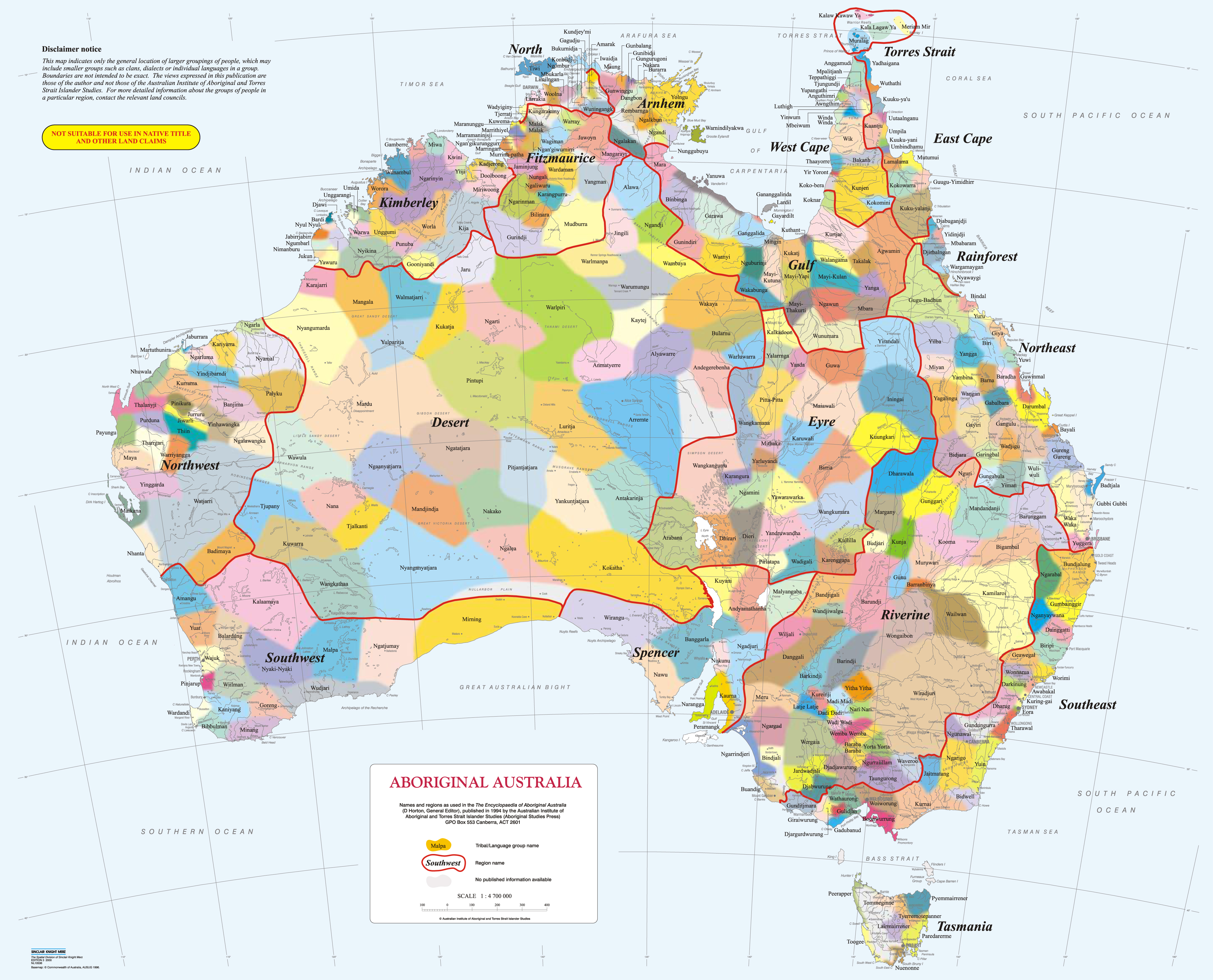
So, indigenous languages from people settled in Australia [1] for 50,000+ years can be a little different, some don't have "left" | "right" as relative to PoV directions and stick with East V. West as absolutes for example.
We're down to maybe 20-30 from pre colonial 100's though [2].
[1] https://mgnsw.org.au/wp-content/uploads/2019/01/map_col_high...