Live data from Hacker News

We need a lot more electricians

canarymedia.com

431–440 of 533 posts

Re: We need a lot more electricians

#431

Earlier quoted context omitted.

same. if i could find something that's like 50/50 or some other ratio with a similarly scaled pay i think i could make the jump

Industrial Controls / Instrumentation Tech Biggest downside is the field environments you can find yourself in. Depending on your industry you can be in some horribly smelly/disgusting facilities or dangling off catwalk way above ground trying to adjust calibration on some silly sensor. There's good ones though too. I'm a Software Eng in the industry so I don't ever really have much for field duty, but I work with se…

thanks, this is great info! i will look into this deeper
Re: We need a lot more electricians

#432
post #383

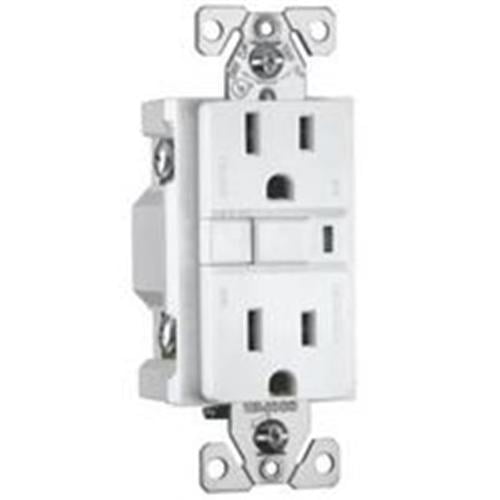
I'm curious if there is some productivity-improving tech for electricians waiting to be invented. The following will be super North-America-centric, but: Right now you have to fasten a box to the wall structure, cut the wire so that about 8" can make its way into the box, strip the outer insulation and insert it into the box, strip at least some of the individual conductors, and then splice (by twisting and using wir…

So, essentially "power over thicknet ethernet". Nobody liked that tech. "Worked in the lab, and whenever it breaks we can blame the user for improper abuse" was such a fiasco it resulted in the world being re-networked in twisted pair, which ironically is installed very much like legacy power outlets... Also the only way to replace the outlet would seem to be to rip out the entire wall and splice in new cables like a…

What I'm proposing is that the electrical box (the blue plastic thing that's essentially non-removable in current practice) would have the vampire connection to one or more cables passing into/through it, and the actual device (outlet, switch, light fixture) would plug into some conductors at the back of the box. So you could replace outlets more easily than you can today.

The boxes would come in a few varieties based on the number of cables that could pass into/through them. Again I'm picturing some kind of intermediate layer between the box and the device that could accommodate less-common connection arrangements, but maybe you lose a bit of flexibility in the name of progress.

The connections wouldn't have to be 100% reliable, but at least as reliable than hand-twisted wires and wire nuts (also AFCI breakers could eliminate a lot of the fire risk).

Re: We need a lot more electricians

#433
post #34

Earlier quoted context omitted.

> but it's important to keep in mind the voltage differences and that effect on total power: > UK: 100 A x 230 V = 23,00 W > US: 200 A x 120 V = 24,00 W That's incorrect. The service drop in the US is 220V. It gets stepped down at the main load center to 120V for most of the regular circuits. So it's more like 48000W service in US houses.

Only small correction to that is that load center doesn't step down voltage. The center tapped transformer at the street steps down the voltage to 240V, but then that center tap on the transformer becomes your neutral so you end up with two legs that are 120V from ground/neutral and 240V from leg to leg in your load center.

Thanks for that correction. In retrospect it makes sense, because each circuit breaker isn't functioning as a little transformer.

Re: We need a lot more electricians

#434
post #407

Earlier quoted context omitted.

> In the UK, where ground fault interrupters are part of the sockets it can be hassle Did you mean US? I've never seen that, and searching 'ground fault interrupter UK' images all look like US sockets. They're usually called RCDs (Residual Current Devices) in the UK, and they're fitted in the Consumer Unit.

No, I meant the UK, for instance: https://internationalconfig.com/icc6.asp?item=72300-S-10MA or https://www.screwfix.com/p/british-general-900-series-13a-2-... It's the only place where I have seen these.

Wow ok, I've never seen that in the wild. RCDs are required on all circuits including lighting in the current regs (i.e. old installations can not have them and be compliant, but they have been required and socket circuits for a long time; bathroom & outdoor lighting for less; all lighting more recently). Maybe these sockets are for when you have no more room in the panel and don't want to replace it, but need it upgraded due to other work or to pass an EICR to let the property? Not sure.

Example US looking one I was seeing: https://i5.walmartimages.com/asr/e9c29ec0-5eeb-40c3-8cde-e2f...

I suppose Earthed sockets are less common there anyway right, so that limits how common these could possibly be.

Re: We need a lot more electricians

#435
post #34

Earlier quoted context omitted.

> but it's important to keep in mind the voltage differences and that effect on total power: > UK: 100 A x 230 V = 23,00 W > US: 200 A x 120 V = 24,00 W That's incorrect. The service drop in the US is 220V. It gets stepped down at the main load center to 120V for most of the regular circuits. So it's more like 48000W service in US houses.

> The service drop in the US is 220V. 240V. Since we're throwing around numbers, let's be accurate. This is a pet peeve of mine. We've been standardized at 240V since 1967, and it was higher than 220V years before that.

Thanks for the correction about the actual voltage today.

However, it seems like 220V was the standard before that [1], which is why it's still common parlance, referring to the "higher" voltage. Certainly I've heard many people in the trades still refer to it with the older term, even if the circuit is actually 240V.

1. https://en.wikipedia.org/wiki/Mains_electricity#History

Re: We need a lot more electricians

#436

I'm curious if there is some productivity-improving tech for electricians waiting to be invented. The following will be super North-America-centric, but: Right now you have to fasten a box to the wall structure, cut the wire so that about 8" can make its way into the box, strip the outer insulation and insert it into the box, strip at least some of the individual conductors, and then splice (by twisting and using wir…

insulation-displacement-crimps are not a good idea for the relatively high amounts of power coming through household wiring. Not much contact area, lots of potential for high resistance and heat and oxidation at the contact point. I wouldn't trust them. Then again, wire nuts aren't that great either.

Maybe insulation displacement isn't exactly the way to go, but some kind of machine that quickly secures a connection onto a cable, either inline or at the end. And then create modular electrical boxes that those connections can connect to (probably somewhat permanently).

It could even start out as basically a fancy wire stripper and a box with push-in connections that switches/outlets subsequently plug into.

Re: We need a lot more electricians

#437
post #434

Earlier quoted context omitted.

No, I meant the UK, for instance: https://internationalconfig.com/icc6.asp?item=72300-S-10MA or https://www.screwfix.com/p/british-general-900-series-13a-2-... It's the only place where I have seen these.

Wow ok, I've never seen that in the wild. RCDs are required on all circuits including lighting in the current regs (i.e. old installations can not have them and be compliant, but they have been required and socket circuits for a long time; bathroom & outdoor lighting for less; all lighting more recently). Maybe these sockets are for when you have no more room in the panel and don't want to replace it, but need it upg…

The lack of grounded sockets in the US has always been a complete mystery to me. Especially for kitchen appliances.

Re: We need a lot more electricians

#438

Earlier quoted context omitted.

Right, don't go off code for having to do a big upgrade like this. I legit hit 100A several times a month. Have hit over 150A. Easy way for me to draw 100A at once: 40A: EV charging 32A: Electric Oven warming up at max 24A: Electric Dryer 40A: HotTub jets on 40A: AC ON Max Unlikely all of those are on full max, but it's pretty easy to imagine getting past 100A before we even touch things like lights and computers. EV…

Do Americans quote large appliance current at 220V or 110V equivalent? From the EV it seems the former, but in that case I'm horrified at how power-hungry your appliances are. A typical new oven sold in Europe is 3.6kW, 16A @ 230V. A new tumble drier is 600W, so about 2.5A at 230V. There's such a range of hot tub and AC sizes I can't compare these.

> Do Americans quote large appliance current at 220V or 110V equivalent?

Fist, North America is a 120/240V system, not 110/220. For the life of me i will never understand the confusion over why some people, including North Americans keep referencing 110 volts?

The code is clear, 120 Volts +- 5 to 10 percent?

Perhaps because the "allowed range" is 110 to 125? If i measure my house right now, it is 121 volts and this is pretty typical.

Your dryer example seems like it is running on gas?

In North America, electric dryers use anywhere from 1800 to 5000 watts.

AC depends on the home size, the location, etc. Mine has a 60A 240V breaker but again the "code" states you can only have an 80% "continuous load" on a circuit so technically this circuit can not pull 14,400 continuous watts.

One thing Europeans dont grasp is the difference in house sizes vs north ameria and so naturally our appliances are larger and more power hungry.

What may take a European washer 2 loads, most north american washer/dryers will do in one. So the "power usage by load" is the same?

Using a device like a range's maximum power draw is dishonest. If a north american range is twice the size of what is available in EU, but not all the elements are in use at once... does that mean something?

Re: We need a lot more electricians

#439

I'm curious if there is some productivity-improving tech for electricians waiting to be invented. The following will be super North-America-centric, but: Right now you have to fasten a box to the wall structure, cut the wire so that about 8" can make its way into the box, strip the outer insulation and insert it into the box, strip at least some of the individual conductors, and then splice (by twisting and using wir…

Implementing this would cost a lot more and would need uptake from all of the hardware manufacturers plus building code changes. The productivity improving tech you're looking for is called an apprentice though opinions differ on how much time they save/waste.

I mean apprentices are great, but we just got done reading an article about how there's a shortage of workers in the field.

You can either train more workers to do it the old way or invent new ways that require fewer workers (or less highly-skilled ones).

Kind of how PEX plumbing (whatever its drawbacks) has made it much simpler to plumb a house than it was when soldering copper fittings onto copper pipes was the norm (let alone threaded connections shudder).

Re: We need a lot more electricians

#440
post #267
post #28

Earlier quoted context omitted.

> if it's within your means, go to 400A to future proof (EVs, HVAC and hot water heat pumps, induction stove, and other large loads all add up, along with colocated generation of some sort I have all of these on 200A with amps to spare. But I have a small house. I suppose if I had multiple EVs, dryers, or heat pumps, or 3000sqft it would be a different story.

Again, see above - it's not about 400 amps per se ... it's about putting in bigger wire because we can't predict the future. It's spending a small additional amount now (on wire) to avoid an enormous expense (trench digging) in the future. Oh, and you know that 3" conduit required for the 400amp ? Make it 4". Oh, and you know that trench you just dug ? Throw in double 1.5" and double 3/4 conduits right in there with…

> Future you will be very happy you did.

The future could also look like large batteries on-site that charge slowly, and then provide power at high amperage when needed, like slowly compressing a spring, then suddenly releasing it.

This is already what Electrify America and Freewire (https://freewiretech.com/) are doing with EV Fast chargers when the electric utility can't provide a higher power connection in a reasonable time-frame. As battery prices drop, that could be a viable way to power heavy home appliances.

Post reply on HN