Live data from Hacker News

Why is hydroelectricity unfashionable?

spectrum.ieee.org

161–170 of 397 posts

Re: Why is hydroelectricity unfashionable?

#161

Obviously hydroelectricity is massively damaging to ecosystems. My day job includes designing hydroelectric control systems and even I can admit that. That's a big part of the reason that hydro is a non-starter in much of the western world, which is probably a reasonably good thing (although there are certainly some exceptions where hydro development seems like a no-brainer to me but I digress) What's not so clear to…

what about artificial hydro ? make a big large raised water retention thing with generators.. it will take space but not harm existing natural spaces. Even in europe there's a lot of unused land.

Pumped hydro needs to be truely massive scale, both in the amount of water (read: lots of depth AND surface area), and the height differential between the two reservoirs. To make it cost feasible we really need very favourable natural geography. Building such structures ourselves would be astronomically expensive.

Re: Why is hydroelectricity unfashionable?

#162

Obviously hydroelectricity is massively damaging to ecosystems. My day job includes designing hydroelectric control systems and even I can admit that. That's a big part of the reason that hydro is a non-starter in much of the western world, which is probably a reasonably good thing (although there are certainly some exceptions where hydro development seems like a no-brainer to me but I digress) What's not so clear to…

Totally agree on pumped power storage capacity being needed. But those are massive infrastructure projects. Erecting a damn, to store the potential energy is bound to meet resistance.

Alternative solution: Build Lots of pressure-piston, that are stable standing on its own. Basically, a pillar of ice, coated in insulation, standing upon a small lake that provides water at pressure. If additional energy is needed after the extraction, heat is added to the system and the lake replenishes, while the piston shrinks. If energy needs to be stored, additional water is pumped on top and frozen.

If additional heat reservoirs are nearby or something in need of coolant is nearby, additional heatpump like bonuses should be findable.

Similar concepts have been explored: https://energypost.eu/gravity-batteries-any-nation-can-do-it... but they need massive construction efforts.

Instead of having the building up storage provide its own structure, with little more then a concrete base and some grain silo walls. https://i.imgur.com/iCg9LzY.png

The piston sealing the under pressure water, could be archieved via "onion" layers, steps leading down, taking up a part of the pressure, until it drops to "holding back by atmosphere" on the outmost layer.

Re: Why is hydroelectricity unfashionable?

#163

Earlier quoted context omitted.

> IMO thats entirely rational. Dying is not what I'm scared of when it comes to a Chernobyl-like accident. Dying slowly and painfully of radiation poisoning is. It's hard to imagine a worse fate. The good news is that really didn't happen. About 40 or 50 people died of acute radiation poisoning (that's a bad way to go). Many were displaced. The most common form of cancer that occurred as a result of Chernobyl was thy…

It's true that there haven't been too many deaths from existing nuclear accidents, but that seems to be more by luck than judgement. If we got a chernobyl-like accident near a major city then the impact would be off the scale. I live in London, and I don't even to think about what it would mean if London ended up in an exclusion zone (and there are plenty of nuclear power plants near to London that could cause this i…

I agree that would be bad, but fundamentally as humans what we do is take things that are unsafe and make them safe. Hurtling through the air at 1000kph in a metal tube is inherently unsafe. Thanks to engineering, it's literally safer than the drive to the airport - let alone the walk.

If a coal tailings pond unloaded into the Thames you'd have a bad time. If a dam unloaded on Quebec City you'd have a bad time. If the strategic petroleum reserve exploded you'd have a bad time. You'd have unlivable areas, you'd have cancers, the whole deal. That's not a reason not to do something that science tells us we've made safer than - and lower carbon than - any other form of power.

[edit] I could just as easily say: "well what if a plane falls out of the sky for no reason over the parliament buildings" and that would be bad, but I have no idea why it would - similarly I have no idea why the spicy rocks going to town on each other in the reaction chamber of a nuclear reactor would get out. But in both cases empirical evidence, testing and refinement have led us to eliminate the reasons that's ever happened before from operating designs and to add a ton of safety mechanisms to mitigate the risk of unforeseen consequences.

Re: Why is hydroelectricity unfashionable?

#164
post #113

Earlier quoted context omitted.

At current battery prices of $132/kwh and oil at $88/barrel, 300 TWh of batteries per decade is actually 40% more expensive than 90 million barrels of oil per day.

Damn, we are that close. We are using expensive, high-density batteries meant for electronics and transportation for stationary storage. CATL is already claiming $40-$50/kwh for sodium ion batteries that begin production next year. In five years there will be even more grid-targeting battery solutions on the market at low price points.

From a practical business perspective, the falling prices of batteries may not be ideal from an investor's perspective. If I buy $100M of batteries and the price drops 50% in five years, I just "lost" 50 million dollars. You'd have to be at a point where the proceeds to storage exceed the depreciation of the product in order to pencil out, I think. So a lot of storage that could be built probably won't be built until the technology war shakes out.

>CATL is already claiming $40-$50/kwh for sodium ion batteries that begin production next year.

Tried to look this up, but didn't find anything. Where's that?

Re: Why is hydroelectricity unfashionable?

#165

Obviously hydroelectricity is massively damaging to ecosystems. My day job includes designing hydroelectric control systems and even I can admit that. That's a big part of the reason that hydro is a non-starter in much of the western world, which is probably a reasonably good thing (although there are certainly some exceptions where hydro development seems like a no-brainer to me but I digress) What's not so clear to…

> hydroelectricity is massively damaging to ecosystems

Sure, but compare it with the alternatives. Oil and gas are obviously very destructive of ecosystems. But so are lots of renewables.

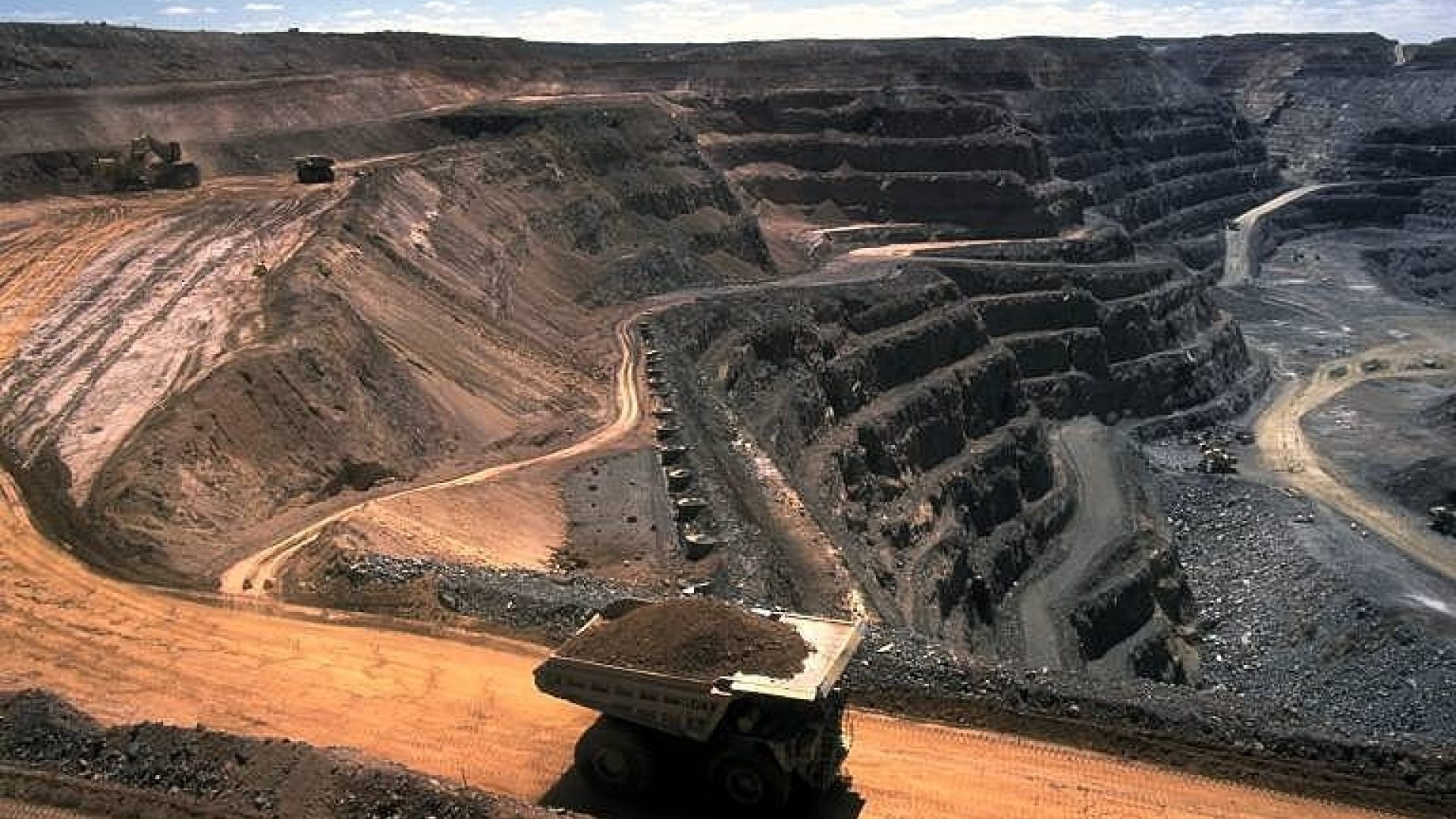
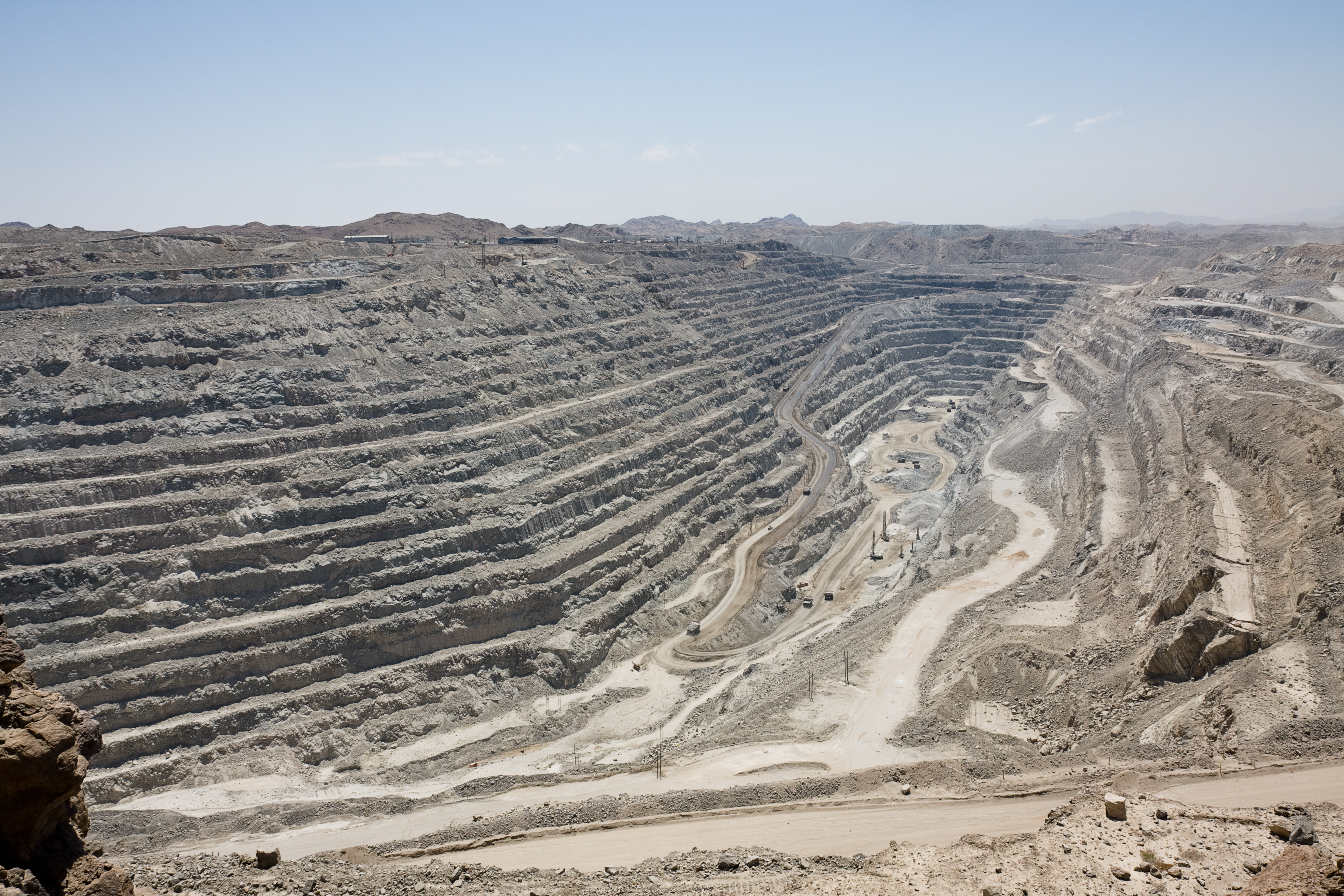
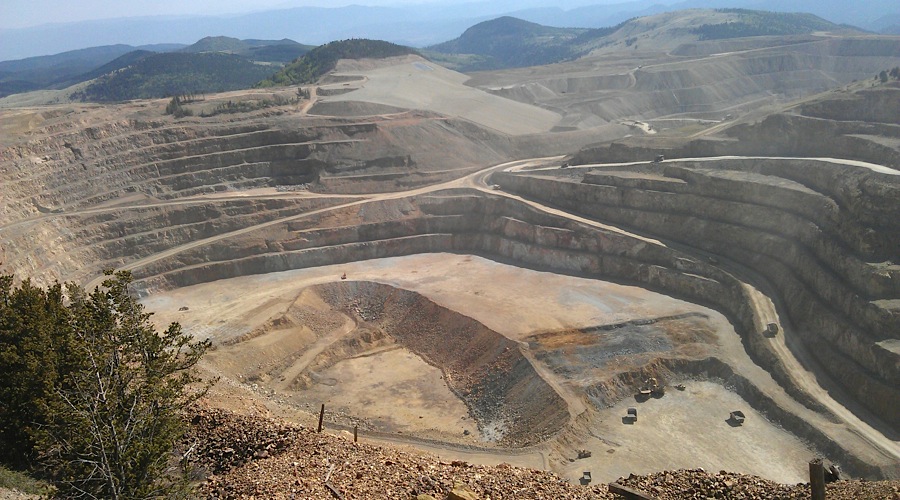
Here's what a silicon mine looks like (used to make solar panels): https://www.mining.com/wp-content/uploads/2016/02/anglogold-...

Here's a lithium mine (used to make batteries): https://assets.telecomtv.com/assets/telecomtv/open-cast-mine...

Here's a uranium mine (used for nuclear energy): https://energyeducation.ca/wiki/images/8/82/Openpit.jpg

Compared to these, the habitat displacement from hydro seems very mild. There simply is no energy source that is harmless.

Re: Why is hydroelectricity unfashionable?

#166

Earlier quoted context omitted.

Where does this extra water come from?

Hydro power work by water flowing down turbines from a higher body of water to a lower. So you can typically pump the lower water back up, using wind or solar power.

Wouldn't this mean the downstream would have no water flowing through it?

Re: Why is hydroelectricity unfashionable?

#167

Earlier quoted context omitted.

Forgive me my lack of understanding of the englisch language, but I do not understand the distinction you make. Hydroelectricity: Is this power you obtain by placing turbines behind a huge concrete wall of a large river? If so, how is the scenario of building a large concrete dam in the mountains where water is pumped up a hill to covert it into kinetic energy any more better? I understand that hydroelectricity is us…

> I understand that hydroelectricity is used to supply the basic power need, say 80% and a water reservoir with turbines to cover power peak needs This seems like you either didn't understand what pumped storage is, or you've confused several related technologies. A typical pumped storage scheme goes like this: We find a mountain with a high lake and a low lake. We dam the high lake so that its natural outflow (perha…

If this still builds a dam, doesn't this have the same environmental concerns as any hydro project? Or is there something that makes this less of a concern?

Re: Why is hydroelectricity unfashionable?

#168
post #98

Earlier quoted context omitted.

Because you're not disrupting a river's flow and natural ecosystem, you only utilize the watershed some more during the initial filling period. After that, it's a closed system separate from the river ecosystem where only evaporation causes leakage.

That ship has already sailed as most power producing dams have been around for long time. Removing them would destroy the (now natural) ecosystem they have created. Plus dams have way more benefits to us than the extremely clean energy they produce - not just store.

This is not the case, removing dams still can come with huge benefits to the ecosystems those dams disrupted: https://www.mercurynews.com/2019/05/08/four-years-after-cali...

Re: Why is hydroelectricity unfashionable?

#169

Obviously hydroelectricity is massively damaging to ecosystems. My day job includes designing hydroelectric control systems and even I can admit that. That's a big part of the reason that hydro is a non-starter in much of the western world, which is probably a reasonably good thing (although there are certainly some exceptions where hydro development seems like a no-brainer to me but I digress) What's not so clear to…

The good news is, that's starting to happen (in some places). A 5GW and 2GW pumped hydro station - both state owned infrastructure - have just been announced for the area I grew up: https://qldhydro.com.au.

Re: Why is hydroelectricity unfashionable?

#170
post #164

Earlier quoted context omitted.

Damn, we are that close. We are using expensive, high-density batteries meant for electronics and transportation for stationary storage. CATL is already claiming $40-$50/kwh for sodium ion batteries that begin production next year. In five years there will be even more grid-targeting battery solutions on the market at low price points.

From a practical business perspective, the falling prices of batteries may not be ideal from an investor's perspective. If I buy $100M of batteries and the price drops 50% in five years, I just "lost" 50 million dollars. You'd have to be at a point where the proceeds to storage exceed the depreciation of the product in order to pencil out, I think. So a lot of storage that could be built probably won't be built until…

To be fair they stated it in the most roundabout way (40%-50% cheaper than LFP batteries) and with no time horizon. I think I got that from reports on their recent shareholder meeting but I will have to look it up better.
Post reply on HN