What I read in this article is that German government did a thorough analysis, but the author dismisses the conclusions of it because the tolerated risk level there is too low and because it’s done by a minister from the Greens party. If this was written by an expert, that could make some sense, but it is not. Nuclear plant is not a startup, where you can just skip the QA part to release faster or put a not working c…
Why Germany won’t keep its nuclear plants open
181–190 of 480 posts
Re: Why Germany won’t keep its nuclear plants open
#182Earlier quoted context omitted.
We don’t know how long this—let’s not water it down with words like “conflict”—war will last. We also don’t want members of NATO to be dependent on a hostile foreign power for heating fuel. If it takes longer than a year, fine, it’s something that should have been started years ago but there’s no other time available to us than the present and future, so let’s try the present. Solar+Wind+Batteries are a necessary but…
> We need to expand renewables, rigorously cut consumption at all levels, diversify, and rapidly ramp up hydrogen. [1] Russian coal imports are projected to go down to 25% (from 50%) in the next month or so, and by autumn should be more or less zero. Independence from gas should be achieved by 2024. LNG terminals will be build and floating LNG terminals have been secured. [1] https://www.bmwi.de/Redaktion/EN/Pressemi…
Re: Why Germany won’t keep its nuclear plants open
#183Earlier quoted context omitted.
This was a great answer and well thought out! Thanks for taking the time. My only rebuttal is heat pumps can heat the air directly. No need for a radiator or plumbing.
Germany basically didn't have central air heating. There is no way to deliver that to each room in a simple retrofit. You can't even do widow AC style units.
They're relatively affordable and extremely popular in places where retrofits of buildings without central air are common.
Re: Why Germany won’t keep its nuclear plants open
#184Earlier quoted context omitted.
That’s not completely accurate. Nuclear is less safe than grid solar, it slightly beats rooftop solar because standing on roofs is dangerous and most solar installs are new. Hydroelectric vs nuclear is tricky because large dams save lives and by reducing flooding etc, and installing hydroelectric when building a dam is much safer than building the dam in the first place. Which makes calculating the deaths from hydroe…
> Nuclear is less safe than grid solar, it slightly beats rooftop solar because standing on roofs is dangerous and most solar installs are new. Yeah and making the solar panel, how green is that? I would like to add that they should bring in bouncy castles around homes when installing solar panels, the kids can play on them and primarily will definitely save the installer from falling. You could also package them tog…
Depending from where you buy them, quiet green. Produced with 100% renewables, made in Germany with polysilicon made in Europe.
Why do you seem some emotional as if your identity is at stake here?
Re: Why Germany won’t keep its nuclear plants open
#185Earlier quoted context omitted.
the article also doesnt mention france's gas consumption, which was mostly about electricity, while german uses the gas 50:50 (heat and electricity). basically nuclear won't replaces gas and gas won't replace nuclear. if we want to discuss about electricity generation, coal is the thing that germany could reduce with nuclear, but not gas. it's always the same thing about these articles, blame germany for a mistake (s…
The sentence about simply replacing gas with heat pumps is almost delusional. You can't just switch out the main heating system for an entire country. Heat pumps require quite a lot of conditions that simply are not met by many older buildings. And even if that weren't an issue, there is still the sheer scale of the problem.
Less efficient portable heaters can be used as stopgap measures, qualified heat pump technicians can be brought in from other countries, people with transferable skills can works as installation assistants, local production of electric heating systems can be increased (convert other factories if needed).
It's Spring in Germany right now. They've got about 6 months until next winter rolls around and should use that time wisely.
Re: Why Germany won’t keep its nuclear plants open
#186Earlier quoted context omitted.
Modern heat pumps work well below freezing, in Chicago 2021 there were 4 days that gas heating would be more efficient. Maybe don't use a radiator? American heat pumps hear air directly.
Heating the air is less efficient, by a significant margin (you need a high temperature for the same comfort level). Using US houses as an example is quite laughable, the energy consumptions of US households is much higher than German ones.
The heat pump will have a coefficient of performance over five for small temperature differentials. For huge differentials, the thermal loss of the building is linear in the differential, and dropping the thermostat a few degrees only drops a few percent of thermal loss. In those scenarios, the COP of the heat pump is still something like 1.5 or 2.
Re: Why Germany won’t keep its nuclear plants open
#187What I read in this article is that German government did a thorough analysis, but the author dismisses the conclusions of it because the tolerated risk level there is too low and because it’s done by a minister from the Greens party. If this was written by an expert, that could make some sense, but it is not. Nuclear plant is not a startup, where you can just skip the QA part to release faster or put a not working c…
The situation Germany finds itself in today is the direct result of these companies lobbying the various Merkel governments between 2005 and 2021. Instead of relying heavily on renewables, too much emphasis was placed on coal and gas when nuclear power was phased out. These companies were able to continue operating their old coal-fired power plants for a very long time, despite strong opposition, especially from the Green party.
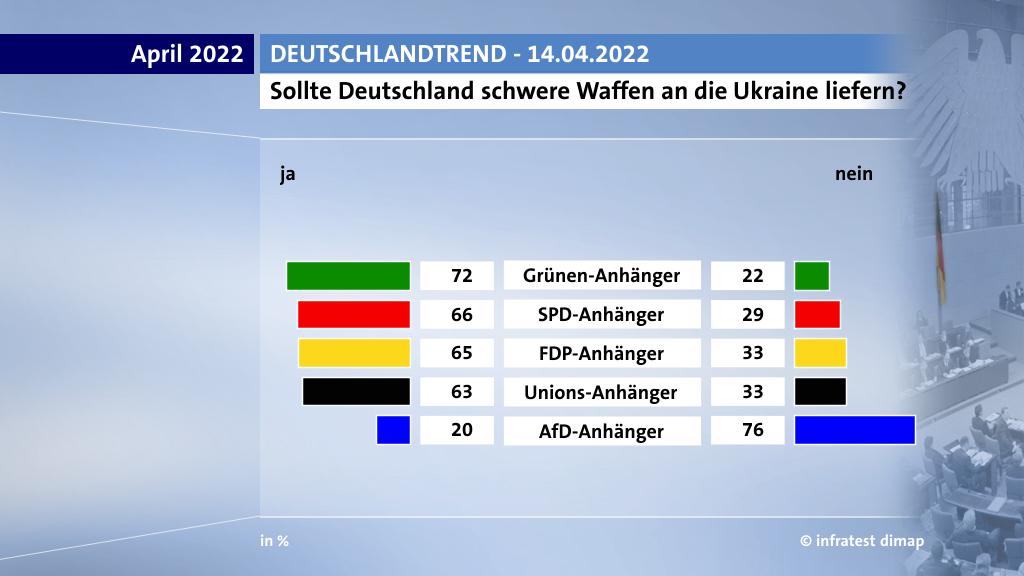
Of all the parties represented in parliament, it was the Greens that was most critical about this policy in the last two decades. It was the Greens who, from the very beginning of his presidency, repeatedly and most strongly spoke out against Putin, his criminal warfare and suppression of human rights. It was the Greens who criticised North Stream 2 the most. It is the Greens, whose supporters today are most strongly in favour of a ban on imports of Russian gas and oil[1], and most strongly advocate the supply of heavy weapons to Ukraine.[2]
Guess whose judgement I trust the most, both with regard to the war in Ukraine and for a future energy policy.
[1] https://www.tagesschau.de/multimedia/bilder/crchart-7833~_v-...
[2] https://www.tagesschau.de/multimedia/bilder/crchart-7837~_v-...
Re: Why Germany won’t keep its nuclear plants open
#188Earlier quoted context omitted.
> require quite a lot of conditions that simply are not met by many older buildings. Such as?
I think the biggest ask the article is making in an unreasonable way is to somehow find millions of contractors who can actually go home by home and refit the heating systems in a timescale that'd actually be relevant for the war in ukraine. If Germany wanted to switch everyone over to a different kind of lightbulb they'd need to ensure the production capacity to make the new bulb exists and set up logistics to actua…
Re: Why Germany won’t keep its nuclear plants open
#189Earlier quoted context omitted.
> This risk is hard to quantify, it can materialize in unexpected ways (just like nobody expected Chernobyl or Fukushima) and it will cost such rich and densely populated country as Germany trillions. You know everyone who died from Fukushima died from the evacuation not radiation, right? You know more people are killed in Germany every year from coal pollution than have died as a result of Chernobyl in total?
So what if they died of the evacuation, the nuclear accident caused the evacuation. I find this argument mind-boggling, because people didn't die directly of radiation exposure it is somehow ok that Japan had to evacuate a significant population? If this would happen e.g. to Krümmel you'd have to evacuate the second largest city in Germany, that's 2 million people.
I wasn't aware that the nuclear accident caused massive flooding (the person you're responding to is saying that everyone died from the tsunami, not the radiation). Your point still stands about large economic costs to exclusion zones, but I don't feel you responded in good faith. As per the article (and as someone who actually did study nuclear physics), the risk of creating an exclusion zone in Germany is extremely small. Last I checked German doesn't have many earthquakes nor large bodies of water that could lead to danger from tsunamis. Germany seems fairly stable from an environmental standpoint, so the only real causes for a nuclear disaster would be from a freak accident. Considering we've learned a lot about safety in the last decade (and way more since Chernobyl), this risk is pretty small.
Re: Why Germany won’t keep its nuclear plants open
#190So the entire article, and also the discussion here skips over a very simple point: Nuclear power plants provide baseline loads because they can't be turned on and off at a whim, while gas power plants can scale up and down quickly to handle daily load peaks. Looking at yearly consumption graphs completely ignores the reality of the grid. Where do you get electricity from for the peaks in the morning and the evening,…
> Where do you get electricity from for the peaks in the morning and the evening, when solar is still weak and wind may or may not be blowing? Not nuclear, for sure. Stable supply is the answer to unstable demand. That means nuclear is the answer to this problem. If that baseline isn’t high enough, then they need more nuclear - not less.
Nuclear is really bad at reacting to swings in demand since it's ramp up and down speed is limited. Adding more slowly changing sources to a network makes it even worse at reacting to those swings, Risking net stability which curiously has increased with introduction of more renewables to the network.