Live data from Hacker News

What made the NES so interesting?

nicole.express

71–80 of 127 posts

Re: What made the NES so interesting?

#71

There were so many things the NES did right. For instance the color palette was designed with aesthetics in mind: it had 56 colors that you'd want to use, compared to the 216 colors of the web safe palette that must have been chosen by a physicist because 60% of them make me want to puke. The Atari 400 and 800 had an elaborate system for game-friendly video that couldn't touch what the NES did with tiles. They did am…

The NES colors are nice but not sure how "designed" it was - to get colors from an NTSC or PAL signal is phase shifting, so if the colors are in rainbow order (which they are) then each color is simply a phase shift of some amount and the "design" is which amount of phase shift. I was always curious why they left 8 colors black and why black and white was duplicated in the palette, though. Something like the C64 whic…

> Something like the C64 which used a "resistor bank" to pick the colors actually had thought into the individual choices of each color.

According to Bob Yannes, there wasn't much thought that went into the C64 color selections. From https://www.pepto.de/projects/colorvic/2001/ :

  Subject: "Re: VIC-II colors"
     From: Robert 'Bob' Yannes
       To: Philip 'Pepto' Timmermann
     Date: 27.09.1999

  I was involved with the development of the VIC-II, however the actual implementation of the design, including the Color Palette, was done by someone else. I have forwarded your message to him, but it is up to him if he wants to respond.

  I can tell you that the design was based on the principle that adding a sine wave of a particular frequency and amplitude to an inverted version of the same sine wave at a different amplitude produces a phase-shifted sine wave of the same frequency. The amount of phase shift is directly proportional to the amplitudes of the two sine waves.

  The VIC-II used the 14.31818 MHz master clock input (4 times the NTSC color burst frequency of 3.579545 MHz) to produce quadrature square-wave clocks. These clock signals were then integrated into triangle waves using analog integrators. The triangle waves were then integrated again into sine waves (actually rounded triangle waves, but good enough for this application). This produced a 3.579545 MHz sine wave, inverse sine wave, cosine wave and inverse cosine wave.

  An analog summer was used to create the phase-shifts in the Chroma signal by adding together the appropiate two waveforms at the appropiate amplitudes. The Color Palette data went to a look-up table that specified the amplitude of the waves by selecting different resistors in the gain path of the summer. The end result was that we could create any hue we wanted by looking at the NTSC color wheel to determine the phase-shift and then picking the appropiate resistor values to produce that phase-shift.

  Color Saturation was controlled by scaling the gain of the summer. When we picked the resistor values to determine the output phase-shift, we also scaled them to produce the desired output amplitude. Luminance was controlled using a simple voltage divider which switched different pull-down resistors into the open-drain output. We could create any Luminance we wanted by choosing the desired resistor value.

  I'm afraid that not nearly as much effort went into the color selection as you think. Since we had total control over hue, saturation and luminance, we picked colors that we liked. In order to save space on the chip, though, many of the colors were simply the opposite side of the color wheel from ones that we picked. This allowed us to reuse the existing resistor values, rather than having a completely unique set for each color.

  I believe that Commodore actually got a patent on this technique. It was certainly superior to the Apple or Atari approach at the time, as they ended up with whatever colors that came out — ours allowed the designer to freely select Hue, Saturation and Luminance.

  Since all of this was based on selecting different resistor values and resistance varied from chip lot to chip lot, there was variation from one Commodore 64 to another. It wasn't as bad as it could have been though, since all of the Chrominance selection was based on resistor ratios, which could be kept constant even if the actual resistor values varied. Luminance was more of a problem. A trimmer resistor should really have been used to pull up the output. This would have allowed the Luminance to be adjusted for consistency from unit to unit, however Commodore didn't care enough about consistency to bother with adjusting each unit.

  —
  Robert 'Bob' Yannes
Re: What made the NES so interesting?

#72
post #55

Earlier quoted context omitted.

Yes, but at a higher refresh rate - 525 horizontal scan lines @ 60hz vs 625 @50hz. Refresh rate is linked to mains frequency.

And pal snes conversion of street fighter 2 was really slow! As were lots of games. All my retro hardware is NTSC now (I live UK which was pal territory). Though UK developers new what they were doing an optimised properly for pal. Goldeneye looks better on pal for example.

SF2 was not only slow but letterboxed and squashed down too. Unfortunately it wasnt optimised for PAL.

Australia is PAL too. I remembered waiting for this game and being so disappointed. It was $135 also which was a lot. Modern games are like $70.

Re: What made the NES so interesting?

#73
post #51

To me the NES is the precursor of Apple and Google with closed systems that preys on the discovery of the home computer and creates waste (cartridges) when software can be written to re-writeable media (cassettes, floppies and network). C64 and Amiga are the precursors of the Raspberry, that while not 100% good; they atleast leave you in charge of your machine to a larger extent: http://move.rupy.se/file/commodore.pn…

Floppies and cassettes had slow access times and lacked the ability to use mappers to extend functionality. Pluggable ROM cartridges had a lot of advantages and were used by computer systems of the era too.

Besides, Nintendo did have the Famicom Disk System in Japan, which used rewritable floppies.

Re: What made the NES so interesting?

#74

> The NES is in some sense a composite-only system. While there is an RGB mod, it's quite invasive[...] This is something that a lot of even very plugged into retrogaming people don't really get about the NES and RGB mods. I think it's very counterintuitive for people now that there is no part of the system that operates in actual 'color' information. The NES' video output is composite from start to finish[1], with p…

Upscaling 2.0 seemed to be the hot tech topic at GDC 2022 ;)

https://community.amd.com/t5/gaming/amd-fidelityfx-super-res...

What made the NES so interesting? It was the games, pure and simple! I've got probably 20 versions of classic arcade Q*Bert. But the iteration with the "purest" design? My goto to actually play when I want to go for a personal high score? Hands down, it's the NES.

Re: What made the NES so interesting?

#75
post #26

> The NES is in some sense a composite-only system. While there is an RGB mod, it's quite invasive[...] This is something that a lot of even very plugged into retrogaming people don't really get about the NES and RGB mods. I think it's very counterintuitive for people now that there is no part of the system that operates in actual 'color' information. The NES' video output is composite from start to finish[1], with p…

In France we had a different color system (SÉCAM), while the other european countries were in PAL, but French TV were required to have a Péritel/SCART entry by law, offering RGB input. So the french NES was basically the european PAL version with an extra PAL to RGB converter.

Wait a minute: we had SCART in the Netherlands too, but it supported both composite (CVBS) and RGB.

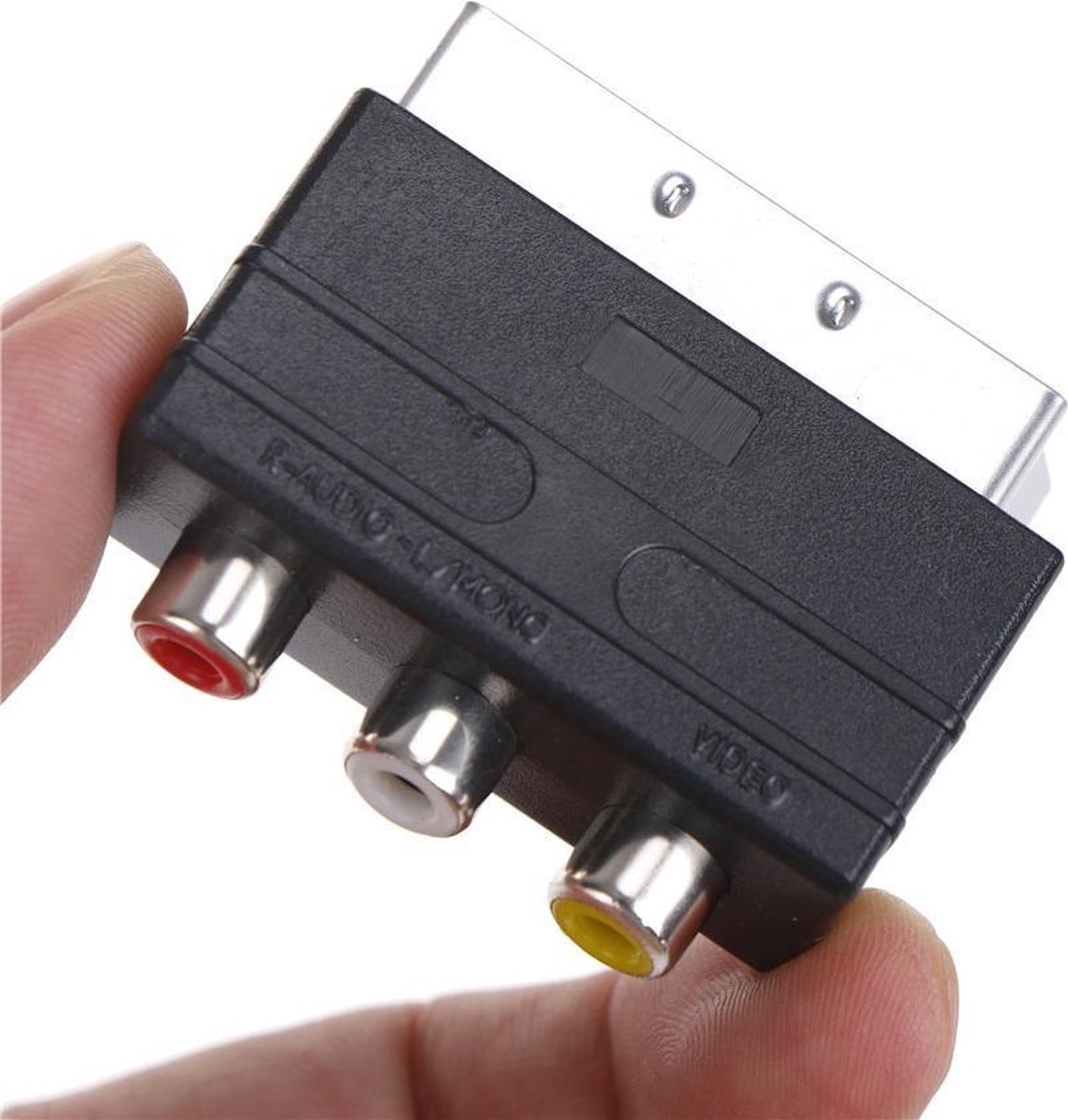
In fact, if you had a composite device (with the yellow, red and black plugs), you could just get one of those cheap passive adapters to hook it up to SCART: https://media.s-bol.com/mwVL1yR45z6E/1144x1200.jpg

IIRC our childhood (Philips) TV had two SCART inputs: one supported both RGB and CVBS, the other only CVBS.

Re: What made the NES so interesting?

#76
post #50

I am not sure why this webpage is so hard to screenshot, but my main screenshot service can't do it (i get a 404 after it returns the URL), and in firefox directly telling it to screenshot loses a significant amount of text. I cannot complain enough, this is a simple web page. there is absolutely no reason i cannot capture a static image of it. beyond that, i sort of enjoyed a deeper dive, but the subject matter was…

You can do that with the Capture Screenshot command in DevTools https://swimburger.net/blog/web/hidden-gem-take-screenshots-...

On Firefox you can just right-click > Take Screenshot.

Re: What made the NES so interesting?

#77
post #57
post #55

Earlier quoted context omitted.

Yes, but at a higher refresh rate - 525 horizontal scan lines @ 60hz vs 625 @50hz. Refresh rate is linked to mains frequency.

>Refresh rate is linked to mains frequency. It doesn't have to be. Japan has a split power grid with 50Hz in the east and 60Hz in the west, but television frequency is 60Hz on both sides. https://en.wikipedia.org/wiki/Electricity_sector_in_Japan#/m...

You could also play PAL on 60Hz in the US with the right equipment. However, playing the video system on the opposite mains always had a weird flicker in the playback as the native power and playback just didn't line up.

It is similar to the effect that could be seen when using native lighting in a 50Hz mains country while recording video in NTSC. Not everyone would notice, but when you sit in an edit bay working with that footage all day, you notice everything.

Then again, some people don't notice the stuttering that is the result from 24->29.97 either. The modern 4th frame repeat drives me up the wall.

Re: What made the NES so interesting?

#78
post #51

To me the NES is the precursor of Apple and Google with closed systems that preys on the discovery of the home computer and creates waste (cartridges) when software can be written to re-writeable media (cassettes, floppies and network). C64 and Amiga are the precursors of the Raspberry, that while not 100% good; they atleast leave you in charge of your machine to a larger extent: http://move.rupy.se/file/commodore.pn…

The Amiga had analog RGB output that was used by everyone because high resolution text (640x200) was unreadable with the composite output. Composite was okay for playing video games (inevitably 320x200), but few actually did that. One RGB monitor that worked (and much better than composite) was good enough.

That was in August 1985, about three years after the C-64. The Atari ST came out a few months earlier, and had excellent monitors, the problem was you really wanted two of them, one for high resolution (640x400), non-interlaced black and white, and the other for RGB low resolution (320x200) color. They were not compatible with each other.

In the PC world you started to see digital RGB EGA with 64 colors about this time, but until VGA monitors came out there wasn't really anything to compare to the Amiga / Atari ST in the color department. VGA was released in 1987, and of course took a few years to become common. An amazing number of PC video games were still CGA (four color low res digital RGB) at the time, but that of course all changed a few years later when VGA became standard.

Re: What made the NES so interesting?

#79

If you wanted to publish a game for the NES, you had to go through Hiroshi Yamauchi, the president of Nintendo. He had the final veto power at the moment of publishing a game. If he didn't like the game, the game would not get published no matter what. This process ensured that the NES had only quality games. Yamauchi was 7th dan in Go, and at one point was the richest man in Japan.

Some companies did manage to produce NES compatible cartridges without NES permission, but it wasn't easy. They had to work around or defeat the lock out chip designed to prevent that.

Re: What made the NES so interesting?

#80

Earlier quoted context omitted.

“I am Error” is a book from the Platform Studies series, to which the extremely famous and well-regarded “Racing the Beam” also belongs - an awesome analysis of the technical features and restrictions of the Atari 2600/VCS and how they influenced the games that defined the console.

Every one of the Platform Studies books that I’ve read is a gem — I think I’ve only missed a couple of them.

I’m having a hard time getting into “Spoony Bards…” because it spends so much of the first couple chapters trash-talking the SNES in generic terms.
Post reply on HN