Live data from Hacker News

The Framework Laptop

frame.work

331–340 of 1001 posts

Re: The Framework Laptop

#331
post #109

What led framework to choose Intel CPUs over AMD ones? Did it simplify the design of the system?

A modular laptop that doesn't offer an AMD module? So, so close.

Hopefully the AMD board will ship late Summer 2021. Lack of AMD support is a showstopper for some.

Re: The Framework Laptop

#332
post #171
post #153

Hi, When I saw this announcement I was hoping that I could finally buy a laptop with a good trackpad, with buttons, and a good keyboard again. But looking at the announcement, it seems like trackpad and keyboard quality are far from anyone's mind, and it just looks like the laptop is copying Apple stylistically like everyone else, which means it is going to be kind-of unusable and I won't want to use it. (Especially…

Keyboard and touchpad quality were high priorities for us. We built in 1.5mm key travel, which is unusually high for a <16mm thick laptop. The touchpad surface feels great and performs well. I hear you on the touchpad buttons though. That is something we've done a little exploration on. The touchpad is an end-user replaceable module, but we can't commit to a three button version materializing just yet.

Key travel isn't everything. The layout is important as well.

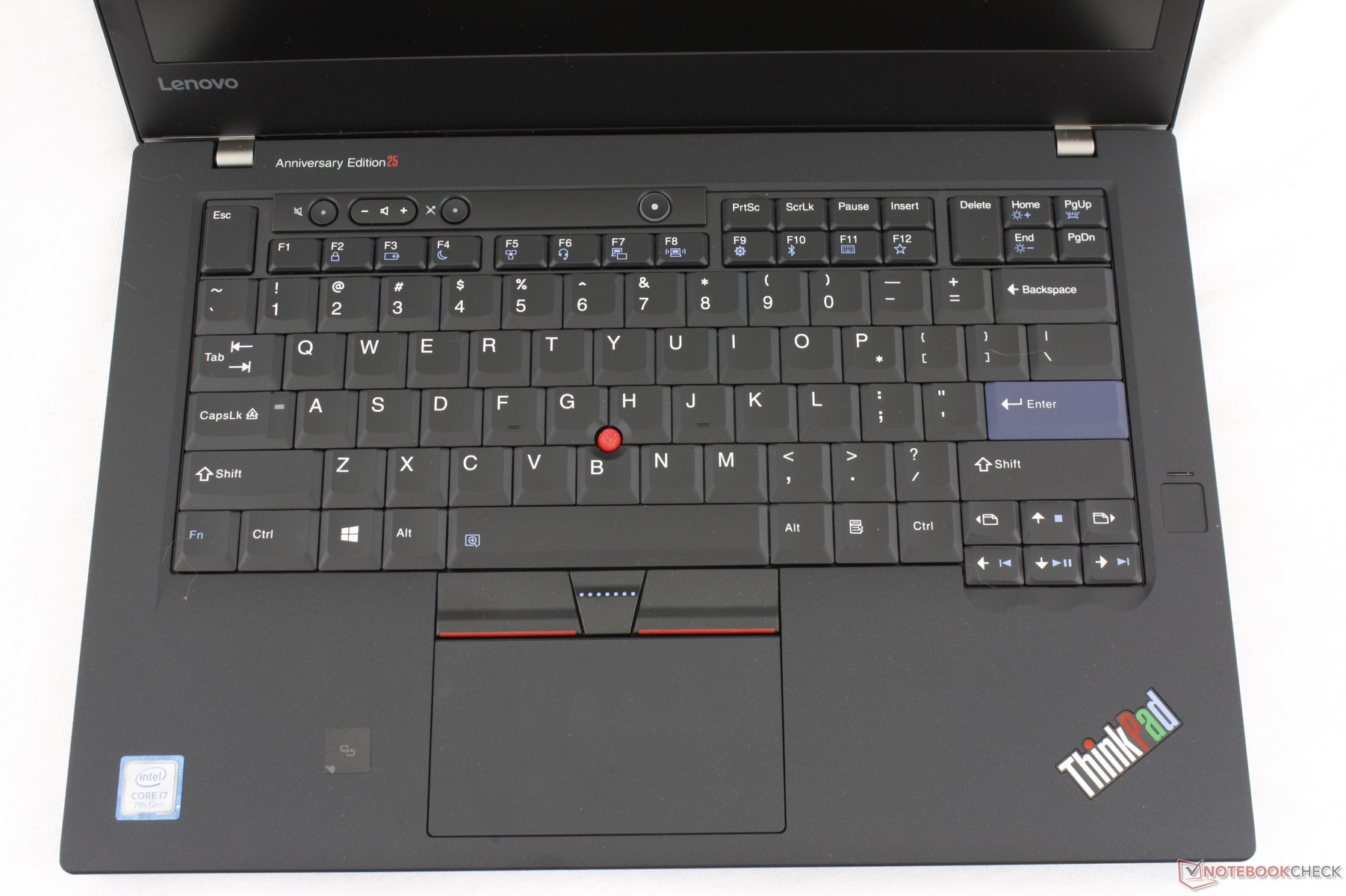
This is the best layout humanity ever invented: https://www.notebookcheck.net/fileadmin/_processed_/c/0/csm_...

Classic arrow keys, separate volume buttons, separate back/forward/pageup/pagedown, F1-F12 as the primary functions, …

Re: The Framework Laptop

#335
post #117
post #62

Nice project. However I see no Gigabit ethernet port. USB dongle for the one of us that prefer the performance and the predictability of a cable over Wi-Fi's whims?

A Gigabit Ethernet Expansion Card is on our roadmap, though it is going to look a little goofy compared to the other cards, since it won't fit entirely in the current envelope.

I'll second the parent's request for an RJ45 Ethernet port. It can't possibly look any goofier than an Expresscard Ethernet adapter!

One easy way to get it to fit would be to make the module thicker. To avoid the whole thing sitting at an angle in the existing envelope, you'd want to replace the little adhesive-secured feet with taller, screw-secured feet to give it clearance.

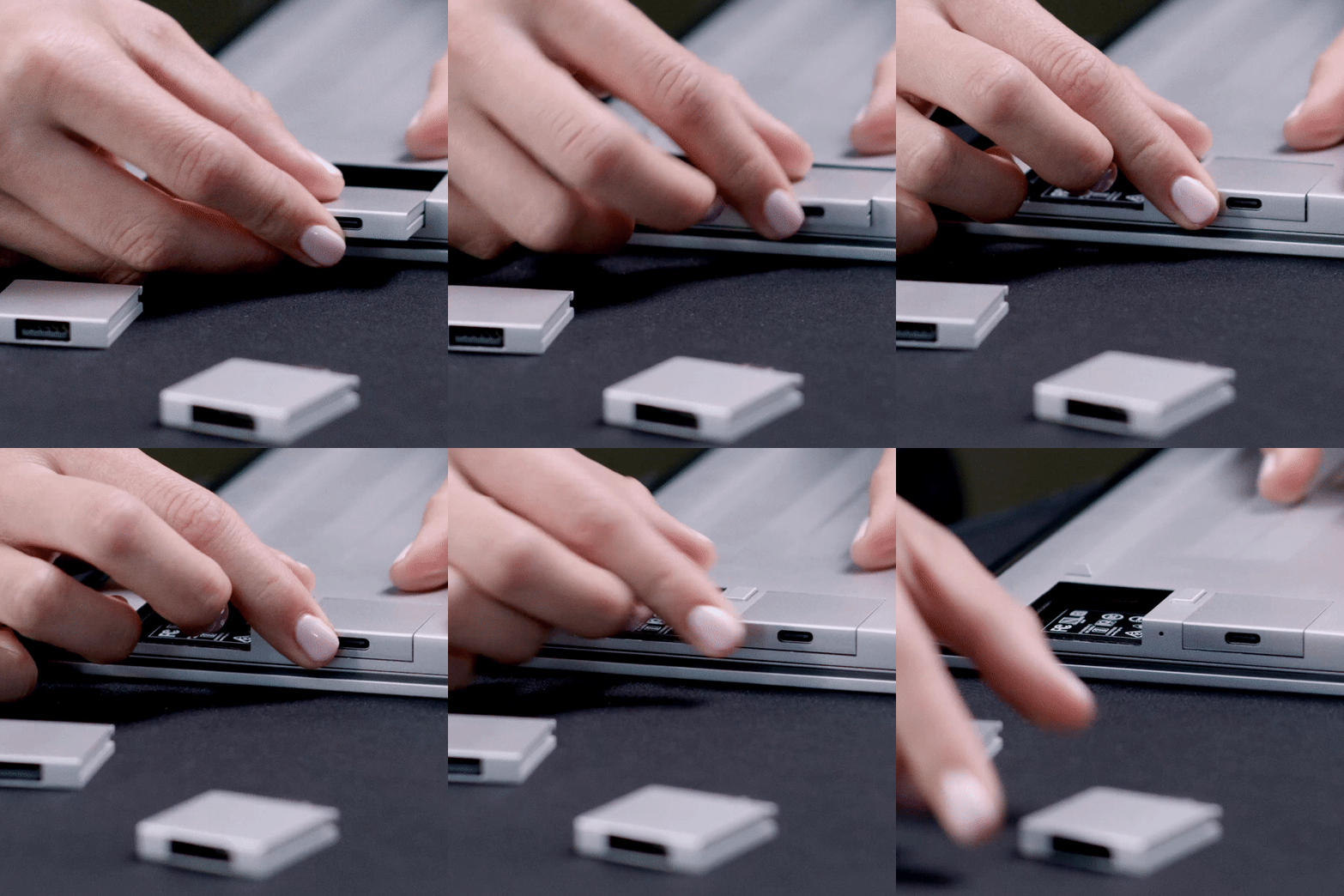
I'm a controls engineer and am constantly connecting to PLCs and robots in environments that don't do wireless networking. I have to deal with all kinds of legacy hardware manufacturer's IDEs and real-time protocols that work poorly with USB dongles. Of course, your expansion cards are really USB dongles, and appear to allow tool-less hot-plugging (https://cdn.arstechnica.net/wp-content/uploads/2021/02/expan...). I'd love to see an optional screw to retain the card, and wouldn't mind shutting the laptop down and rebooting it, especially if it meant it showed up in /etc/network/interfaces all the time and never needed to be kicked out of sleep with `ip link set dev eth0 up`.

Other desirable expansion cards would be a VGA port or DB9 serial port; would those fit?

I fear that your efforts to reach beige-box compatibility are really hamstrung by the obsession with thin and light laptops; there's no way (for example) that you'll fit my preferred keyboard (Lenovo 45N2211, out of a T420) and still have the hinges close because the enclosure is so thin. I hope you succeed, but I especially hope you produce a 15" workstation version that's 10mm thicker.
Re: The Framework Laptop

#336

Earlier quoted context omitted.

Yes, I remember being particularly disappointed when Google's Project Ara [1] to create a modular mobile phone was shelved. It seemed like a fantastic idea, and I truly thought that Alphabet/Google had the cash/clout - and will - to deliver. Still, I haven't lost my optimism just yet. As you say, good luck to Framework with the laptop project. [1] https://en.wikipedia.org/wiki/Project_Ara

I feel like building a modular laptop is much easier than a modular phone. You don't have to deal with the hardware enumeration problems on x86 as you do with ARM Already many laptops you can easily swap parts like the HDD/SSD, Battery and RAM, and even the GPU (to an extent) if its using a standard like MXM. Building a laptop with more modular parts using existing standards (looks like from the images the modular pa…

Yep, designing custom ssd, gpu, ram pcbs will be of course more expensive, and take time.

USB 3, and Thunderbolt are also complete disasters power consumption wise, not to say that Type-C, and Thunderbolt chips cost arm, and a leg.

Re: The Framework Laptop

#337

Earlier quoted context omitted.

They've got the street cred but producing and marketing hardware is so damn hard. Ouya and the Essential phone are two cases that immediately spring to mind where the founding teams were credible, but the products ended up being massive flops. Good luck to them anyway. The idea is cool and I think if I were on the lookout for a Linux laptop and they delivered on their quality promise, I'd consider them.

Yes, I remember being particularly disappointed when Google's Project Ara [1] to create a modular mobile phone was shelved. It seemed like a fantastic idea, and I truly thought that Alphabet/Google had the cash/clout - and will - to deliver. Still, I haven't lost my optimism just yet. As you say, good luck to Framework with the laptop project. [1] https://en.wikipedia.org/wiki/Project_Ara

Project Ara seemed quite impractical/naive at the time. Myself (and some people I trusted) dismissed it as yet another Google flight of fancy.

This thing though, I can kind of see it working.

Basically: The pressure to minimize volume + weight is way too high for a mobile phone to become modular. Then add recent requirements like IP68 ratings.

In a laptop there's still some breathing room for modularity. And noone expects a laptop to survive an accidental drop into a pool.

Re: The Framework Laptop

#339
Yeah, let’s pretend that firmware isn’t a thing and RYF certification isn’t important. /s

I only care about repairability when it affects a product’s longevity. And if the drivers are proprietary and will be unsupported after the warranty runs out, who cares if I can repair the hardware? It’s useless anyway if I can’t get security updates to the thing.

Re: The Framework Laptop

#340

Earlier quoted context omitted.

The article says there's a linux/no-os option

But only if you order the kit, not if you get it preassembled I believe.

Nothing stopping just installing linux on the preassembled one when you get I though, I assume. Although I guess you may have to pay for a Windows license in that case...
Post reply on HN