Earlier quoted context omitted.
The buried lede from that article: > But Japan relies on coal for more than a third of its power generation needs. And while older coal plants will start retiring, eventually reducing overall coal dependency, the country still expects to meet more than a quarter of its electricity needs from coal in 2030. So this decade Japan's reliance on coal power will roughly drop from 33% to 25%. To provide even more context, Ja…
> Japan's energy consumption has been falling since before the 2011 disaster That is really surprising. Can this be traced back to a cause. Some industry that closed down or did appliances and lighting got that more efficient?
https://d33wubrfki0l68.cloudfront.net/0784d9d63336606d4ca025...
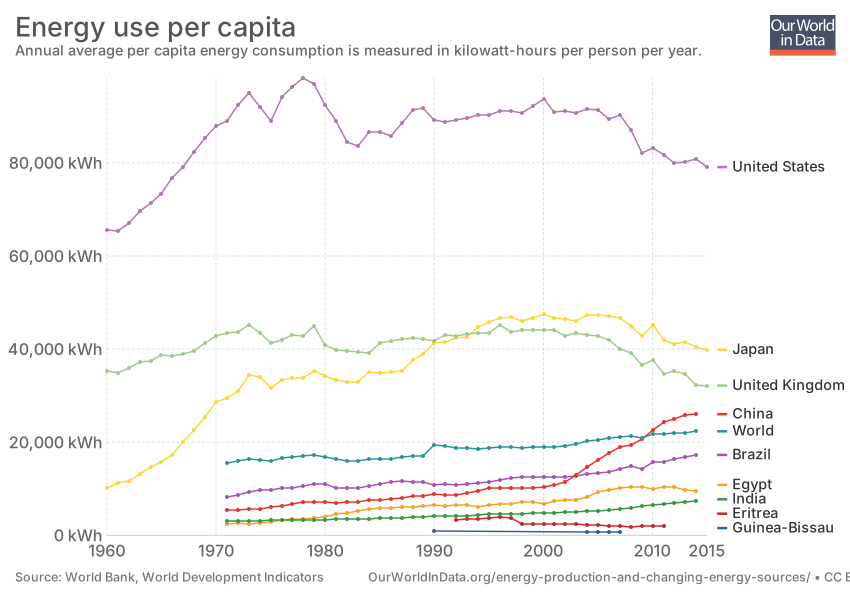
The usual explanation given is that these countries have outsourced their energy-intensive industries to other countries that have a corresponding increase in energy use, but there is reason to be optimistic even when factoring in "imported emissions" of CO2, in the UK, for example:
"While UK carbon dioxide (CO2) emissions peaked in 1972, once we consider imported emissions – such as when the UK imports products that are manufactured abroad – UK emissions peaked in 2007."[0]
Of course, peaking emissions isn't the same as peaking energy usage, but it does assuage some of the concerns about outsourcing our manufacturing to countries with "dirtier" energy like China.
[0] https://www.ons.gov.uk/economy/nationalaccounts/uksectoracco...