Note to the people asking why this matters: Legally, if you take a position in federal court on X (i.e., that it's okay to ban external transactions by apps using your app store), and you are found to be doing not-X in an analogous situation (i.e., setting up external transactions to avoid fees in your competitors' app store), the court can rule against you in the original case...and then sanction you and your lawyer…
Wouldn't it all depend on the contracts/agreements in place? If Google has a different agreement than Apple, why would the same terms apply?
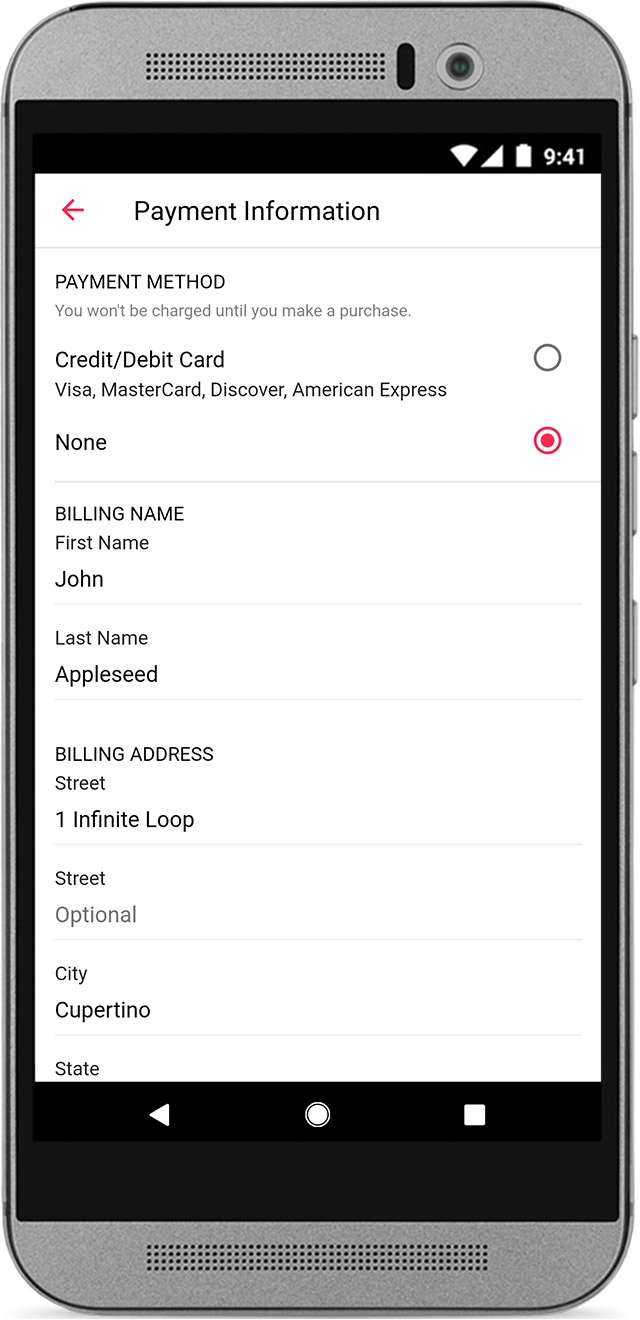
Apple Music on Android requires its own payment details to avoid Google 30% cut
51–60 of 408 posts
Re: Apple Music on Android requires its own payment details to avoid Google 30% cut
#52I don't understand why people are putting moral dimensions on this business conflict. If you don't like Apple's platform or business practices, don't use it. All the users and developers are there by choice. Their alternatives were worse. And Apple didn't make them worse. I was active in the mobile development world starting in 1999. It was awful. Would I like it if Apple took a lower cut? Sure. I would prefer a 5% c…
This isn't an option! There are no alternatives. Most people do computing on their smartphones today. Apple has prevented web from being a first-class native construct on their devices. There's no technical reason web couldn't have a native-like experience with native windowing, sensor access, persistence, multithreading, and WASM speed. Google and Apple just don't like that software distribution idea because the gravy train they have set up is so sweet.
> All the users and developers are there by choice.
I strongly beg to differ.
> Their alternatives were worse.
Thanks largely to Apple.
> Do I want world's governments coming in and imposing more terms on these markets? No.
Thousands of us do.
The answer is a robust web distribution model where web gains native capabilities (and sandboxing). First class web apps would be portable between Apple and Google and there would be zero gatekeeping tax or threat of removal for doing something either company doesn't like.
Mozilla needs to get on this. And we need to harp on our legislators to make it happen. It's how all of this should have evolved in the first place.
Think about all the wasted human and innovation capital it takes to implement the same app twice for two different platforms! It is so incredibly expensive to maintain two wholly different apps. And then they have the gall to take 30% on top. The real cost is far steeper.
I'm not mad. I'm enraged. It's such a waste and we should be building more innovation instead of jumping through hoops.
Re: Apple Music on Android requires its own payment details to avoid Google 30% cut
#53Google sets its own policies for its own app store. If Google approved this, all it means is Google approved it.
Apple similarly sets its own policies for its own app store. It's totally free to set totally different policies, and disapprove of things that Google approves.
I still think Apple's policies have huge problems, but this particular example is apples and oranges, unfortunately.
Re: Apple Music on Android requires its own payment details to avoid Google 30% cut
#54> Developers offering products within a game downloaded on Google Play or providing access to game content must use Google Play In-app Billing as the method of payment. Developers offering products within another category of app downloaded on Google Play must use Google Play In-app Billing as the method of payment, except for the following cases:
> Payment is solely for physical products
> Payment is for digital content that may be consumed outside of the app itself (e.g. songs that can be played on other music players).
That second note is critical here and the example quite literally describes the exact situation here as an exemption.
[1]: https://play.google.com/about/monetization-ads/payments/
Re: Apple Music on Android requires its own payment details to avoid Google 30% cut
#55Note to the people asking why this matters: Legally, if you take a position in federal court on X (i.e., that it's okay to ban external transactions by apps using your app store), and you are found to be doing not-X in an analogous situation (i.e., setting up external transactions to avoid fees in your competitors' app store), the court can rule against you in the original case...and then sanction you and your lawyer…
Can you link to something that goes into more details about this principle, or give us some search terms? Stated as broadly as you have done, it doesn't sound right to me.
More generally, the thing known as "common law": https://en.wikipedia.org/wiki/Common_law Note that "common law" does not mean "law that is common", at least not on an international scale; it is a specific legal system. As the Wikipedia article says, there are several others.
A super super high-level summary is that common law systems take more account of intent and precedent, whereas civil law systems tend to interpret the law exactly as written. A common law judge is more able to look at a litigant and take into account any sort of hypocrisy of their positions whereas I think a civil law judge in this situation would be more likely to simply take the case as is without such external considerations. But, let me again emphasize, that's a super-high level summary.
Re: Apple Music on Android requires its own payment details to avoid Google 30% cut
#56Earlier quoted context omitted.
Yes absolutely. As with the exceptions on iOS (Netflix is outside the iOS payment system) i suspect it's a case that certain apps are large enough that kicking them off the store for not paying the 30% tax isn't feasible. >Developers offering products within a game downloaded on Google Play or providing access to game content must use Google Play In-app Billing as the method of payment. https://play.google.com/about/…
Actually, there seems to be an exception that sounds relevant here: > Developers offering products within another category of app downloaded on Google Play must use Google Play In-app Billing as the method of payment, except for the following cases: > . Payment is solely for physical products > . Payment is for digital content that may be consumed outside of the app itself (e.g. songs that can be played on other musi…
Re: Apple Music on Android requires its own payment details to avoid Google 30% cut
#57Note to the people asking why this matters: Legally, if you take a position in federal court on X (i.e., that it's okay to ban external transactions by apps using your app store), and you are found to be doing not-X in an analogous situation (i.e., setting up external transactions to avoid fees in your competitors' app store), the court can rule against you in the original case...and then sanction you and your lawyer…
Wouldn't it all depend on the contracts/agreements in place? If Google has a different agreement than Apple, why would the same terms apply?
Re: Apple Music on Android requires its own payment details to avoid Google 30% cut
#58Isn't taking payment this way against the terms of one or both of the app stores?
Re: Apple Music on Android requires its own payment details to avoid Google 30% cut
#59Something that they don’t allow Spotify to do on their own platform - how convenient!
Re: Apple Music on Android requires its own payment details to avoid Google 30% cut
#60Given the strong emotions around the topic, I've been a bit afraid to ask this question - is what Apple does really that different than traditional retail? In FMCG there are difficult hurdles to jump over to get on the store shelves. The stores don't have an obligation to put anyone's product on the shelf. They can also module what the cut of the revenue is. I'm not sure I have an opinion on what Apple is doing, but…
I think the difference here is that Apple is the only retailer for someone to install an app onto an iOS device. It prohibits anyone else from setting up a retailer, through policy-based (not technical) restrictions. You cannot install an app on an iOS device, except from their store. Apple won't let you install an alternative store. Therefore their app store is a monopoly store, and should be regulated as such. (Is…