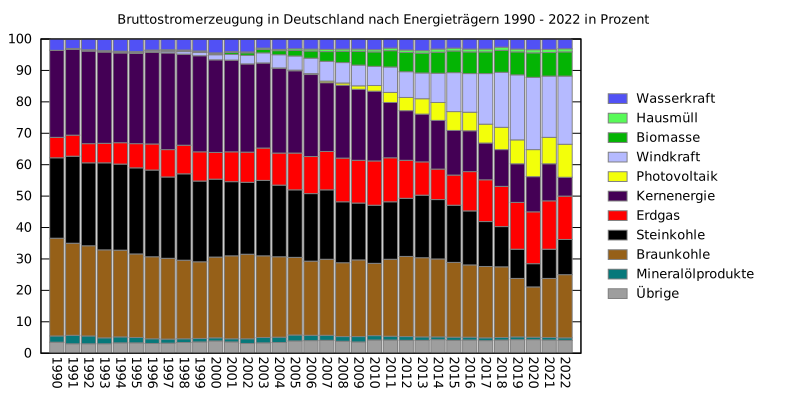
we would sit on a bunch of nuclear waste we would not know what to do with. France does not scale with nuclear to the rest of Europe. Basically France is bound to nuclear because it needs the technology for their nuclear weapons and nuclear powered submarines ... otherwise it would phase out this costly technology.
Germany helps the world more, since renewable energy scales much easier and is cost effective, low-danger, ... that's why exporting energy efficient systems and renewable energy production technology is the way to go. Whether we use coal for a decade longer or not does not matter much in the larger picture. We need to develop scalable renewable technology and deploy it, for billions of people. Nuclear is too slow and too risky. If we look at the world-wide numbers for electricity production from nuclear, its mostly stagnating and it will be tough in the coming years when aging reactors will be taken off grid to sustain the level of production, enhance the life of existing reactors by upgrading them, build storage, have money for both decommision of old reactors and money to build new ones. France will need to invest upwards 100 billion Euro just for their aging fleet ... good luck with that. There is a single new EPR in the works and its expensive and late. With an old design from decades ago. The real battle for emission reductions will not be with 80 mill Germans, but with billions of people in Africa and Asia - where the growth is. We need to develop together with them fast scalable electricity production.
Let me quote the World Nuclear Report (!) from 2019:
* Non-Nuclear Options Save More Carbon Per Dollar. In many nuclear countries, new renewables can now compete economically with existing nuclear power plants. The closure of uneconomic reactors will not directly save CO2 emissions but can indirectly save more CO2 than closing a coal-fired plant, if the nuclear plant’s larger saved operating costs are rein- vested in efficiency or cheap modern renewables that in turn displace more fossil-fueled generation.
* Non-Nuclear Options Save More Carbon Per Year. While current nuclear programs are particularly slow, current renewables programs are particularly fast. New nuclear plants take 5–17 years longer to build than utility-scale solar or onshore wind power, so existing fossil-fueled plants emit far more CO2 while awaiting substitution by the nuclear option. Stabilizing the climate is urgent, nuclear power is slow.