Live data from Hacker News

Kansas City is first major city in U.S. to offer no-cost public transportation

citylab.com

251–260 of 401 posts

Re: Kansas City is first major city in U.S. to offer no-cost public transportation

#251

In Gavin Newsom’s book Citizenville he talked about how, after becoming SF mayor, he discovered that fare collection cost as much as the revenue generated from fares. He started the process of making the bus free but was told by so many advisors that the busses would become “dumpsters on wheels,” from a combination of homeless people using them for shelter and people not respecting services that are free, that the pl…

> fare collection cost as much as the revenue generated from fares

WTF!?

That's freakin insane.

If that's true, why do they keep raising the fares and upgrading the fareboxes!?

If that's true, the SF city gov is effectively collecting money and lighting it on fire as a way to "throttle" bad behaviour on the bus!?
Re: Kansas City is first major city in U.S. to offer no-cost public transportation

#252
post #58

Earlier quoted context omitted.

Arh, is this why why people in US hate public transport and prefer to drive themselves or go by taxi? For those of us living in the "outside" world where public transport are the norm, it is sometimes hard to understand why public transport is treated so differently in US.

> it is sometimes hard to understand why public transport is treated so differently in US. It is worth remembering that the US is much larger than all of Europe, is considerably less dense, and much of it was not well-developed until after automobiles were in wide use. Public transit doesn't make logistical sense in much of the country. It does make sense in some places, of course, but it's less of a part of the nati…

The US is a bit smaller than Europe, actually. 9.8mi sqkm vs 10.2mi sqkm. But yeah, less than half of the population density.

Re: Kansas City is first major city in U.S. to offer no-cost public transportation

#253

Earlier quoted context omitted.

The reasons are: 1. Public transit is very slow relative to cars. This is because the U.S. was mostly built after the invention of the car, which means road capacity is higher, parking is easier, and distances are farther. Even in places with decent public transit, it takes 2-3x as long to get somewhere on public transit as driving a car. 2. The U.S. is a rich country and more people can afford their own car or to ta…

>2. The U.S. is a rich country and more people can afford their own car or to take a taxi/rideshare. Is this true? It was my understanding that a large % of Americans can't even afford to buy a car and have to take out a loan as well as cutting down on other living expenses to have enough money to drive to work.

The US is 4th for cars per capita. Behind San Marino, Monaco, and New Zealand.

Regardless of whether it’s “affordable” to own a car, people do it anyway.

Financing for vehicles in the US is very accessible. There are dealerships who advertise on the radio in my city that they cater to people with “multiple bankruptcies”, and “no drivers license”, with little to no money down.

As a more extreme anecdote:

I had a bad roommate in college who spent almost all of the money from his part time minimum wage job on alcohol. He routinely “bought” a car, didn’t make the payments, and when the tow truck showed up to repossess it, he just went out and “bought” another the next day.

His high-risk loans didn’t have great terms, but he always had a car.

Also, even with some of the lowest required insurance minimums in the developed world, the number of uninsured drivers in the US is huge. There are insurance companies that will give you insurance for a single day too... just long enough to register your car and get a license plate.

Used cars are super cheap in the US too, and in most places, inspection requirements are minimal. You can buy old and ugly but running vehicles for less than a yearly bus pass in many places.

Re: Kansas City is first major city in U.S. to offer no-cost public transportation

#254
post #56

Earlier quoted context omitted.

> Transit investment has a LOT of catching up to do to even get close to the types of subsidizing and handouts we give drivers in every corner of this country. That’s completely untrue. Yes we spend more on vehicles than transit. But way more people drive than use transit. There is not even a comparison. In 2016 federal and state spending on road, transit, and water infrastructure was $416 billion: https://www.bidnet…

I’m not disagreeing with your broader point but none of those studies account for space utilization issues. Transit uses space better due to lack of parking and more density per track. No idea how that impacts the actual dollar numbers but it’s worth noting.

Loss of life impacts the dollar amount.

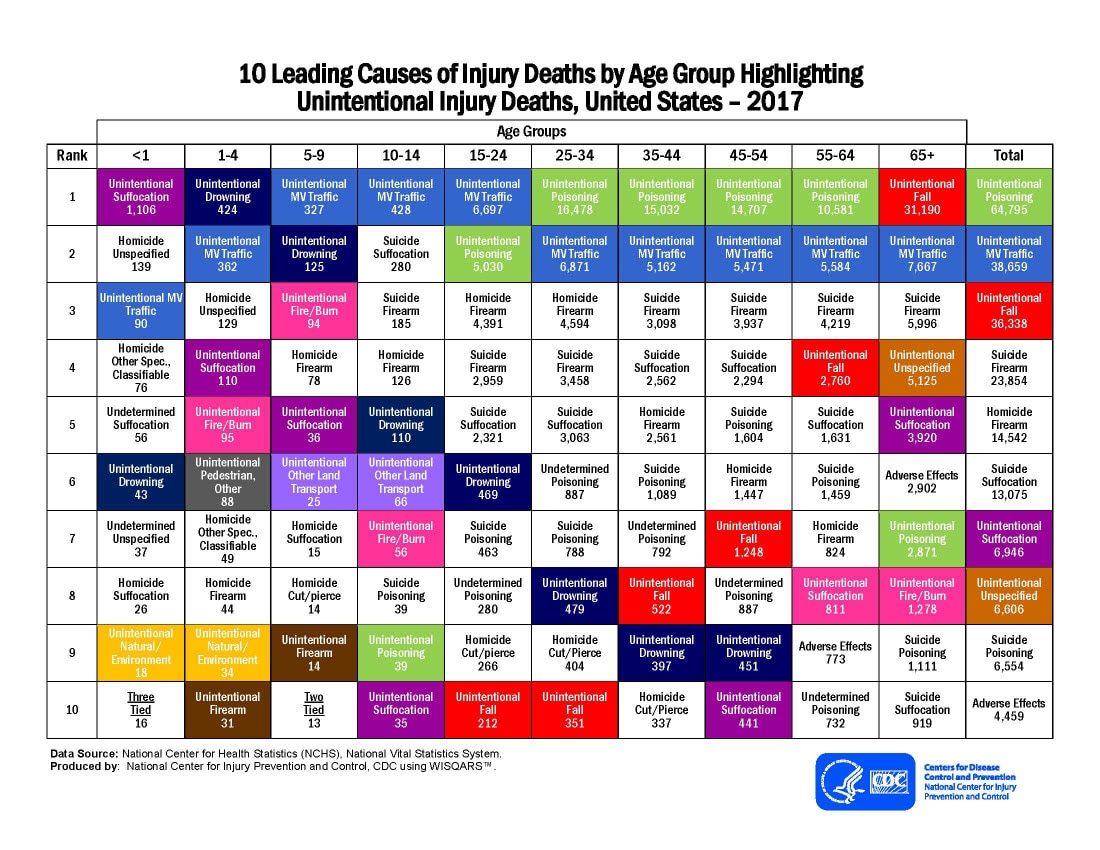
Unintentional injury is the leading cause of death for young people. Of which, motor vehicle accident is the leading cause. It takes second place after age 25 due to overdoses. Young people have the most life left to live.

https://www.cdc.gov/injury/images/lc-charts/leading_causes_o...

Re: Kansas City is first major city in U.S. to offer no-cost public transportation

#255
post #67

Earlier quoted context omitted.

It's not just the free fare - it's the abysmal lack of shelter options and the attempts by cities to criminalize encampments and force people to find somewhere indoors to avoid arrest.

What is it that's preventing us from forcing our politicians to offer better options? I would vote for a solution to this, and even donate money to it, if enough other people were doing the same. Don't most people feel the same about this issue? What systemic problem is preventing a huge mass of people who agree on this from making a meaningful change happen?

If you give everyone houses, it relieves pressure from the housing system which causes rents to go down. Therefore, every landlord opposes actually solving homelessness. Since we have government by the rich and landed, we get their position encoded in policy.

The degree to which reality diverges from this prescription is the degree to which the politicians fear either a) a declining bushiness environment or b) riots

Re: Kansas City is first major city in U.S. to offer no-cost public transportation

#256

Earlier quoted context omitted.

> it is sometimes hard to understand why public transport is treated so differently in US. It is worth remembering that the US is much larger than all of Europe, is considerably less dense, and much of it was not well-developed until after automobiles were in wide use. Public transit doesn't make logistical sense in much of the country. It does make sense in some places, of course, but it's less of a part of the nati…

The US is a bit smaller than Europe, actually. 9.8mi sqkm vs 10.2mi sqkm. But yeah, less than half of the population density.

I'd suggest that "Europe" in this context is really referring to Western/Central Europe, which is the "Europe" that non-European Anglophones tend to think about.

Re: Kansas City is first major city in U.S. to offer no-cost public transportation

#257
post #58

Seattle used to have this for an area of the city. It was called the "Free Ride Zone" - and it had some unexpected consequences. The primary problem is that homeless people would get on the bus because it's warm, and would fall asleep. The busses became rolling homeless shelters. This caused other people to take the bus less, because of public safety concerns, as well as simple quality-of-life issues like unpleasant…

Arh, is this why why people in US hate public transport and prefer to drive themselves or go by taxi? For those of us living in the "outside" world where public transport are the norm, it is sometimes hard to understand why public transport is treated so differently in US.

Look at the history of public transportation in the US. It is notoriously underfunded, and was intentionally starved in favor of pushing car ownership.

Re: Kansas City is first major city in U.S. to offer no-cost public transportation

#258

Earlier quoted context omitted.

The reason for the distinction is that federal highways are interstate. Neither New York nor San Francisco is going to be willing to pay for highways to connect the two cities, but we all benefit from being able to get from one side of the country to the other. But arguing that states and cities have fewer resources is ridiculous. Cities have more resources than anybody -- they're where the highest income people live…

Cities give a lot more in federal taxes than they get, hence the "less available resources." Things like eliminating the state and local tax deduction have also hurt urban areas. If transportation taxes were devolved to the states or the localities then there would be a lot more public transportation funding.

Cities give a lot more in federal taxes than they get, but the percentage of what they give that goes to transportation funding is negligible. >75% of the federal budget is social security, medicare/healthcare and the military, and the next biggest category after that is interest on the debt. Transportation is only ~2%, and almost half of that is things like aviation, railroads and funding for local public transit.

If you want more local money in the cities then there's a lot more to be had by e.g. raising the retirement age than by eliminating federal highway funding, which we still kind of need unless you want to stop maintaining the interstate highways.

Or if you really want to restore state fiscal control, transfer social security and medicare entirely to the states, and make the National Guard constitute more of the military.

Re: Kansas City is first major city in U.S. to offer no-cost public transportation

#259
post #240
post #233

Earlier quoted context omitted.

Unfortunately the answer is not obviously yes. A long time ago I volunteered in a shelter. High (and drink) guests can be more violent and argumentive; fights will break out over people stealing drugs. They pass out and make messes with bodily fluids that have to be cleaned up. They leave dirty needles laying around. Few people, including other guests, want to deal with these and the safety issues and so fewer come (…

Are you saying that you volunteered at a location which expressly served as a safe-injection or maintenance program site? Or a place where addicts clandestinely acquired and used heroin? This discussion is about the former: is it a good idea to have safe injection or maintenance facilities at or near shelters? The consequences you are describing sound to me like symptoms of the latter, which are not widely described…

I volunteered at a shelter in a Boston suburb and the problems were fairly small compared to big cities. This was a while ago so heroin wasn't much of a problem; by far the drug of choice was alcohol with crack a distant second. You cannot allow alcohol in a shelter, it is a recipe for disaster.

The problem with simple solutions is that many people don't want to do what you think they should do. They don't want safe injection, they want their hit now. They want to drink until they pass out. They want the freedom to make bad choices.

Re: Kansas City is first major city in U.S. to offer no-cost public transportation

#260
post #67

Earlier quoted context omitted.

It's not just the free fare - it's the abysmal lack of shelter options and the attempts by cities to criminalize encampments and force people to find somewhere indoors to avoid arrest.

Yup, just earlier this post showed up in my thread with people trying to criminalize sleeping in public areas so homeless can be arrested. https://www.npr.org/2019/12/16/788435163/supreme-court-wont-...

Well they should, shouldn't they. Nobody should be able to monopolize and ruin the commons, whether or not they have a home.

The problem isn't the criminalizing of sleeping in public spaces, it's the lack of publicly funded shelters and publicly funded (incl. mental) healthcare for the homeless.

We should pay to give them a place to sleep, and punish them just like anyone else if they choose to set up camps in public spaces.

Post reply on HN