Live data from Hacker News

China laying tracks for 1,000km/h maglev trains

asiatimes.com

391–400 of 503 posts

Re: China laying tracks for 1,000km/h maglev trains

#391

Earlier quoted context omitted.

For idealized shorter range distances (300~350 miles) I've seen claims of 2x or 2.5x, sometimes up to 5x, but that's using full LCA, not just fuel per passenger mile. The embedded energy in ROW and track are significant, and it doesn't scale well (capacity wise) compared to air travel.

2x/5x in which direction? Link? I mean transport uses so much fuel I would be surprised over the lifetime of a rail line the infrastructure costs are over 95% of the total cost.

In favor of hsr, but still with some big assumptions and limited distances. The fuel factor is huge, but still relatively comparable between modes, and it's all heavily dependent on % of empty seats.

95% is extreme, but it's usually assumed to be in the 55-65% range for generic civil infrastructure, not hsr specific. Compared to that hsr is heavy on concrete and steel, so would be higher.

Embedded rail infrastructure costs are calculated based on near track capacity (amortized over 30-50 years, which is generally correct for civil projects), and typically near train capacity. Empty trains are much worse than empty airplanes, and if ridership isn't projected accurately pulling a train from a route doesn't reclaim any embedded costs of the track or row, while airline infrastructure can be completely reallocated. Multiply a miscalculated capacity by 50 years and it turns into a big number.

I'm about 2/10 so far on finding these papers I'm looking for today, but this one at least addressed ridership implications for the California project in terms of LCA.

https://iopscience.iop.org/article/10.1088/1748-9326/5/1/014...

And arguing for the greater use of LCA in passenger studies:

https://iopscience.iop.org/article/10.1088/1748-9326/4/2/024...

And here's one comparing air to hsr in Europe, showing only 3%-20% gains by shifting passengers from air to rail, based on existing infrastructure, but using LCA assuming a %50 recyclable rate for rail.
https://www.hindawi.com/journals/jat/2018/6205714/

Re: China laying tracks for 1,000km/h maglev trains

#392

Earlier quoted context omitted.

> But is that dramatically worse than blowing up a train moving 50 mph Yes, it is extremely bad when 60-100 ton railcars are being thrown around like toys, at nearly the speed (about 30m/s slower than most .45 ACP) some handguns fire bullets.

I get that, but it seems strictly better than, for example, blowing up a trail full of oil cars.

If the goalposts move as fast as these trains are marketed to move, I'm sure we could find all sorts of things worse than the already terrible tragedy of a deliberate derailment, explosion, or sabotage of a high speed train.

Re: China laying tracks for 1,000km/h maglev trains

#393
post #59

Earlier quoted context omitted.

Currently living in California, and I feel the main opposition to things like this are the constituents. Everyone in the Central Valley will simply vote against whatever California wants to spend money on unless if overwhelmingly benefits them, or “hurts” those in the cities. I know this isn’t the only reason the high speed rail project was canned, but those in the Centra Valley opposed it unless it connected some st…

> those in the Centra Valley opposed it unless it connected some stretches like Fresno Bakersfield together. Why would they support being essentially left behind?

Allowing people to commute from outside for work decreases property value in major cities.

Re: China laying tracks for 1,000km/h maglev trains

#394

Earlier quoted context omitted.

The alternative to being stuck in traffic for hours is flying. A major problem with train systems in the United States (and this is both short and long haul) is that almost the entire country is sprawl - built around the automobile. In dense environments (China and the north-east coast of the US (which has Acela), it's great to take a train into the core -- you beat traffic and are near your destination. In sprawling…

It's not sprawl, it's that the United States, and by extension Canada, have extensive freight rail systems but almost zero exclusively passenger rail networks. In Europe and Asia these networks are generally separated. The American model means that passenger trains need to be built to freight-train safety standards, that a passenger car must be engineered to "survive" a potential collision with a freight train, since…

I recently took VIA rail, from Vancouver to Edmonton. Partway through the trip the attendant announces we'll be 6-10 hours late, which is normal. It hasn't been on time since April. Some daft Europeans with a connecting flight were relieved that we pulled in to Edmonton only 2 hours late! The best in weeks!

Re: China laying tracks for 1,000km/h maglev trains

#395

So, as someone that lived in New York for 6 years and California for 6 years, stories like this are incredibly depressing. The US is the world's largest economy and should be the shining example of amazing infrastructure, high-tech, green cities, and forward thinking policies. California is an especially egregious example in terms of infrastructure investment: If California was a country it would be the world's fifth…

Think of something better.

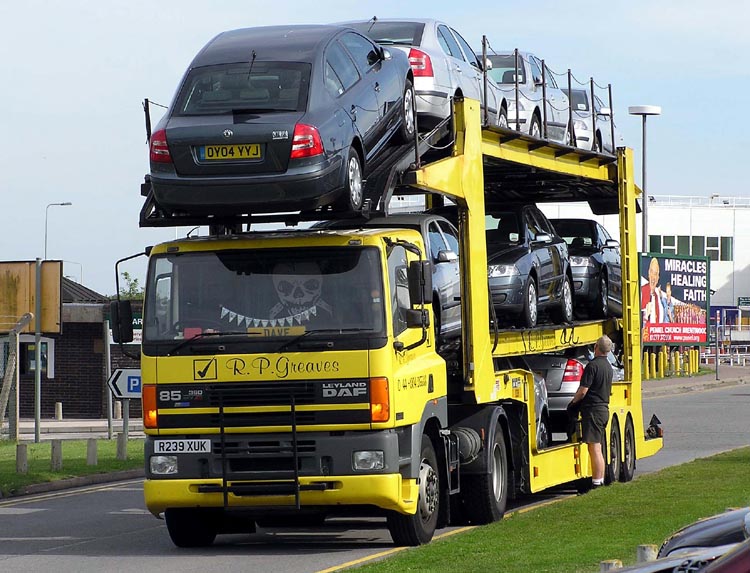
Buy an car transporter, https://upload.wikimedia.org/wikipedia/commons/1/1b/Truck.ca...

Convert it to being an electric trolley bus https://upload.wikimedia.org/wikipedia/commons/thumb/5/5e/Va...

Haul people and their cars around from city to city, saving them gas, letting them work with wifi.

Re: China laying tracks for 1,000km/h maglev trains

#396

So, as someone that lived in New York for 6 years and California for 6 years, stories like this are incredibly depressing. The US is the world's largest economy and should be the shining example of amazing infrastructure, high-tech, green cities, and forward thinking policies. California is an especially egregious example in terms of infrastructure investment: If California was a country it would be the world's fifth…

I understand why there is no high speed rail. I can jump on a plane and get there in 1 hr for about $50-75 each way. I also have a choice of 3 different airports around the bay and similar options in LA. San Diego is just another 15 min by air.

Re: China laying tracks for 1,000km/h maglev trains

#397

So, as someone that lived in New York for 6 years and California for 6 years, stories like this are incredibly depressing. The US is the world's largest economy and should be the shining example of amazing infrastructure, high-tech, green cities, and forward thinking policies. California is an especially egregious example in terms of infrastructure investment: If California was a country it would be the world's fifth…

> I hate the fact that an autocratic and repulsive Government The Chinese government is much more autocratic yet it obviously does a much better job in building infrastructure The problem with the US government is lobbyism. It does not work for itself, it does not work for the people, it works for big corporations and lawyers.

I've heard that whereas American politicians are mostly lawyers, Chinese politicians are mostly engineers. If true, that would partly explain why they get a lot more done.

Another factor may be that the US has elections every 4 year. There is no long-term planning happening, because who knows what's happening in 4 years. Too much energy is spent on political campaigns, destroying your opponent and getting re-elected.

Re: China laying tracks for 1,000km/h maglev trains

#398

So, as someone that lived in New York for 6 years and California for 6 years, stories like this are incredibly depressing. The US is the world's largest economy and should be the shining example of amazing infrastructure, high-tech, green cities, and forward thinking policies. California is an especially egregious example in terms of infrastructure investment: If California was a country it would be the world's fifth…

I think the surprisingly simple bottom line is: Infrastructure is EXTREMELY expensive (are you willing to pay 10'000 for every ride?) and the upside NEXT TO IMPOSSIBLE to gauge.

Re: China laying tracks for 1,000km/h maglev trains

#399
post #333

Earlier quoted context omitted.

The simple truth is, transportation projects are not created to solve problems but instead of pay off political affiliates, be they donors, family members, political parties, or the unions. Democrats have no more interest in high speed rail or energy independence than Republicans and for the same reason. Oh they will pay lip service saying otherwise but you can see the results of all those years they have made their…

What makes (high-speed or normal-speed) rail a success is a population density. A train moves a lot of people, that's its point. For it to work, these people need to work close to it, and move along it often. Passenger railways make sense in places where one metropolis is close to another, and to yet another, etc, with suburbs commuting to these cities, too. This is what you see in Europe like Germany / Netherlands /…

But on the other hand, if there were a cheapish, fast way to get from say Philadelphia to NYC, I might trade my $3500/mo Manhattan apartment for a $2000 new construction rental in Philly and take the train to work every day. 45 minutes is a shorter commute than many people have from Queens or Brooklyn.

Re: China laying tracks for 1,000km/h maglev trains

#400

So, as someone that lived in New York for 6 years and California for 6 years, stories like this are incredibly depressing. The US is the world's largest economy and should be the shining example of amazing infrastructure, high-tech, green cities, and forward thinking policies. California is an especially egregious example in terms of infrastructure investment: If California was a country it would be the world's fifth…

> I hate the fact that an autocratic and repulsive Government The Chinese government is much more autocratic yet it obviously does a much better job in building infrastructure The problem with the US government is lobbyism. It does not work for itself, it does not work for the people, it works for big corporations and lawyers.

China is a communist country, one impact being that the government owns all property. For example, individuals lease/rent their homes but the terra firma is the peoples'.

If the Chinese government wants to put a train line where houses, farms, or offices used to be, they do it. One, because they already own the land. And two, the faster goods and services can move, the faster the economy can grow.

Not an advocate for socialist/communist capitalism, but this is one area where central planning can move a little faster than the west. One are the west can vastly improve is permit streamlining.

Post reply on HN