This seems like a good thing, they should be testing with people who don’t know the answers. Though I can’t help but wonder if this is a very subtle re-framing of the Max accidents to shift blame back towards pilots. This approach of a regulatory agency recommending “average pilot” testing makes both the agency and Boeing look good, and tends to downplay the fact that Boeing intentionally avoided training the pilots,…
>Though I can’t help but wonder if this is a very subtle re-framing of the Max accidents to shift blame back towards pilots. Blame is a loaded word. Boeing assumed that pilots could be relied upon to recover from a MCAS induced runaway trim. Practice has shown that they can't. Whether Boeing or the pilots is at fault is, from a safety perspective, irrelevant. The bottom line is that an assumption was made, it was wro…
The incidents of MCAS errors with US pilots who reported it to the FAA did result in recovery. But later cases did result in tragic accidents.
https://static.seattletimes.com/wp-content/uploads/2018/11/L...
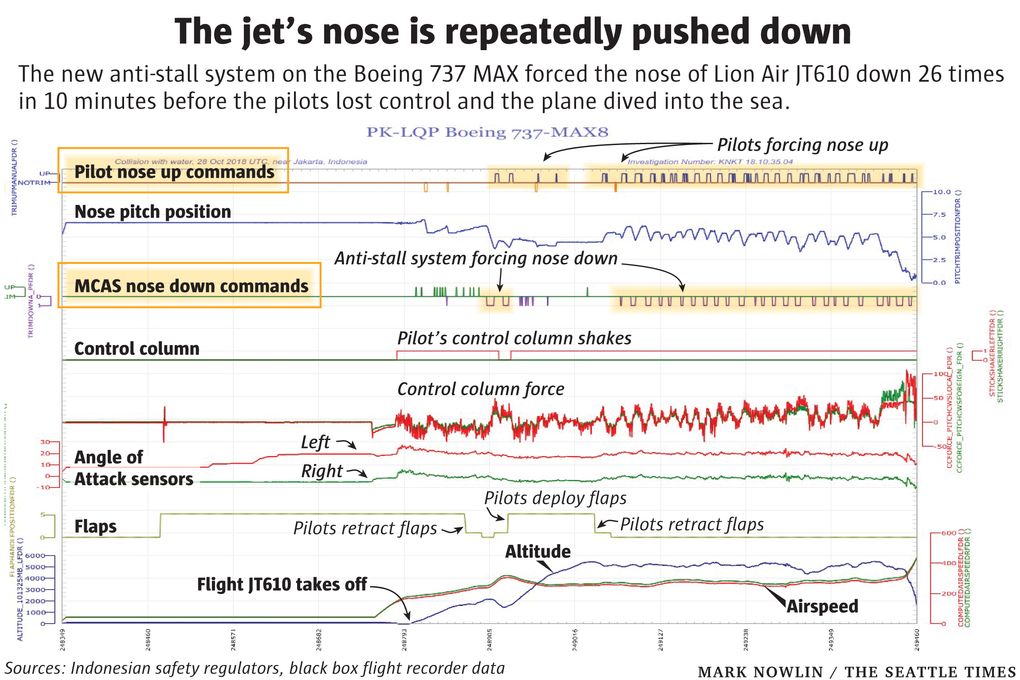
But when you make that statement, I don't think you're really imagining what it would be like to be on a plane like that. The above infographic shows what it is like. The plane was operating in an erratic manner.
I don't design planes, but does Boeing at least have a system that detects whether or not pilots are resisting against the controls?