Live data from Hacker News

Alternate Day Fasting Improves Physiological and Molecular Markers of Aging [pdf]

cell.com

41–50 of 159 posts

Re: Alternate Day Fasting Improves Physiological and Molecular Markers of Aging [pdf]

#41
post #24

A -37% change in caloric intake (Fig. 2B) produces only a -4.5% change in body mass (Fig. 3A)? Seems odd no? Or am I mis-reading something?

This change was reported over 4 weeks, or 28 days.

For a 180lb person consuming, on average, 1900 kCal/day, a 37% drop in calories is a 703 kCal/day deficit below their initial equilibrium. This is 19,700 kCal over four weeks. Divided by 3600 kCal/lb, this is about 5.5 lbs. 4.5% of 180 lbs is 8.2 lbs. So, we're in the ball park. A 3-lb deficit from reduced inflammation (water) seems reasonable.

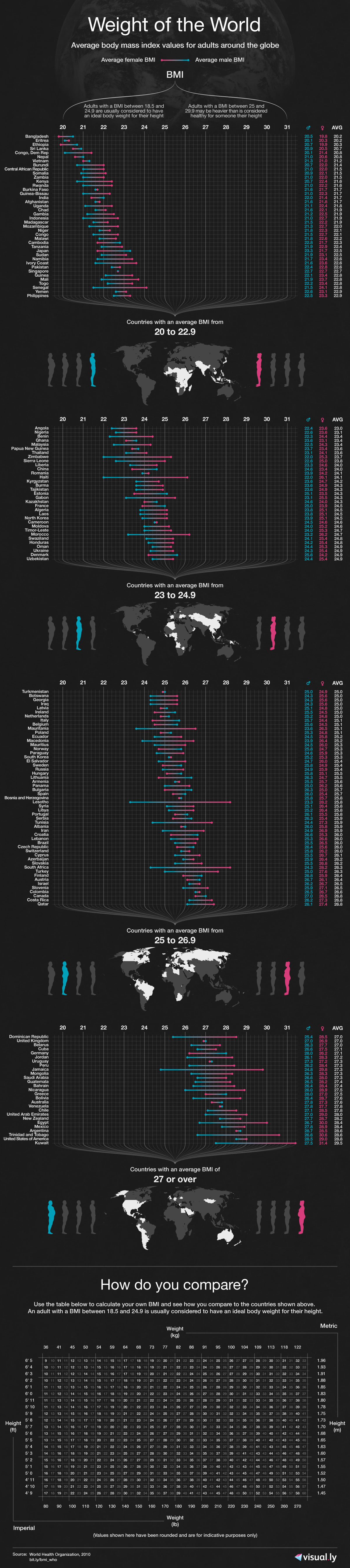
For a higher initial weight, you can get the numbers to agree exactly. I'm 6' and 182 lbs., which is just barely overweight. In the U.S., were I live, I look pretty "fit" by comparison with the average person. (I'm not, but that's another story.) According to [1], Austria, from where the participants were likely sourced, is only slightly leaner than the United States.

Therefore, their numbers seem to line up. Westerners are stuffing themselves.

[1] https://www.indexmundi.com/blog/wp-content/uploads/2013/04/w...
Re: Alternate Day Fasting Improves Physiological and Molecular Markers of Aging [pdf]

#42
post #32
post #29

Earlier quoted context omitted.

This is a fair point. In fact, most research seems to point to the fact that vitamins don't really do anything. I just do it out of habit.

Most nutritional studies are worthless.

Studies of taking vitamins aren’t nutritional studies in the sense of “diet”. They’re more similar to studies of drugs and can be reliable.

Re: Alternate Day Fasting Improves Physiological and Molecular Markers of Aging [pdf]

#43

This fasting caused a 37.4% reduction in caloric intake. It raises the question of whether it was the fasting itself or merely the overall caloric reduction that made the real difference.

We also can't discount the placebo effect. That is, is it the caloric reduction, or the awareness that they are doing something presumed to be healthy. It wouldn't be the first time the body+mind was self-fulfilling.

Sometimes any change and increased observation of test subjects has a temporary effect even if the subjects are unaware of the reason for the change or the hypothesis behind the experiment. Just the attention paid to them can be motivational.

https://en.wikipedia.org/wiki/Hawthorne_effect

Re: Alternate Day Fasting Improves Physiological and Molecular Markers of Aging [pdf]

#44
post #24

A -37% change in caloric intake (Fig. 2B) produces only a -4.5% change in body mass (Fig. 3A)? Seems odd no? Or am I mis-reading something?

You don't eat 100% equivalent of your body mass everyday. You probably eat 2-3% (just an assumption). So, cutting from 3% to 2% over a course of few months should not drastically lower your body mass.

Re: Alternate Day Fasting Improves Physiological and Molecular Markers of Aging [pdf]

#46
post #17

I fast, on average, once a week. At least once a month, I try to do an extended fast (2-5 days) to force ketosis. I also do intermittent fasting basically daily (I only eat between 12-8). Been doing this for about 4 years now. Some anecdata: - Fasting > 24 hrs paradoxically gives you an extreme boost of energy and mental focus. I especially love how my olfactory sense is extremely heightened. It's pretty cool and eve…

Are you fit? as in, do you lift weights or are active in sports that require strength? I ask because I wonder about the effects of extended fasts on muscle loss/retention, a big problem cutting weight for some people is that they get rid of some muscle mass along with the calories they wanted to eliminate.

I did for a few months this year, but I've been lazy over the summer. I'm 155lb, 6'0, so fairly skinny, maybe at around ~15% BF. I noticed that fasting doesn't help with BF at all unless I eat very clean and lift. I was at 170lb, around ~28% BF earlier this year and had to work my ass off to get my body fat percentage down.

Re: Alternate Day Fasting Improves Physiological and Molecular Markers of Aging [pdf]

#47
post #13

This fasting caused a 37.4% reduction in caloric intake. It raises the question of whether it was the fasting itself or merely the overall caloric reduction that made the real difference.

I wondered this as well. In many of the intermittent fasting studies they kept caloric intake the same and showed that the benefits applied even when taking caloric restriction out of the equation.

A lot of diets, especially IF style diets, are pretty much just tricks to get you to eat less calorie wise. Intermittent fasting does this by just setting the simple rule, only eat during a relatively small window of time. It's easier to eat less during that period because there's only so much you can comfortably eat in that time. (Granted you can totally fit a whole day's intake in the IF period but it's harder).

Re: Alternate Day Fasting Improves Physiological and Molecular Markers of Aging [pdf]

#48
post #30
post #17

I fast, on average, once a week. At least once a month, I try to do an extended fast (2-5 days) to force ketosis. I also do intermittent fasting basically daily (I only eat between 12-8). Been doing this for about 4 years now. Some anecdata: - Fasting > 24 hrs paradoxically gives you an extreme boost of energy and mental focus. I especially love how my olfactory sense is extremely heightened. It's pretty cool and eve…

Why would your body breakdown your organs when you still have plenty of adipose stores ? Do you have a citation for the "starvation mode" ? If it's the 1940's study from MN, that was only when the subjects where well into single digit fat %.

>Why would your body breakdown your organs when you still have plenty of adipose stores ?

Most people are not "fat adapted" meaning their body/brain primarily run off of glucose.

When you fast and your body runs off of glucose, it still goes into ketosis and burns fat, but the brain still needs glucose because that its accustomed primary fuel source (think of marathon runners hitting the wall, that is their body conserving remaining glucose in the body for the brain to function). When their is no dietary glucose the body breaks down protein (muscle and organs) to convert into glucose to keep the brain working (gluconeogenesis).

This will still occur but to a far lesser degree to people who are fat adapted and primarily use fat for energy.

Re: Alternate Day Fasting Improves Physiological and Molecular Markers of Aging [pdf]

#49
post #17

I fast, on average, once a week. At least once a month, I try to do an extended fast (2-5 days) to force ketosis. I also do intermittent fasting basically daily (I only eat between 12-8). Been doing this for about 4 years now. Some anecdata: - Fasting > 24 hrs paradoxically gives you an extreme boost of energy and mental focus. I especially love how my olfactory sense is extremely heightened. It's pretty cool and eve…

- Even on fast days, make sure you take vitamins (I take Fish Oil, Zinc, a Multivitamin and Magnesium) I have done some fasting recently (water, some water/apple cider vinegar in the morning; coffee, green tea, Ooolong tea), and have a similar vitamin intake (B complex; calcium/D combo; Magnesium; Zinc; Iron; Fish Oil). During the fasting I don't take the Fish Oil, I haven't read anything about it specifically, but j…

In a talk my parents sent me a few years ago, the speaker (I believe a nurse) argued that you need at least ~20 calories to trigger a metabolic response. Hence, things like tea, coffee (even with a tiny bit of milk), fish oil, etc. should be fine.

Re: Alternate Day Fasting Improves Physiological and Molecular Markers of Aging [pdf]

#50
post #26
post #17

I fast, on average, once a week. At least once a month, I try to do an extended fast (2-5 days) to force ketosis. I also do intermittent fasting basically daily (I only eat between 12-8). Been doing this for about 4 years now. Some anecdata: - Fasting > 24 hrs paradoxically gives you an extreme boost of energy and mental focus. I especially love how my olfactory sense is extremely heightened. It's pretty cool and eve…

Can you point to any studies that show the benefits of your vitamin regimen? You point out there are no studies on long term fasting but I am also unable to find the studies on the benefits of vitamins.

https://www.health.harvard.edu/staying-healthy/should-you-be...

https://ods.od.nih.gov/factsheets/VitaminD-HealthProfessiona...

https://www.ncbi.nlm.nih.gov/m/pubmed/23930726/

https://www.ncbi.nlm.nih.gov/m/pubmed/27713952/

Post reply on HN