Feel free to educate me... > The HET is a three-dimensional, circumferential flux, exterior > permanent magnet electric motor with some interesting > characteristics. For starters, it runs four rotors where other motors > typically run one or two. The stator is fully encapsulated in a four > sided "magnetic torque tunnel," each side having the same polarity, > ensuring that all magnetic fields are in the direction of…
Electric motor design claims remarkable improvements
71–80 of 144 posts
Re: Electric motor design claims remarkable improvements
#72Don't get me wrong, I saw the title and was excited. I want this to be real. I want to believe. But way too many keyword drops. Disruptive is what red flagged me the most. Way too many promises. Only lab results and "experts" commenting that it should work in theory. But no prototype? Even though it's a different motor they don't "believe" it's going to cost more to make than traditional motors? Only 3d renders? I th…
-they have built prototypes
-they know it will be cheaper because they eliminated the need for rare earth minerals
Re: Electric motor design claims remarkable improvements
#73Don't get me wrong, I saw the title and was excited. I want this to be real. I want to believe. But way too many keyword drops. Disruptive is what red flagged me the most. Way too many promises. Only lab results and "experts" commenting that it should work in theory. But no prototype? Even though it's a different motor they don't "believe" it's going to cost more to make than traditional motors? Only 3d renders? I th…
Lots misleading in your comment but: -they have built prototypes -they know it will be cheaper because they eliminated the need for rare earth minerals
-They say it can be built without rare earth elements, but say nothing about how that affects performance. Everything else is for the magnet version and they use more magnets than is normal.
They do apparently have prototypes, but I'm still skeptical: https://www.youtube.com/watch?v=yqIKZGx-06Y
Re: Electric motor design claims remarkable improvements
#74Feel free to educate me... > The HET is a three-dimensional, circumferential flux, exterior > permanent magnet electric motor with some interesting > characteristics. For starters, it runs four rotors where other motors > typically run one or two. The stator is fully encapsulated in a four > sided "magnetic torque tunnel," each side having the same polarity, > ensuring that all magnetic fields are in the direction of…
I think the place where automotive and electric engines make the biggest leaps in the coming 20 years is in batteries. smaller and better batteries allows bigger and better motors.
Re: Electric motor design claims remarkable improvements
#75Re: Electric motor design claims remarkable improvements
#76How cooling of rotor being achieved ? Energy, power and torque density of other motor designs are limited by their cooling capacity. Reluctance motor being externally cooled, has this as a prime selling point. I think for claimed improvement, it will need external cooling which is not mentioned in article.
There's a lot not mentioned. How do they move the rotor magnets in field weakening? How do they reconfigure the coils? How do they get 20 percent more efficiency when most are already over 90-95 percent?
If efficiency is 90%, then 10% is waste; cut that by 20%, and your motor efficiency is now 92%. Something like that. There's a lot of ways they can arrange the math, not to mention it's not clear which motor they're comparing to, which makes this kind of claim very vague. They should just state the efficiency they get.
Re: Electric motor design claims remarkable improvements
#77Don't get me wrong, I saw the title and was excited. I want this to be real. I want to believe. But way too many keyword drops. Disruptive is what red flagged me the most. Way too many promises. Only lab results and "experts" commenting that it should work in theory. But no prototype? Even though it's a different motor they don't "believe" it's going to cost more to make than traditional motors? Only 3d renders? I th…
Re: Electric motor design claims remarkable improvements
#78Uhm. *Halbach Cylinder" like in [1] https://en.wikipedia.org/wiki/Halbach_array ?
Re: Electric motor design claims remarkable improvements
#79Their site[0] has an animation of their 4-pole design and describes some advantages. https://www.linearlabsinc.com/why-our-motor/
> As much as 30% of the typical copper needed is reduced by having all the copper in the coil involved in energy conversion.
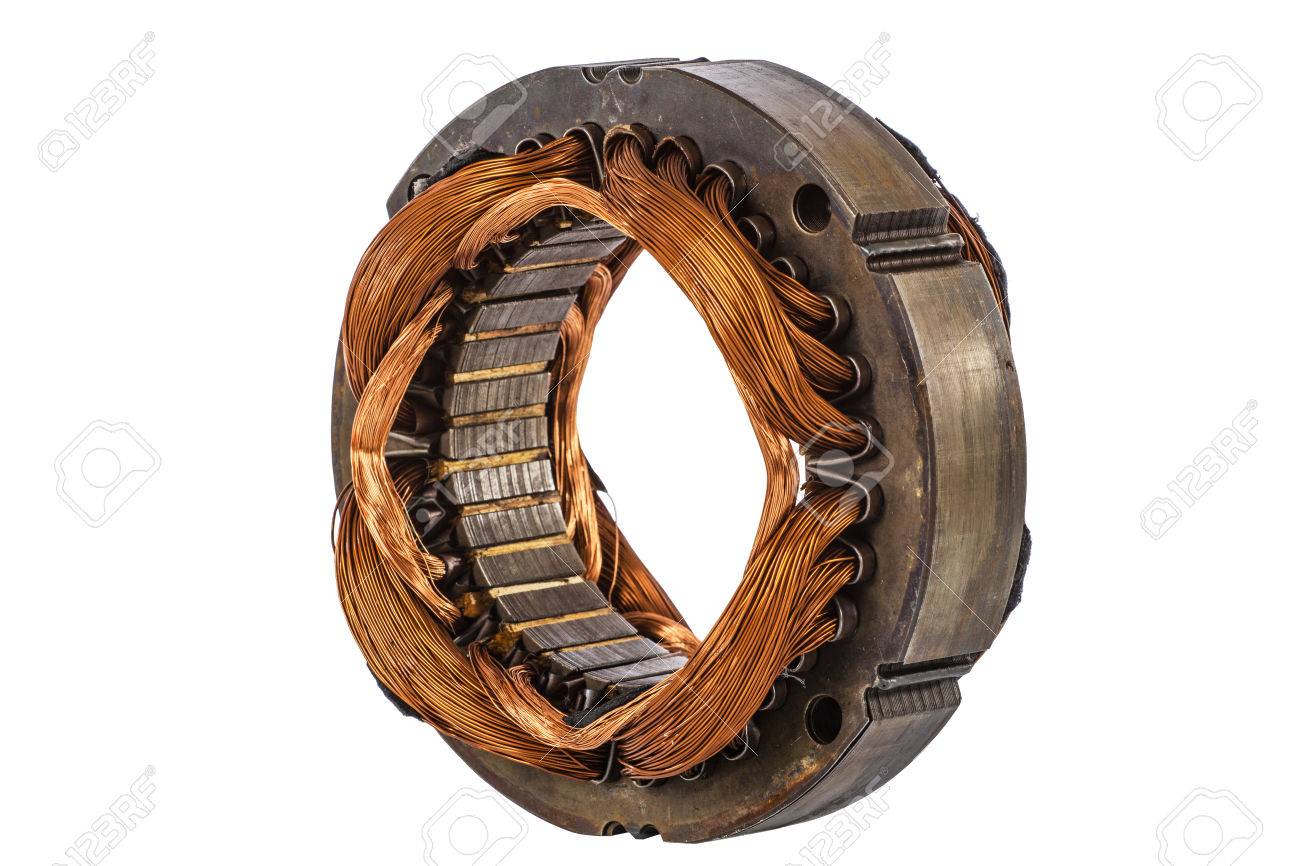
That's total bullshit. Here's what they're saying: in a typical motor, at least some of the copper will be outside the iron[1]. There's waste associated with that, since you only need current to be flowing exactly around the iron. However, 30% is an order of magnitude high. The stray field from that copper is almost nil, as it will massively prefer to travel through the iron, so the only real worry is that you've just got extra copper. In modern motors the windings are quite tight to the iron and the stator is long axially.
Even in poorly-wound stubby motors like those in ceiling fans[2] you won't be wasting 30%- maybe 10%. The part of the loop going side-to-side is not wasted, only the parts extending up and down away from the iron.
> The structure of the HET ensures that all of the magnetic field interactions are fully involved in the production of torque.
They must have a gap to get in wiring to the stator, so field can escape there. It also goes straight through the magnets. Any gap develops fringing loss essentially regardless of how big it is, so their reduction in loss is small. And stray field loss is already so tiny it can be neglected.
> The unique design requires no unproductive open spaces. Only the air gap surrounding the coil is left open.
And I wonder how tight their air gap actually is, with all those cantilevered magnets and moving parts. Probably not great. Plus, there's a ton of empty space inside the rotor. They do use the stator iron slightly more efficiently, but in normal motors that space is usually used for bolts anyway.
> Unlike existing conventional machines where torque is only present at an optimum point as it approaches a magnetic pole, the HET has no single optimum point but rather all positions exhibit maximum torque. > The torque and force will exist while the coil is in the tunnel, regardless of tunnel length.
Well that's just blatantly not true, and also the crossover point between poles is going to be very wiggly indeed. The stator is going to be stretching and compressing itself at different points and the flux has to travel from pole to pole regardless of how many coils are in the way. Their design lets them trade off between torque and speed more easily, but all the rest is nonsense.
> Another advantage is that phases can be software controlled to be grouped into particular patterns. For example, phases A and B can be controlled to act as a single larger pole. Likewise, C, D, E and F. Conversely other groupings are possible with A, B, and C or D, E and F acting as single poles.
Any high-slot motor can be run like this. It's very rarely done because the cost of adding more phases is immensely high. Doubling the number of phases can be multiple times more expensive than doubling the power. And for variable three-phase motor systems the driver is already the most expensive part. If they need all those coils, that's a big problem. TBH though this bit is probably what won them investors- people may be interested in applying their simulation and controls work to conventional motors. It would be deeply challenging to add more slots to the current gold standard motor (PM-reluctance), but it could potentially lead to more high-end efficiency.
> In both of the above cases there is a radical drop in efficiency. The HET Motor addresses this need in a completely different manner. By slightly rotating a single side rotor, an axial magnetic component is introduced. This weakens, as far as the coils are concerned, the total magnetic field experienced by the coils. The degree of field weakening controls the tradeoff between torque and speed.
> For the first time in electric machine history, as the HET Motor enters the Constant Horsepower Region, core losses drop and overall efficiencies actually climb! Hmm. Yeah, I could believe it. They're also introducing slew, but that's not terrible. It also makes it easier on the driver. However, this would be ungodly expensive.
[1]: https://previews.123rf.com/images/kostiuchenko/kostiuchenko1...
[2]: https://qph.fs.quoracdn.net/main-qimg-245c5636ff7753478e9348...
Re: Electric motor design claims remarkable improvements
#80They mention increases in efficiency like it matters when electic motors are already ~95% efficient.
They mention cogging as a problem, when everyone solved that a decade ago by using FOC drivers.
It does field weakening by physically rotating part of itself? That doesn't sound like a good idea. At all.
A single reduction gear is complex and heavy? Uh no, its probably the cheapest part of the motor