Live data from Hacker News

Unexpected Surge in Global Methane Levels

climatenexus.org

91–100 of 230 posts

Re: Unexpected Surge in Global Methane Levels

#91

Earlier quoted context omitted.

Live stock farming is ~27% of methane production, where fossil fuels are ~33% [1]. Eating an eco friendly diet is great on the individual level, but we should not underscore the drastic need for decisive action on an institutional level. [1] https://whatsyourimpact.org/greenhouse-gases/methane-emissio...

One way to achieve both action on an institutional level, and reduce the consumption of meat, would be to capture the 'environmental costs' in the price. This could be orchestrated by government intervention, or on a less-effective scale, it could be a market differentiation for certain beef brands to include climate-change mitigation as part of their strategy and charge a premium.

Yes 100%. The world needs Environmental Economics. This would make it financially worth while for huge investment to flow into environmentally friendly products.

Re: Unexpected Surge in Global Methane Levels

#92

My favorite doomsday scenario at the moment is that it may be earthworms who finally kill us: https://www.nytimes.com/2019/05/20/science/earthworms-soil-c... They appear to be venturing into new areas and releasing carbon there, furthering global warming. There are just too many scenarios of that kind. Either we really are doomed, and climate will switch into a new kind of equilibrium hostile to humans. Or, there are…

> Will so many climate based doomsday scenarios, how did earth survive for so long? Earth will be fine. Us, not so much.

Depends how you define the earth being fine.

Re: Unexpected Surge in Global Methane Levels

#93
post #67

Earlier quoted context omitted.

Doing something, I mean really doing something, requires changing our culture. Future generations, if there are ones, will look back at this time and see that we have an oil burning culture. Everything we eat, where we live, fossil fuels have been used to produce and maintain it. If it only was cars that was the problem we would easily solve it. To make a real change a Total War economy would have to be implemented,…

Doing something, I mean really doing something, requires changing our culture. I'm not sure it's so dire as that. Taking the US as an example (numbers from https://www.epa.gov/ghgemissions/sources-greenhouse-gas-emis... ), the largest source of greenhouse gases is transportation at 29%. A real push to switch to electric cars could have a significant impact without significantly changing the way people live their live…

A real push to switch to electric cars already pushes certain types of people to drive bigger trucks and pollute more brazenly, e.g. "Rolling Coal" which I've witnessed first hand in my very liberal college town. Culture is very complicated and you will always get push back.

Furthermore, switching out the 200+ million cars in USA to electric vehicles is not going to help emissions because of the carbon footprint of newly manufactured vehicles.

The idea that providing each citizen with a personal 1000 pound supply of lithium ion will save the climate is bananas.

I agree that swapping out coal for wind and solar could be done without much change to culture but solar panel production isn't carbon free either, what we really need to do is use way, way less electricity per person, and its almost impossible to convince people to sacrifice for their future.

As far as my suggestions: cash-for-clunkers program except with lifetime public transit passes instead of cash. Melt down the ICE vehicles for their aluminum and build lots of trains. This would be justice for the 1920s-40s when all of our electric trains were melted down to build tanks and bombs.

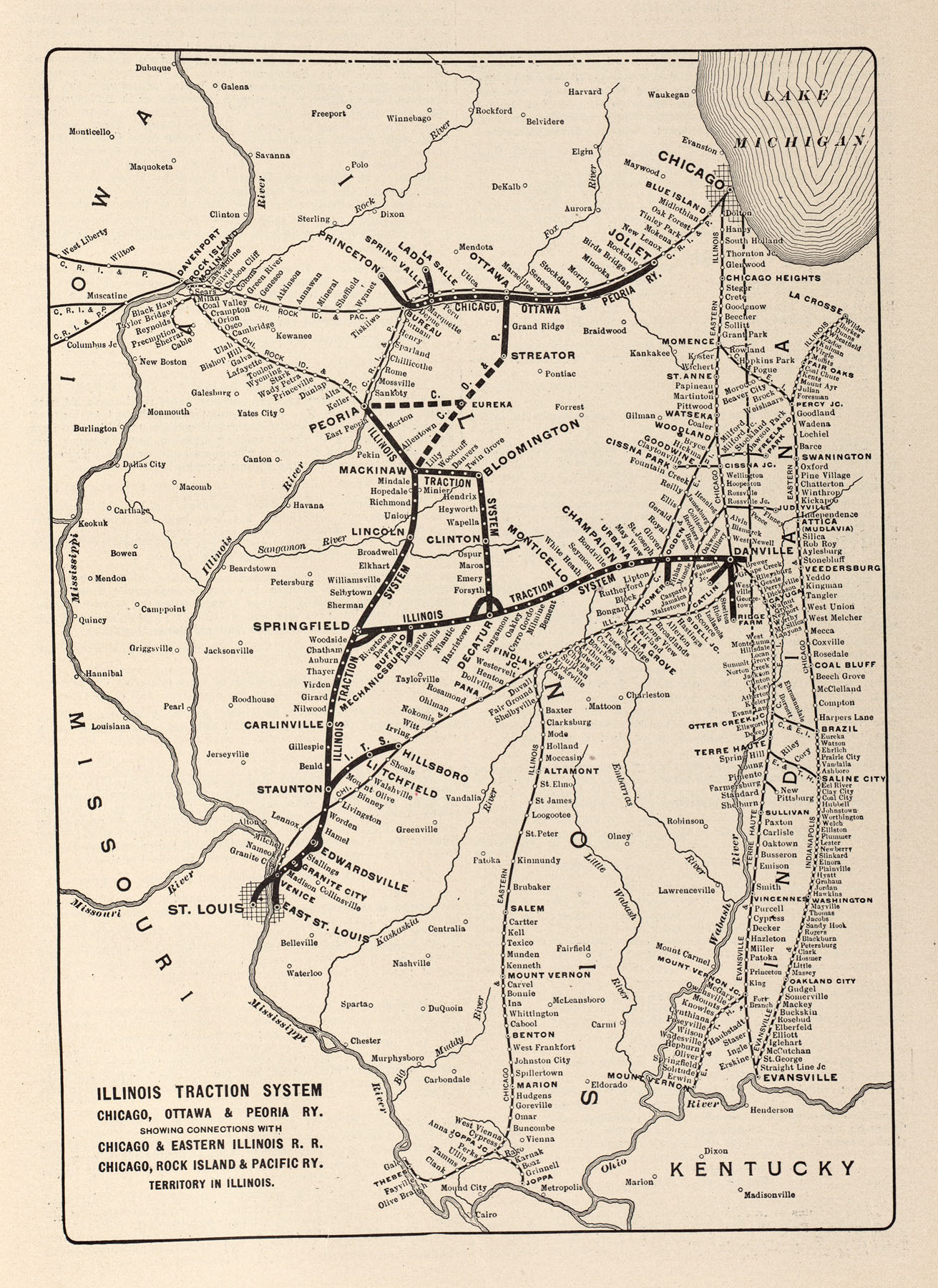
For the haters that say trains don't work in USA, I refer you to the 1913 Illinois Interurban railway map [1] where you could pay a nickel to hop on a 20-60mph trolley to the next town over.

Use those same train lines to move mail and food from the farmland it passes through.

Stop eating imported food, stop sending food roundtrip to China for processing before shipping it back to the store [2]

Stop building houses that need to be heated and cooled artificially year round because they have no notion of solar gain or heat mass.

I could go on...but business as usual will keep destroying the environment that keeps us alive.

[1] https://legacy.lib.utexas.edu/maps/historical/txu-oclc-64454...

[2] https://www.nytimes.com/2008/04/26/business/worldbusiness/26...
Re: Unexpected Surge in Global Methane Levels

#94
post #90

Earlier quoted context omitted.

I had an impossible burger slider yesterday for the first time — as a fan of the taste of meat, I’m very ready for the non-animal based meat future!

What's their carbon footprint ?

"The carbon footprint of the latest Impossible Burger recipe is 89% smaller than a burger made from real beef, according to a science-based life cycle assessment released by the company this week."

https://www.fooddive.com/news/impossible-burger-boasts-much-...

Re: Unexpected Surge in Global Methane Levels

#95
post #70

Earlier quoted context omitted.

I think the argument that you posed in your other post to be challenged in one particular way. You claim that there is no time to deploy carbon scrubbing. I immediately see two major issues with this argument. The first is that greenhouse effects are not irreversible. As you remove greenhouse gases from the atmosphere, you change the heat equilibrium. Even feedback effects can be mitigated both by temperature change…

> The first is that greenhouse effects are not irreversible. The UN clearly says there is a point of no return, could you please clarify what you are trying to say? https://www.un.org/press/en/2018/gaef3500.doc.htm edit: better report https://www.egu.eu/news/428/deadline-for-climate-action-act-... And what do you think about this type of scrubbing? https://www.ozy.com/fast-forward/the-search-for-a-perfect-pl...

I don't think plants are a viable solution for quite a number of reasons.

The most fundamental is that they are inherently temporary storage. Plants absorb various gases as they live, and then emit it as they die. So you're just kicking the can, and not even especially far. For instance a tree can absorb up to around 50 pounds of CO2 per year. To put that into contrast an iPhone 7 results in about 123 pounds of emissions, so you need 2.5 trees per iPhone per year. Alternatively a gallon of gasoline releases about 19 pounds of CO2. So for every 10 gallons of gas a person uses you'd need about 4 full grown trees. And again that is per year, per person. Look around your house and imagine how many trees you'd need just to temporarily mask just your own personal consumption. It'd be a small forest, per person.

That leads to the second problem - scale is limited. With an unbelievably massive planting effort we could probably work to temporarily mask our emissions today. And while our emissions today are a problem, you can't ignore the future. Right now the vast majority of the world doesn't emit much per capita, but that's because most of the world lives in less developed areas. As China, India, Africa, and other areas continue to develop their emissions per capita are going to continue to increase. We should expect worldwide emissions to sharply increase over the coming decades, and so we need solutions that can scale accordingly.

And the final issue is that these solutions can, at times, go up in flames. For instance a recent study on wildfires has indicated that wildfires in places such as California can end up contributing even more to their CO2 output than the vehicles in those areas. [1] Mass planting of greenery would work as temporary storage, but it's not an especially stable form and so the net effect would be very difficult to accurately predict.

[1] - https://www.livescience.com/1981-wildfires-release-cars.html

Re: Unexpected Surge in Global Methane Levels

#96
post #37

Earlier quoted context omitted.

It’s a nice thought, but even if we accept that the global population doing this would stem the tide of climate change (which I am doubtful it would), one quickly realizes that there is no way that the entire global population is going to stop eating animals, and we are back to feeling hopeless. I’m increasingly convinced that carbon sequestration on industrial scales is the only serious way to solve this problem.

Sequestration won’t do enough soon enough. This could be methane deposits evaporating from long frozen stores (permafrost and other sources). Methane is a much bigger problem for the atmosphere than carbon and sequestration won’t touch it. If quitting meat sounds tough, consider that I’ve heard the only effective thing to do would be immediately cease all ICE production/use. But oddly feeding cows seaweed would cut t…

That’s a best case scenario based on lab results, not feeding cows at scale in the field. The number looks a lot closer to 50% in other trials. In a addition there are tremendous challenges in producing and transporting enough seaweed to implement this even if the kinks get worked out without doing as much damage to the environment.

It’s good to keep all options on the table but seaweed is far from the silver bullet some people want it to be.

Re: Unexpected Surge in Global Methane Levels

#97
post #84

Great hyperbole with words like "surge" and "skyrocketed" to summarize an increase of 12% in 35 years.

the percentage is meaningless out of context. you cannot say what is a surge if you don't know how stable it was before and how stable the equilibrium is.

Re: Unexpected Surge in Global Methane Levels

#98
post #7

The scale of human activity has become so large that what may seem like fairly trivial variations can be quite impactful thanks to the multiplication factor. Until we substantially reel in the global population size the situation will continue to be rather precarious.

Western capitalism seems to be the one thing that has successfully incentivized people to have less kids, later in life. It's not always glamorous, but it's probably better than most alternatives.

What we really need is cap-and-trade for offspring. Everyone gets one each (so two to a couple), and if you need more, you can buy permits from someone who doesn't, at market price. That adds an economic incentive to have fewer children!

Re: Unexpected Surge in Global Methane Levels

#99
post #22

Often I see comments asking what we can do to combat this, or expressing feeling hopeless. While it is not the complete solution, one direct way is by eliminating your personal consumption of animal products. Animal agriculture is a huge contributor to methane production, especially from cows. > Overall, we conclude that methane emissions associated with both the animal husbandry and fossil fuel industries have large…

This is terrible advice, because it makes people think they did "enough" themselves to combat climate change when dropping animal product methane to 0 would not even be close to enough.

Remember, 100 companies are responsible for 71% of climate emissions. These need to be dealt with, swiftly.

https://www.theguardian.com/sustainable-business/2017/jul/10...

Re: Unexpected Surge in Global Methane Levels

#100
post #84

Great hyperbole with words like "surge" and "skyrocketed" to summarize an increase of 12% in 35 years.

the percentage is meaningless out of context. you cannot say what is a surge if you don't know how stable it was before and how stable the equilibrium is.

Using words like skyrocketed explicitly take the increase out of context. These kind of alarming articles give climate deniers ammunition in the future when values have doubled and the equilibrium remained state.
Post reply on HN