Live data from Hacker News

Quake II RTX: Re-Engineering a Classic with Ray Tracing Effects on Vulkan

nvidia.com

131–140 of 169 posts

Re: Quake II RTX: Re-Engineering a Classic with Ray Tracing Effects on Vulkan

#131

Earlier quoted context omitted.

I'm very skeptical. This is not just RTT; there's a big amount of rework. Likely, any old game would look significantly better with such development effort (in other words, with any good remastering). This could be considered a great market stunt - the graphical improvement is touted to be due to RTX (ray tracing), while it's actually due to many factors. On top of that, it misleads people into thinking that this typ…

But it's not down to polygons or details in the environment - the simple architecture still looks realistic with the addition of realistic lighting. In the quest for realism, modern games have so many details, dirt and grit everywhere [1]. Perhaps going forward artists can let the lighting do more work and still represent realistic clean environments. I loved this blocky room in Half Life 1 for the dramatic (prebaked…

A whole lot of the benefit is the added "normal and roughness maps for added surface detail."

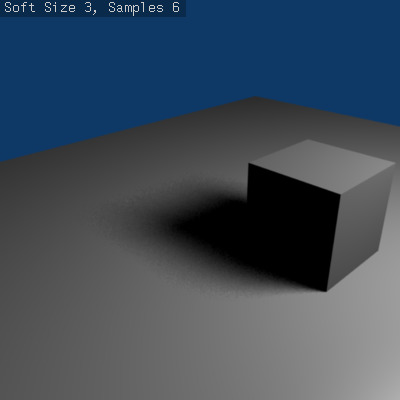
If they hadn't done the hard work of basically retexturing every single surface, it wouldn't look half as good. Without depth, ray-tracing looks incredibly flat, like this: http://builder.openhmd.net/blender-hmd-viewport-temp/_images...
Re: Quake II RTX: Re-Engineering a Classic with Ray Tracing Effects on Vulkan

#132
post #86

Earlier quoted context omitted.

My P200MMX with a Voodoo 2 managed it just fine.

It was more that Voodoo than the MMX. I tried playing some MMX "accelerated" games and it was a lo-fi slideshow. I think the MMX era was the start of Intel's tradition of hyped up graphics related press releases followed by a total lack of execution.

MMX was always more selling point than substance, from my experience... a Voodoo card, on the other hand...

Re: Quake II RTX: Re-Engineering a Classic with Ray Tracing Effects on Vulkan

#133

Earlier quoted context omitted.

I thought path tracing was just ray tracing with additional random scatters traced, is it not?

In the realtime graphics world, Ray tracing = initiate rays from light sources, bounce them around, accumulate them on camera. This is accurate but incredibly inefficient. This is how pre-baked light mapping and GI works. Path tracing = initiate rays from camera, induce bounce rays toward light sources. Not quite as accurate but orders of magnitude mode efficient in terms of producing an acceptable image.

This is confusing and not true. The RTX is specifically referred to as "ray tracing" but no one does forward ray tracing which is what you are referring to. Both general Ray Tracing and Path Tracing involve "backwards ray tracing", starting from the camera. The distinction is not where the ray originates, its the algorithm for generating and following those rays.

Re: Quake II RTX: Re-Engineering a Classic with Ray Tracing Effects on Vulkan

#134
post #33

Earlier quoted context omitted.

HL1 already has a modern remake, check out 'Black Mesa' on Steam. It's really good.

As someone passionate about hl1, I dont like Black mesa. Yes it looks nice, but gameplay wise it seems lacking to me. It feels very slow to move, bhopping has been nerfed to death. It feels more like a reboot than a remaster

From what I remember of Black Mesa, it felt more like Half-Life 2, control wise, than Half-Life. So for people who played Half-Life 2 first, Black Mesa probably feels more natural.

Re: Quake II RTX: Re-Engineering a Classic with Ray Tracing Effects on Vulkan

#135
post #122

The original textures were done by Adrian Carmack. I think he's a genius as much as John. He was capable of making a difficult theme really work: a mix between dark future and fantasy. Specially fantasy with guns is terribly difficult and I don't recall having seen a game that succeeded in making that mix as well as the Quake series.

Maybe this isn't what you're talking about, but Bungie's game Destiny is a pretty great example of medieval fantasy transposed several thousand years into the future.

Is it? I only played Destiny 2 and from the parts I really got into (pre-expansions), I didn't get a very medieval fantasy vibe at any points. Most of the architecture was fairly modern or alien. Was nice though.

Anthem has some buildings that have an older feel out in the freeplay areas, but even that would be a stretch.

Re: Quake II RTX: Re-Engineering a Classic with Ray Tracing Effects on Vulkan

#136

Earlier quoted context omitted.

In the realtime graphics world, Ray tracing = initiate rays from light sources, bounce them around, accumulate them on camera. This is accurate but incredibly inefficient. This is how pre-baked light mapping and GI works. Path tracing = initiate rays from camera, induce bounce rays toward light sources. Not quite as accurate but orders of magnitude mode efficient in terms of producing an acceptable image.

This is confusing and not true. The RTX is specifically referred to as "ray tracing" but no one does forward ray tracing which is what you are referring to. Both general Ray Tracing and Path Tracing involve "backwards ray tracing", starting from the camera. The distinction is not where the ray originates, its the algorithm for generating and following those rays.

This guy is right. I have been inadvertently perpetuating a misconception for the last 5 years.

Re: Quake II RTX: Re-Engineering a Classic with Ray Tracing Effects on Vulkan

#137
post #60

Earlier quoted context omitted.

Yes, but I remember you still had to use a really contrived way of explaining that 3d 'geometry' on the editor (BUILD.exe). Basically you still drew in 2d but you could overlap rooms with other lines that wouldn't intersect with any already existing lines, and that would configure 'a room above/below the current room'. Then you had to slope the floor until it actually connected with the newer room. It was pretty stra…

> Basically you still drew in 2d but you could overlap rooms with other lines that wouldn't intersect with any already existing lines, and that would configure 'a room above/below the current room'. Elaborating a bit -- the Build engine had a feature called "sector effectors" that, when triggered, would teleport the player to a completely different sector in the map. The transition was seamless and permitted interest…

Interestingly enough the Portal games leverage similar level design given to the Source engine, not only for the obvious user controlled portals but also to stitch levels together seamlessly, including impossible architecture (the long bridge leading to the glados confrontation in the first Portal shows the room you're about to enter, but its actually too small and shaped differently to hold the room.

Re: Quake II RTX: Re-Engineering a Classic with Ray Tracing Effects on Vulkan

#138
post #135
post #122

Earlier quoted context omitted.

Maybe this isn't what you're talking about, but Bungie's game Destiny is a pretty great example of medieval fantasy transposed several thousand years into the future.

Is it? I only played Destiny 2 and from the parts I really got into (pre-expansions), I didn't get a very medieval fantasy vibe at any points. Most of the architecture was fairly modern or alien. Was nice though. Anthem has some buildings that have an older feel out in the freeplay areas, but even that would be a stretch.

It's much more apparent in Destiny 1, with the Hive architecture, which is like something out of Mordor. And in the Forsaken expansion to Destiny 2, where The Dreaming City seems like a high-fantasy kingdom, but under attack by evil forces.

Re: Quake II RTX: Re-Engineering a Classic with Ray Tracing Effects on Vulkan

#139
post #61

Earlier quoted context omitted.

I would argue that VR is the next step like this. Even taking an "old" title like Skyrim drives home that no matter how nice the renderer makes it look on a screen, it is still flat. With VR you are in the place. Does the raytracing look really, really nice? Yes, definitely. Is it that much better? I don't think so (personal opinion, of course)...

Working in VR, I think ray tracing is really going to come into its own with VR. Some of the effects that are mostly just nice visuals on a monitor actually make VR more usable. Accurate contact shadows for example are super important to our brain when picking up and putting down objects off surfaces to help get an accurate sense of distance and are extremely hard to do well with rasterization based techniques but th…

Presumably the sampling rate can also be limited in places the user isn't looking (with eyetracking etc)?
Post reply on HN