Live data from Hacker News

The $2M Urinal: Why Hard Work Doesn’t Cut It (2018)

behavioralscientist.org

61–70 of 188 posts

Re: The $2M Urinal: Why Hard Work Doesn’t Cut It (2018)

#61
post #5

I feel like modern art market is primarily a way for a subsegment of rich people to buy certain intangible goods: These are people that feel lonely, and have low self esteem... They really would like to socialize with cool and charismatic people, and the "modern art scene" is basically a very pricey matchmaking service for them to make friends and go to parties with people that fit this description (i.e. the artists)

It's also a way for rich people to involve themselves comfortably in some non-profit sector (go look at a board for a major art museum), and to become 'tastemakers.' The desire to be an influencer is very natural, and this is the easiest path for you if you've got a lot of cash to burn.

I'd say being an "influencer" and socializing with interesting people are very similar and hard to tease apart as separate concepts.

Re: The $2M Urinal: Why Hard Work Doesn’t Cut It (2018)

#62
post #25

> But I do mean to say that there is no quality in art. > The simple truth is we have no way of objectively determining the value of any work of art or the performance of its maker. Ehh... Not having objective, quantitative metrics is not the same thing as having no quality what so ever. It seems very strange (and utterly wrong) to claim there is not even a smidgen of underlying truth or insight about the world found…

AFAIK there's no way of objectively determining the value of anything. Are prices of houses in SF "reflecting their inherent quality" compared to houses in other parts of US? Or is the value of t-shirt with some brand logo sticked on it "objectively determined"? No, they're not, it's all simply negotiated by market's supply and demand, and so is art. It's worth exactly as much as someone is willing to pay for it.

> AFAIK there's no way of objectively determining the value of anything.

You can objectively determine how people subjectively value something, but value is always subjective.

Re: The $2M Urinal: Why Hard Work Doesn’t Cut It (2018)

#63
post #60

> But I do mean to say that there is no quality in art. > The simple truth is we have no way of objectively determining the value of any work of art or the performance of its maker. Ehh... Not having objective, quantitative metrics is not the same thing as having no quality what so ever. It seems very strange (and utterly wrong) to claim there is not even a smidgen of underlying truth or insight about the world found…

This article is directly relevant to the tech community. It's axiomatic that technical performance is very difficult to measure. It's also axiomatic that it's not what you know, but who.

[deleted]

Re: The $2M Urinal: Why Hard Work Doesn’t Cut It (2018)

#64

> But I do mean to say that there is no quality in art. > The simple truth is we have no way of objectively determining the value of any work of art or the performance of its maker. Ehh... Not having objective, quantitative metrics is not the same thing as having no quality what so ever. It seems very strange (and utterly wrong) to claim there is not even a smidgen of underlying truth or insight about the world found…

>Ehh... Not having objective, quantitative metrics is not the same thing as having no quality what so ever. I am shocked that in 2019 there are adults walking around with this epistemology. Every quantitative metric is an exercise in narrative. The notion of objectivity is an appealing construct in a world constructed by second hand observations, but alas, it remains just another implement in the narrative toolkit.

And now you are swinging too hard in the other direction. We can and do draw distinctions between narratives as we best we can.

The unattainability of ultimate truth does not negate the partial truths we are able to grasp.

Re: The $2M Urinal: Why Hard Work Doesn’t Cut It (2018)

#65

> The art world is a wonderful illustration of the First Law of Success: 'Performance drives success, but when performance can’t be measured, networks drive success.' This is a thought-provoking reframing of "it's not what you know; it's who you know."

The difference is that it's admitting that in some areas the managers/consumers can discern between good and bad, just not in every area. It's a bit closer to, "it's not what you know but who you know, when nobody else knows anything." When a non-technical manager hires his nephew to write PhP, he isn't thinking "I love my nephew so much that I am willing to sacrifice our company's technology plan to help his career,…

I don't see how this is "cynical". If you have no way to discern the difference between good and bad employees, it makes sense to at least hire somebody you know.

Re: The $2M Urinal: Why Hard Work Doesn’t Cut It (2018)

#66
post #9
post #7

Earlier quoted context omitted.

What a weird and condescending take.

Why? It’s not strange to think that an old man in leveraged buyouts would be willing to spend some money to be catered to by a group of young, talented, attractive people... and if he’s rich enough or lucky enough, maybe even fuck a few of them.

It's not an insane idea, but it's also totally unfounded to assume that people who buy art are primarily "lonely" with "low self-esteem".

Re: The $2M Urinal: Why Hard Work Doesn’t Cut It (2018)

#67
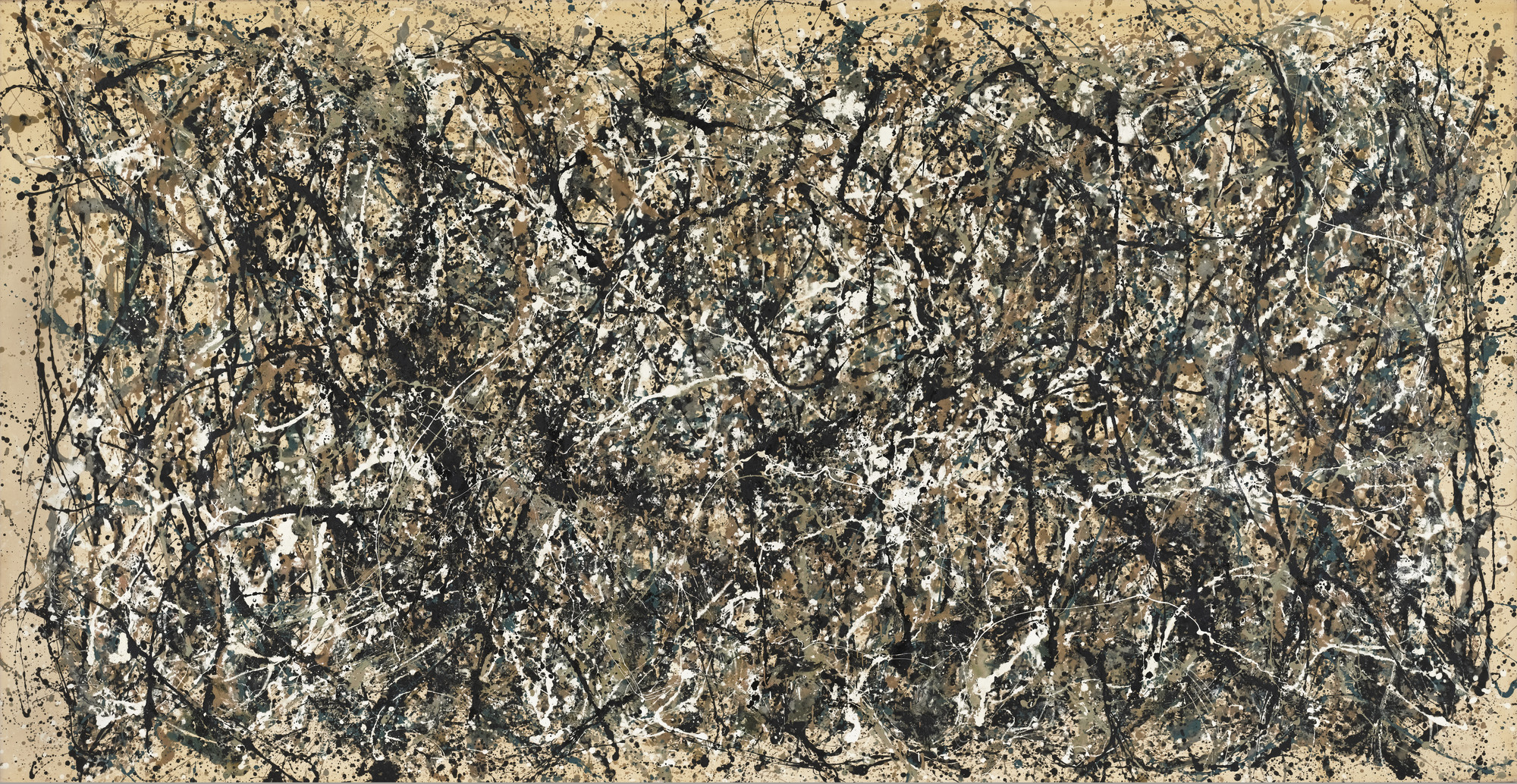
Whenever people discuss about contemporary art I get reminded of these incredibly poignant Soviet war paintings [1] which manage to partially describe what the atrocities on the Eastern Front meant for the people involved, but which are nevertheless a lot less well-known compared to contemporary art "darlings" like Jackson Pollock whose works don't tell me absolutely anything and who had his career propped up by the CIA at some point. [2]

Later edit: I mean, compare this Soviet painting called "The Last Letter" [3] to Pollock's "One, Number 31, 1950" (taken from the artist's wikipedia page). The first painting instantly made me feel the blood flowing through my veins, even though I had last seen it 7 or 8 years ago (when I also left a related comment here on HN), while Pollock's painting doesn't make me feel anything.

[1] http://www.allworldwars.com/Soviet%20War%20Paintings.html

[2] https://www.independent.co.uk/news/world/modern-art-was-cia-...

[3] http://www.allworldwars.com/image/008/SovietPictures065.jpg

[4] http://www.moma.org/media/W1siZiIsIjIyMzgwNSJdLFsicCIsImNvbn...

Re: The $2M Urinal: Why Hard Work Doesn’t Cut It (2018)

#68
post #53

Earlier quoted context omitted.

>Ehh... Not having objective, quantitative metrics is not the same thing as having no quality what so ever. I am shocked that in 2019 there are adults walking around with this epistemology. Every quantitative metric is an exercise in narrative. The notion of objectivity is an appealing construct in a world constructed by second hand observations, but alas, it remains just another implement in the narrative toolkit.

E pur si muove.

If you are an empiricist worth your salt this (the fundamental lack of objectivity in human knowledge) is a vital piece of understanding. Being blind to the flaws of your instruments is a terrible way to do science. Also I find it ironic that this quote is probably apocryphal and yet is offered in defense of objectivity.

Re: The $2M Urinal: Why Hard Work Doesn’t Cut It (2018)

#69
post #32

Contemporary art is a sophisticated form of money laundering for the very rich. As it almost completely exempt from taxation, it's an ideal vehicle, relatively fungible and open to crazy speculation. The crazy financiarisation of our world made many collectible objects prices skyrocket (see old cars, art, etc). But Contemporary art is the best of all, because, contrary to ancient art or old ferraris, its supply is un…

[deleted]

Re: The $2M Urinal: Why Hard Work Doesn’t Cut It (2018)

#70

Earlier quoted context omitted.

>Ehh... Not having objective, quantitative metrics is not the same thing as having no quality what so ever. I am shocked that in 2019 there are adults walking around with this epistemology. Every quantitative metric is an exercise in narrative. The notion of objectivity is an appealing construct in a world constructed by second hand observations, but alas, it remains just another implement in the narrative toolkit.

And now you are swinging too hard in the other direction. We can and do draw distinctions between narratives as we best we can. The unattainability of ultimate truth does not negate the partial truths we are able to grasp.

No, but it does negate their status as objective, and it gives us cause to be suspicious whenever people start trying to wear that particular crown. If anything this is the entire point of empiricism, that we're only able to produce approximate descriptions of reality that are valued for their utility rather than their approach to some gilded ur-state called "Truth". Keeping that in mind (what some people might call "skepticism") is what allows us to observe the distinctions between narratives in the first place.
Post reply on HN