One of my startups was purchased by QLogic, which made PCI cards in bulk. One of their corporate standards is that prototypes have red PCBs, to prevent them ever being mixed together with production parts. These days I have some friends who have a particular debit card that's the same color of red. Every time I see it, I twitch.
Why Are Printed Circuit Boards Usually Green? (2017)
11–20 of 73 posts
Re: Why Are Printed Circuit Boards Usually Green? (2017)
#12What I'd like to see is a developer board targeted at the education market that uses colours to show the traces.
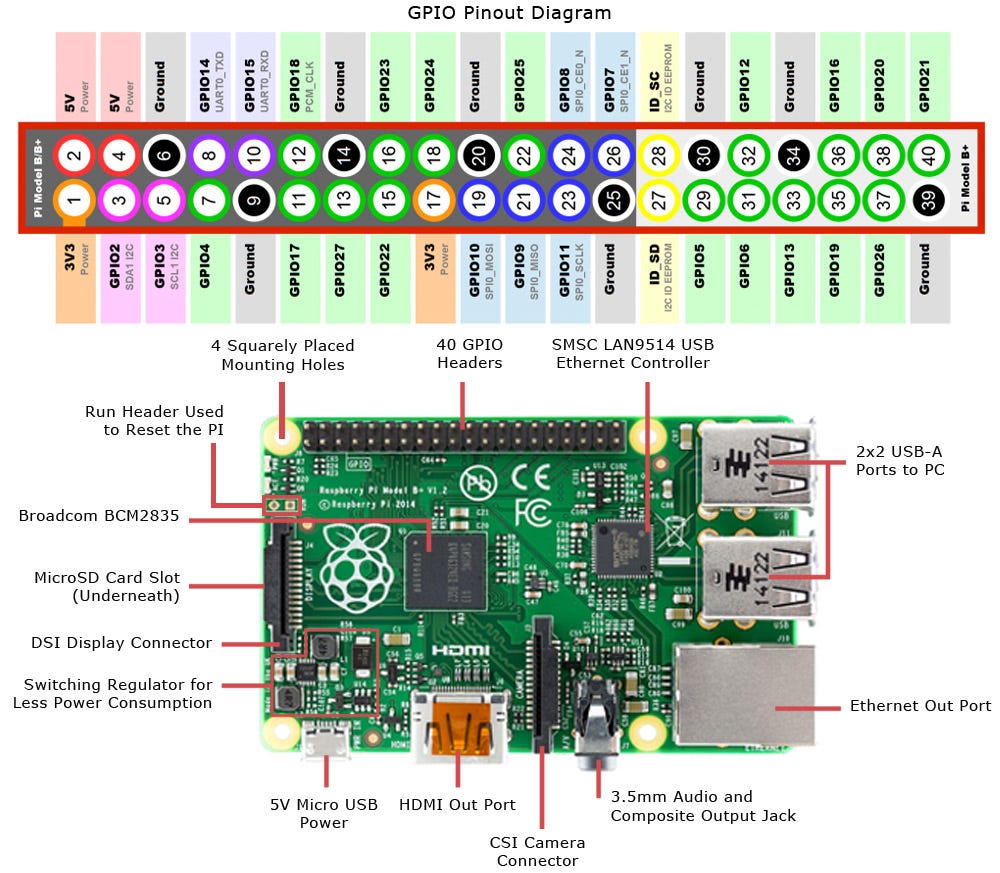
I think that at least showing the power and ground could reduce the risk of shortouts. It would be a lot easier for teachers to say "plug the red wire into the red pin" instead of "the top right ... no, other top, turn it around".
[1] Raspberry Pi pinout https://cdn-images-1.medium.com/max/1000/1*QlSyHfcfNu4ePpNoN...
[2] https://i2.wp.com/makezine.com/wp-content/uploads/2009/12/20...
Re: Why Are Printed Circuit Boards Usually Green? (2017)
#13Re: Why Are Printed Circuit Boards Usually Green? (2017)
#14Re: Why Are Printed Circuit Boards Usually Green? (2017)
#15Interesting example of a place where a small but meaningful advantage in a manual application (reduced eye strain during visual inspection) leads to a larger, nearly insurmountable advantage in a world where the task has been largely automated thanks to preexisting R&D/economies of scale. I expect we will see more and more of this in the coming decades across multiple industries. Anything else fit this pattern today?
Re: Why Are Printed Circuit Boards Usually Green? (2017)
#16https://en.wikipedia.org/wiki/File:IBM_SMS_card_circuit_side...
Re: Why Are Printed Circuit Boards Usually Green? (2017)
#17Re: Why Are Printed Circuit Boards Usually Green? (2017)
#18Interesting example of a place where a small but meaningful advantage in a manual application (reduced eye strain during visual inspection) leads to a larger, nearly insurmountable advantage in a world where the task has been largely automated thanks to preexisting R&D/economies of scale. I expect we will see more and more of this in the coming decades across multiple industries. Anything else fit this pattern today?
Small but meaningful advantage in a manual application:
* Guiding the user to guide a complex machine through a precise sequence of steps in order to achieve a goal, such as reading mail or writing a letter
Automation:
* Natural language recognition, shell scripting
Economy of scale:
* Beautiful formatted text has lost its value due to being ubiquitous, and more and more document processing consists of copying and pasting in an e-mail program
Re: Why Are Printed Circuit Boards Usually Green? (2017)
#19I love that OSH Park ( https://oshpark.com/ ) uses purple soldermask. It's a fairly unusual soldermask color, but they use only purple. It looks great with gold plating, and it gives a satisfying sense of branding to for open source hardware and prototyping.
Re: Why Are Printed Circuit Boards Usually Green? (2017)
#20Note that in the early days of electronics, PCBs did not have soldermask, because it wasn't necessary: https://en.wikipedia.org/wiki/File:IBM_SMS_card_circuit_side...
Examples here: http://golddredgervideo.com/kc0wox/tek/7504/detailedpictures...
Whole scope is a work of art!