Live data from Hacker News

Ikea founder leaves fortune to no one, structures it to ensure it lasts forever

bloomberg.com

121–130 of 373 posts

Re: Ikea founder leaves fortune to no one, structures it to ensure it lasts forever

#121
post #103

Earlier quoted context omitted.

The Swedish flags predates the Swedish welfare state by several hundred years (and IKEA predates it by a couple of decades).

The hypocrisy is that IKEA is now registered basically nowhere, technically in the Netherlands, but definitely not in Sweden. How would you feel if Apple would keep portraying itself as an US company after moving its HQ to China? :)

"registered basically nowhere" != "moving its HQ to China"

Registration is a matter of paperwork. Incorporation is a legal fiction. IKEA is a Swedish company for all intents and purposes, except tax liability. Taxation isn't the essence of Swedishness.

If Apple did some legal magic and moved its company registration to Sweden (and paid any and all due taxes in Sweden), it still wouldn't make the iPhone a Swedish product (to the extend the iPhone claims a nationality, which is doesn't really, so it's not a great comparison).
Re: Ikea founder leaves fortune to no one, structures it to ensure it lasts forever

#122
post #53

Earlier quoted context omitted.

Oh nice, if he thought he could use the money better, then sure, please carry on not paying taxes. Can I do the same? Or is that a privilege reserved for the mega-rich? Or let's call a spade a spade, and let's call tax evasion tax evasion.

Want to stop avoidance? Make proper laws. If it's legal (even through lobbying), then it is legal. And frankly I don't see why you shouldn't if you legally can. But to each their own views on this. You know who can stop avoidance? Politicians. They need to take responsibility. Feel free to shame multinationals or HNWIs for not paying taxes, but at the end of the day avoidance is only possible because politicians (or…

> If it's legal (even through lobbying), then it is legal.

But it's not legal. At least in theory, in most of continental european law the spirit of the law stands above the letter of the law, and just because you found a technicality does not make it legal.

Re: Ikea founder leaves fortune to no one, structures it to ensure it lasts forever

#123
post #86

Earlier quoted context omitted.

willing to pay more taxes than you are legally required to There is a material difference between that and actively seeking loopholes that are not available to ordinary people. Ikea is only possible because of the physical and legal infrastructure paid for by those ordinary people after all. Not that they will do anything of course, the Viking spirit is long dead.

If you aren't seeking out the loopholes that apply to you, then you are paying more in taxes than you are legally required to. "legally required to" does not incur a balancing test between what is practicable vs the time it takes. If you're a regular, mid-income citizen, then there isn't likely to be a good ROI on hiring a dedicated accountant to find you loopholes. If you're making $200k a year, and you save 10%, ho…

The difference between "many Americans" (actually other highly-taxed subjects are probably the same) and hideous unkillable corporate zombies like Ikea is that the little people use the tax laws as they are. The corporate monsters write the tax laws, to their own exclusive benefit, in every nation they invade. That's not an option for the little people.

Re: Ikea founder leaves fortune to no one, structures it to ensure it lasts forever

#124
post #120
post #96

Earlier quoted context omitted.

I'll see if I can find the sources but I saw some comments recently that it was a sham, mostly. He did have high expenses. Edit: Wikipedia says: > Kamprad owned a villa in Switzerland, a large country estate in Sweden and a vineyard in Provence, France. I can't guarantee the prices, but those things should be in the multi-million Euro range. Not quite rapper expenses, but definitely not middle class either.

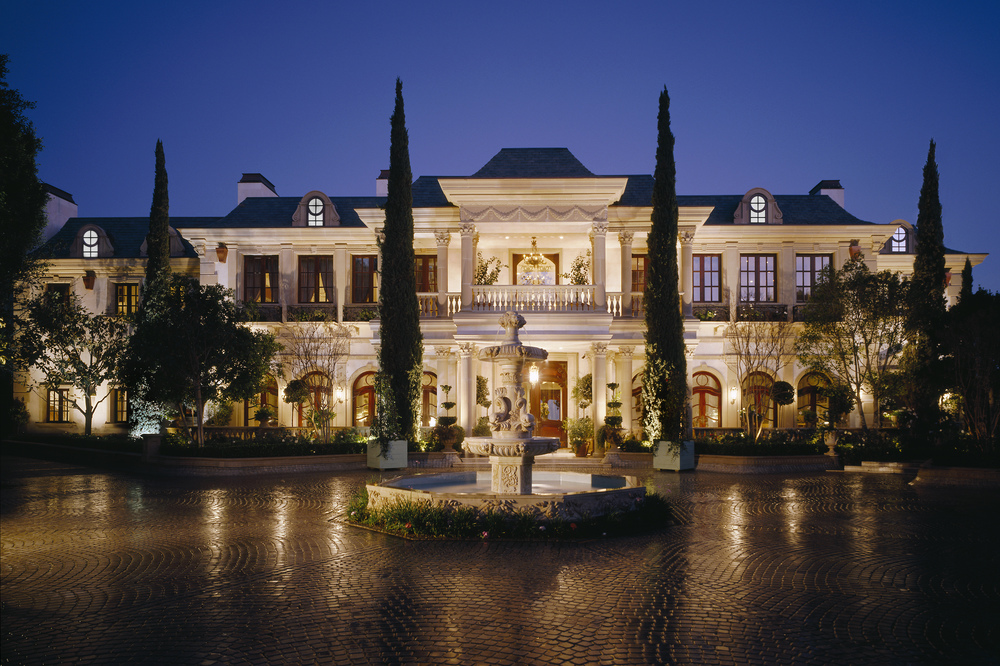
Here's a picture of his villa in Switzerland: https://w.cdn-expressen.se/images/7d/e2/7de2bbfb59044fe6bfc3... I mean it's really nice house and apparently comes with a very big garden and beautiful view of the lake, but it's hardly opulent. In a different, cheaper, part of the world a house like that would definitely be within the reach of at least someone earning a decent upper middle class salary. edit: Here is his…

> In a different, cheaper, part of the world

Key words :)

Real estate is 90% "location, location, location".

Re: Ikea founder leaves fortune to no one, structures it to ensure it lasts forever

#125
post #95

Earlier quoted context omitted.

Injecting legal definitions into an informal conversation is a cheap debater's trick, annoying, and and hijacks the conversation.

It's not semantic, or a legal definition. It's a very explicit and important difference – 'evasion' is illegally avoiding taxation, and 'avoidance' is legally avoiding taxation. Messing these two different concepts up helps nobody and just muddles the two issues further. Avoidance is a problem that must be tackled on a global scale; but first, we have to be honest about what it is.

> It's a very explicit and important difference

It's a mere technicality. Important in a court of law - sure.

Not important when discussing ethical implication of not paying taxes in the context of HN.

Re: Ikea founder leaves fortune to no one, structures it to ensure it lasts forever

#126

Earlier quoted context omitted.

Sure, call tax evasion tax evasion, but AFAIK Kamprad wasn't doing it. Authorities go very hard against tax evasion, the illegal thing. Tax avoidance is by definition things that are legal, not tax evasion.

In fact authorities are pretty lenient on tax evasion by the hyper-rich. The number of convictions and jail sentences isn't zero, but given the sums involved it's pitifully low. This is partly a resource problem. If you can pay advisors to create an impenetrable network of shell companies through which money disappears five levels down, you can pay lawyers to defend you if something goes wrong. The authorities are fa…

It's not only relevant what the sums involved are. It is very relevant whether laws are broken, and how clear the lawbreaking is.

Thus you can have large sums involved, but may find out that law wasn't broken, so there is no conviction. This is as it should be.

Re: Ikea founder leaves fortune to no one, structures it to ensure it lasts forever

#127
post #124
post #120

Earlier quoted context omitted.

Here's a picture of his villa in Switzerland: https://w.cdn-expressen.se/images/7d/e2/7de2bbfb59044fe6bfc3... I mean it's really nice house and apparently comes with a very big garden and beautiful view of the lake, but it's hardly opulent. In a different, cheaper, part of the world a house like that would definitely be within the reach of at least someone earning a decent upper middle class salary. edit: Here is his…

> In a different, cheaper, part of the world Key words :) Real estate is 90% "location, location, location".

Obviously. My point is that if you just saw a picture of that house your first thought wouldn't be "Wow, I bet one of the richest people in world lives there". Compare to for example this house: http://luxurylaunches.com/wp-content/uploads/2017/02/Le-Belv... which would be expensive basically no matter where in the world you where.

And even with it's perfect location it's apparently still 'only' a ~4 million eur. house. It's not even one of the 10 most expensive houses in town. Hell there are 10 more expensive houses for sale around there on homegate.ch right now.

Re: Ikea founder leaves fortune to no one, structures it to ensure it lasts forever

#128
post #46

> The foundation owns itself, so no Kamprad family members hold shares. Late stage capitalism... Anyway, I don't really get why the article claims he didn't care about money. It's known for a while that IKEA avoids taxes in many dodgy ways. If he really didn't care, the connected companies could pay a reasonable amount.

He didn't really care about money personally, or at least not the material things money can buy. At least that's the image he worked very hard to portray by driving an old Volvo, living in a modest house and wearing clothes bought in a second hand store etc. He obviously cared a lot about his companies making as much money as possible. Although if you asked him he'd probably say that all that tax avoidance was just h…

That was part of his public appearance because it has been extremely valuable, and it has been debated wether it was authentic or not.

Re: Ikea founder leaves fortune to no one, structures it to ensure it lasts forever

#129

Earlier quoted context omitted.

It's not semantic, or a legal definition. It's a very explicit and important difference – 'evasion' is illegally avoiding taxation, and 'avoidance' is legally avoiding taxation. Messing these two different concepts up helps nobody and just muddles the two issues further. Avoidance is a problem that must be tackled on a global scale; but first, we have to be honest about what it is.

> It's a very explicit and important difference It's a mere technicality. Important in a court of law - sure. Not important when discussing ethical implication of not paying taxes in the context of HN.

> Not important when discussing ethical implication of not paying taxes in the context of HN.

Legal definitions are not important for discussing ethical implications?

This is a wildly unsubstantiated claim that you’re positing without any compelling argument behind it. What you’re saying is implicitly tantamount to saying a discussion of legislation is irrelevant in a discussion of ethics. Doing that literally dismisses entire schools of ethical philosophy.

You don’t have to agree with legal definitions a priori, just like you don’t need to agree with particular ethical arguments. But you absolutely need to consider them for a well reasoned discussion about ethics. The legal definitions are there precisely because of past ethical discussions - legislative arguments are, categorically, ethical arguments. In fact, you could define legislation as the implementation of an ethical specification.

Re: Ikea founder leaves fortune to no one, structures it to ensure it lasts forever

#130
post #109
post #86

Earlier quoted context omitted.

willing to pay more taxes than you are legally required to There is a material difference between that and actively seeking loopholes that are not available to ordinary people. Ikea is only possible because of the physical and legal infrastructure paid for by those ordinary people after all. Not that they will do anything of course, the Viking spirit is long dead.

I think everyone seeks loopholes. And certainly all businesses are seeking as many loopholes as possible. And as long as politicians are either business people or bought by business people the loopholes will exist. And we will be paying for those businesses in one way or another.

The word "loophole" itself encodes a sort of prejudice into our language, much like the phrase "automobile accident" instead of the more neutral "automobile collision". If by "loophole" one means a legislative mistake that catches legislators and lobbyists by surprise with its unintended consequences, then it denotes something that has never actually existed. People work for hundreds of hours on legislative terms, and other people pay hundreds of thousands of dollars to get those terms in front of the legislature for a vote. We need another word, that encapsulates the whole concept of a benefit that big business has created for itself via corruption.
Post reply on HN