Live data from Hacker News

Apple is sharing your facial wireframe with apps

washingtonpost.com

81–90 of 152 posts

Re: Apple is sharing your facial wireframe with apps

#81
post #49
post #29

Earlier quoted context omitted.

Haha, cool! Hi :) Given the small size of the laser projector, I imagine natural movement from the phone being hand-held would result in significant displacement of the projected dots over a 1s interval? Have you tried integrating the 15 frames to see what it looks like?

Could you stabilize this before integrating? Using feature points and matching them up, perhaps?

I imagine something like that would be necessary. The techniques would probably be ones related to those used in SLAM [1].

[1] https://en.wikipedia.org/wiki/Simultaneous_localization_and_...
Re: Apple is sharing your facial wireframe with apps

#82
post #35

Let’s not jump to conclusions here based on assumptions and ignorance. What is likely being shared is a generic wireframe with pose and expression information. Not a face fingerprint as some are breathlessly calling it.

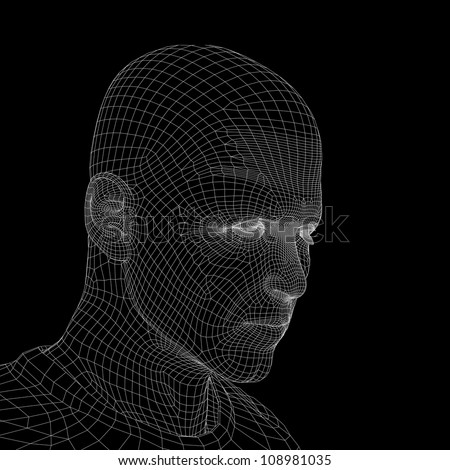
a precise wireframe could be as precise as a fingerprint... If it has a very high mesh count, it is just a high resolution 3D model of your face... much more information then what is required to face-id you

look at this model for example, it has medium amount of mesh: http://image.shutterstock.com/display_pic_with_logo/279553/1...

Re: Apple is sharing your facial wireframe with apps

#83
post #13

I've been playing with the TrueDepth Camera APIs on the iPhone X. Some things I've noticed: 1) The ARKit "Face Mesh" seems to be a standard model that is scaled and skewed to fit your face (for example, it ignores glasses, still works if you put your hand in front of your face, etc). It is _not_ a 3D scan. 2) The "TrueDepth" data is not really all that granular. It seems similar to the depth map you get from the rear…

Re 3) I don’t know any details of Apples implementation, but typically computer vision algorithms integrate data from multiple sensors to generate a 3D model. The more data you have, the more robust the output will be. It’s possible to generate reasonable 3D models of faces from a single photograph. [1] The highest resolution 3D scans I’ve seen are produced by aligning data from multiple high resolution photographies…

And if you're interested in building 3D models from multiple photographs, try Helicon Focus. You take a focus stacked set of images (basically get a macro lens, open it up pretty wide, and take a picture with the focal plane 1cm (etc.) apart until every part of your subject is in sharp focus), and it will look for the sharply-focused parts to infer depth information for the stack. It can then build you a 3D model.

Pretty neat stuff, though I've never found any actual artistic or practical use for it.

Re: Apple is sharing your facial wireframe with apps

#84

Earlier quoted context omitted.

> What if I don't want to have my face scanned, but nevertheless need to pick up somebody's lost-phone/detonation-device? Shall I just wear a mask? Well...yeah. If you're out in public and your face is visible, you don't have a reasonable expectation of privacy.

What does this have to do with "out in public"? I have by law, custom, and common sense an expectation of not being 3D-scanned in a gas station bathroom, even if I pick up the phone that the previous visitor had dropped on the floor.

And if the previous visitor was on a Skype call with someone while in that bathroom, dropped the phone on the floor, and walked out, and you walked in and picked up the phone, you would have the same issue.

Many privacy-conscious settings that I've been in prohibit phones entirely.

Re: Apple is sharing your facial wireframe with apps

#85

Earlier quoted context omitted.

Does Tencent not have an extension that pops up in the sharing sheet for images?

Just checked again: not for Discord. No idea about other apps owned by Tencent. It's notable Discord was developed as an American startup, and it's not clear what Tencent's involvement is. Regardless, for me it's too much access for a chat app to have in exchange for the convenince of sharing a photo from my phone.

A better solution would be for Apple to provide a decent photo picker that functions at the system level, and require a separate (special) permission to access all photos with the appropriate warning if that app needs a fancy dancy photo picker.

Why do I need to give snapchat access to all photos ever just to post from my camera roll?

Re: Apple is sharing your facial wireframe with apps

#87
post #13

I've been playing with the TrueDepth Camera APIs on the iPhone X. Some things I've noticed: 1) The ARKit "Face Mesh" seems to be a standard model that is scaled and skewed to fit your face (for example, it ignores glasses, still works if you put your hand in front of your face, etc). It is _not_ a 3D scan. 2) The "TrueDepth" data is not really all that granular. It seems similar to the depth map you get from the rear…

It looks like one of those old conversation pieces that had the grid of needles you could push your face or hand into to make a 3D image.

Re: Apple is sharing your facial wireframe with apps

#88
post #13

I've been playing with the TrueDepth Camera APIs on the iPhone X. Some things I've noticed: 1) The ARKit "Face Mesh" seems to be a standard model that is scaled and skewed to fit your face (for example, it ignores glasses, still works if you put your hand in front of your face, etc). It is _not_ a 3D scan. 2) The "TrueDepth" data is not really all that granular. It seems similar to the depth map you get from the rear…

> The scary part, which is vast dystopian databases of facial fingerprints is already being done with normal photographs. The depth data is not needed

Exactly what I've said from day one - that Apple's "FaceID is 50x more secure than Touch ID" claim, based on the False Acceptance Rate, was total bullshit. That only works if you're going to throw random data at the authentication mechanism.

But someone who's going to target you isn't going to do that. It's going to you a 3D profile of your face from your online photos or from CCTV cameras (to which not only the government has access, but hackers, too).

In practice, it's much more difficult to gain a clone of someone's fingerprint than it is to gain a clone of their 3D face.

Post reply on HN