Live data from Hacker News

Young men dropping out of the job market to spend time in an alternate reality

1843magazine.com

211–220 of 535 posts

Re: Young men dropping out of the job market to spend time in an alternate reality

#211
post #163

Usually love the Economist -- and I read it regularly -- but I think this article is bullshit. It's the same kind of nonsense people were writing in the mid and late-90s: that violent games cause violent tendencies. Luckily, those claims ended up being completely debunked by dozens of studies. Now, we have a "gaming epidemic" that has gripped the unemployed, underemployed, and depressed? Give me a break. Gaming is si…

> "For Emily, and for many others, games were not the luxury luring her away from career. They were a comfort blanket and distraction, providing some solace when the working world offered only bitter disappointment."

> And.. why is this bad exactly?

According to the article Emily left her first job voluntarily. Why is that not ideal?

- Felt bad about herself while unemployed/underemployed

- Opportunity cost of not building job skills/experience (for 2+ years)

- Opportunity cost of not building normal adult skills and attitudes, like understanding that work isn't always fun, and adult life is about accepting a balance between fun and responsibility

- The more tangible opportunity costs of not building savings, a salary history, or contributing to retirement savings, which due to compounding interest is significantly more effective the earlier it begins

- The Fallout games really aren't open-ended enough to provide enough entertainment to take the place of a career

> What's the alternative? Work yourself to the bone, fall in love with someone you hate, have some kids that hate you, get a divorce, and die alone?

No idea how any of this follows from staying employed until a better job is available.
Re: Young men dropping out of the job market to spend time in an alternate reality

#212

It's not just video games either. Add Netflix and social media, and soon, VR, to the equation, and it's pretty clear that the game of life offers insufficient rewards relative to one's efforts. I don't believe we ended up here due to some grand conspiracy, but I do think that the top 1% have gotten so skilled at trapping wealth and therefore opportunity that it's really screwing over everyone else. Even as a relative…

It's like the world is catching up to Japan and its problems: slow growth, deep government debt, ballooning social entitlement spending, and un/under-employed youth.

This is just like the Japanese Neets.

Re: Young men dropping out of the job market to spend time in an alternate reality

#213
post #186

Earlier quoted context omitted.

I have to disagree. Apart from maybe post WW2 in America, the average person has always had to work much harder than the elite. There were sweatshops, Kings, slavery, and colonialism. If we look at American now, even with all of its issues, it is much better for the middle and lower class than it was 100 years ago.

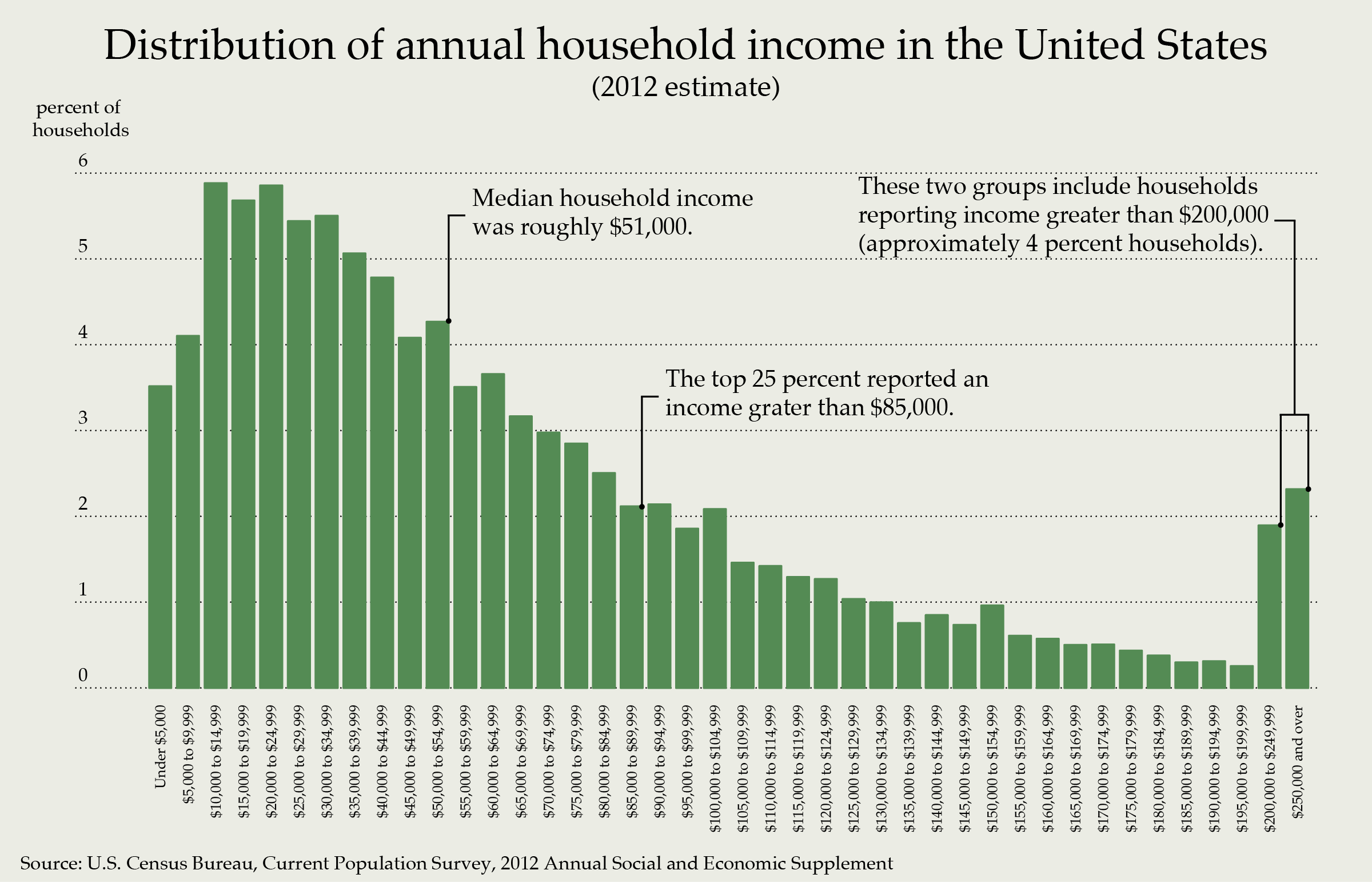
Not sure how you come to that conclusion when the middle class is almost gone in this country.

Not quite: https://cdn2.vox-cdn.com/uploads/chorus_asset/file/2930990/D...

Re: Young men dropping out of the job market to spend time in an alternate reality

#214
post #211
post #163

Usually love the Economist -- and I read it regularly -- but I think this article is bullshit. It's the same kind of nonsense people were writing in the mid and late-90s: that violent games cause violent tendencies. Luckily, those claims ended up being completely debunked by dozens of studies. Now, we have a "gaming epidemic" that has gripped the unemployed, underemployed, and depressed? Give me a break. Gaming is si…

> "For Emily, and for many others, games were not the luxury luring her away from career. They were a comfort blanket and distraction, providing some solace when the working world offered only bitter disappointment." > And.. why is this bad exactly? According to the article Emily left her first job voluntarily. Why is that not ideal? - Felt bad about herself while unemployed/underemployed - Opportunity cost of not bu…

> No idea how any of this follows from staying employed until a better job is available.

If you're arguing that one should stick with a job they hate until something better comes along, I vehemently disagree. That's like saying "I understand your husband beats you, but don't leave him until you find someone else."

Maybe you haven't had any, but some jobs are soul-suckingly terrible and toxic. You only get one life, at least try to enjoy it.

Re: Young men dropping out of the job market to spend time in an alternate reality

#215

Earlier quoted context omitted.

This is the thing UBI prevents. A large benefit of a UBI compared to the status quo is that it reduces marginal tax rates on low income people. Right now you can get a lot of assistance if you have little to no income, but if you make a dollar you lose 90 cents in benefits. Who wants to work for 10 cents on the dollar? With a UBI you make a dollar and you keep most of it, so there is more incentive to work.

How does a UBI prevent this? The people described in the article don't seem to want more money. They want to play video games. Giving them enough money to live off of would allow them to do exactly that while producing nothing of benefit to society. Right now, at least, some of them seem marginally productive (contractors, the cashier, etc). Utility, as a function of money, generally has a negative second derivative…

You are assuming that a person working is always better than a person not working, but if some of the nascent technologies become mainstream (AI, robotics), it might be that the aggregate offer of jobs dries out. In those conditions, what justifies incentives to jobs that no one needs? Wouldn't it be possible that such a scheme becomes more expensive than a UBI scheme? Another solution would be to heavily regulate AI, robotics etc. in a way that human jobs are still needed, but that would mean paying a very high price in terms of international competitiveness.

Re: Young men dropping out of the job market to spend time in an alternate reality

#216

My friends were getting addicted to "Evercrack" 15 years ago, playing for days on end, affecting school, work, and social life. Other games had similar effects (usually mmorpgs). Nothing new here

Scale and the surrounding economic/social circumstances are new.

This article provides absolutely no evidence of that.

> What these individuals are not doing is clear enough, says Erik Hurst, an economist at the University of Chicago, who has been studying the phenomenon. They are not leaving home; in 2015 more than 50% lived with a parent or close relative. Neither are they getting married.

Yes, that's very clear from many surveys & studies.

> What they are doing, Hurst reckons, is playing video games. As the hours young men spent in work dropped in the 2000s, hours spent in leisure activities rose nearly one-for-one. Of the rise in leisure time, 75% was accounted for by video games.

Ok, so people are playing more video games. That makes sense, not only as they become more ubiquitous and engaging, they take up new forms of media and are easier to acquire. There's even products marketed to people who never played a video game before. More people are gaming, and existing people are playing more. That's logical enough.

They also mention that at the same time, working hours dropped. Sure, in the 2000s we had a massive recession on the heels of a new generation about to join the workforce. Perhaps there were reasons other than gaming that people worked less hours. They don't speculate on that.

> It looks as though some small but meaningful share of the young-adult population is delaying employment or cutting back hours in order to spend more time with their video game of choice.

Uh.... What?

They go ahead and interview a handful of more people who have a story about how they like to game more than they like to work, or how it affected their life. This is anecdotal, cherry-picking, speculative fiction. And this is the only evidence they propose.

Why else would a young adult delay employment or cut back hours?

1. There aren't any jobs.

2. People are getting horrible loans they'll never pay back and can now afford a home with much less money (or none?), so their kids can stay at home longer and don't need to get a job yet.

3. There aren't any jobs.

4. There are less hours available to work, because the economy is crashing.

5. There aren't any jobs.

With those "opportunities" to stay at home, without a job, of course they're going to play video games. What else are they going to do, dig ditches? Go outside and play? These are millennials we're talking about.

The circumstances are new, and the scale of those circumstances is new, but there is no trending ramp in people not working in order to play video games. This isn't Japan.

Re: Young men dropping out of the job market to spend time in an alternate reality

#217
post #165
post #25

Earlier quoted context omitted.

This really hits home for me. Seems like every older family member I have just has tons and tons of useless stuff. I dont get it.

Right now, the biggest pile of useless stuff I have is .. video games. (~Twenty years ago I bought every Atari/Intellivision/Vetrex/etc game I could find at various flea market and thrift stores, and for the last ten I've been dreading getting rid these boxes of useless stuff.)

Useless is 3 different vacuums that have different brand names, colors, attachments, etc... but are all made by the same parent company and all break predictably after 2 years of use.

Collecting game systems that you play and use which are also not being made anymore isn't useless in the least. Comparatively, that is.

Re: Young men dropping out of the job market to spend time in an alternate reality

#218
post #163

Usually love the Economist -- and I read it regularly -- but I think this article is bullshit. It's the same kind of nonsense people were writing in the mid and late-90s: that violent games cause violent tendencies. Luckily, those claims ended up being completely debunked by dozens of studies. Now, we have a "gaming epidemic" that has gripped the unemployed, underemployed, and depressed? Give me a break. Gaming is si…

I kind of get what you're saying, but the phenomenon is new: this isn't the only source I've seen that discusses that there is a growing amount of un- or under-employment among young men that seems to be accepted comparatively happily, with the hypothesis that compelling computer games are part of the difference. I'm pretty sure that the analogy with movies is weak, although probably the 80s equivalent was sitting ar…

> I'm pretty sure that the analogy with movies is weak

Maybe. My point was only: take an arbitrary decade and [insert cheapest form of entertainment here].

> I think that if you're that annoyed about the idea of this article using strawmen...

I'm annoyed with the article using gaming as a red herring to get clicks. I'm being hyperbolic (or am I? divorce rates are pretty high[1]).

[1] http://www.pewresearch.org/fact-tank/2017/03/09/led-by-baby-...

Re: Young men dropping out of the job market to spend time in an alternate reality

#219

Earlier quoted context omitted.

Utter and complete rubbish. The 'boomers' invented most of the 'computer stuff' you use, most 'developers' today are hacks (granted, some are amazing). Boomers had difficult upbringing, brought real social change, lived through - and ended the Cold War. Female boomers were expected to be secretaries - and had to fight for the right just to do normal jobs in the workplace. Even the boys - were expected to do the same…

This response is so stereotypical and contrary to the facts of the conditions of young people today, I have to thank you for demonstrating both my and the parent's points. Thanks for that!

[deleted]

Re: Young men dropping out of the job market to spend time in an alternate reality

#220

Earlier quoted context omitted.

It's even better when they don't like the fact that you are doing the job in a way they can't understand. I swear some people think they are paying you to suffer, and if you do something in a way that doesn't require enough suffering they feel ripped off.

Lets be clear here. What-ever the persons opinion of you should have absolutely no bearing on your professional work, and your relationship between then. I have rude clients, I have smart ass clients. Something is very clear I make it to them when I do the job, I'm doing it for money. If they think $1000 per hour is too much then they're not a client I really want to be working with. I have found you need to make it…

That works fine when they're "clients" and you have a business - they naturally accept B2B situations as equals. But when you're the employee, that doesn't work. If you make it clear that you're only in the job for the paycheck, you're going to get fired - you have to make it seem to management like you have some psychopathic desire to be there busting your ass for nine hours on their inane and unfulfilling tasks.
Post reply on HN