Live data from Hacker News

The dream of Ara: Inside the rise and fall of Google’s most revolutionary phone

venturebeat.com

81–90 of 109 posts

Re: The dream of Ara: Inside the rise and fall of Google’s most revolutionary phone

#81
post #6

I don't get it. This is a IBM PC moment right here. Imagine you could standardize the smartphone. Really divide it into block, standardize the communication bus. Make it a PC. It would be huge, eat up the smartphone world, just like the PC ate up the homecomputers. I even think this is how Google would have beaten the iPhone. Android as the OS for an ever-evolving phone, where if a user needs more ram he would just a…

The thing about the PC was that it was an accident of history.

Being made largely out of off the shelf parts, and coming from a company with a massive brand recognition in the business world, the PC was ripe for cloning.

The standardization only happened after the BIOS had been cloned, and the clones defended successfully in court.

As Project Ara moved forward, it became more and more clear that Google would have none of that clone business.
Re: The dream of Ara: Inside the rise and fall of Google’s most revolutionary phone

#82
post #32
post #6

I don't get it. This is a IBM PC moment right here. Imagine you could standardize the smartphone. Really divide it into block, standardize the communication bus. Make it a PC. It would be huge, eat up the smartphone world, just like the PC ate up the homecomputers. I even think this is how Google would have beaten the iPhone. Android as the OS for an ever-evolving phone, where if a user needs more ram he would just a…

Did the upgradeable PC ever really work, or did the vast majority of PCs sold go to the dump with exactly the same configuration as sold? After a few years, it becomes a cascade of dependencies: Can't upgrade memory because the old motherboard won't support state of the art DIMMs, the bus used by current cards (ISA, PCI, AGP, PCIx) doesn't match the motherboard, power supply connector has different number of pins, an…

It did, until it no longer did.

With DOS and Win9x one could effectively replace everything underfoot of the OS and it would hardly blink. Yes it would fall back to 640x480 and 16 colors, and demand you install some new drivers, but beyond that you could do just about anything and it would still boot.

Come NT and you would just be greeted with a error screen and a demand that you did a recovery (that would effectively roll back all patches etc).

And these days you have to phone Microsoft if you try anything like it more than a couple times because you tripped their DRM checks.

Yes, one could wander into a solid case of "my grandfathers axe". But the various layers were independent enough that they would come up in some kind of state that you could work with.

Sadly i fear that Linux is heading into the NT realm with the changes to the graphics sub-system that has come in recent years.

Where before higher modes were the realm of X, and things like 3D acceleration was yet another semi-independent layer, these days the kernel may well give you an error if you do not have the right GPU driver compiled in.

Re: The dream of Ara: Inside the rise and fall of Google’s most revolutionary phone

#83
post #6

I don't get it. This is a IBM PC moment right here. Imagine you could standardize the smartphone. Really divide it into block, standardize the communication bus. Make it a PC. It would be huge, eat up the smartphone world, just like the PC ate up the homecomputers. I even think this is how Google would have beaten the iPhone. Android as the OS for an ever-evolving phone, where if a user needs more ram he would just a…

This actually already happened, to the extent that it ever made a difference in the PC ecosystem. The manufacturers of cheap phones in China use standardised modules: motherboard PCB, display with standardised connector, battery, "open mold" (a standard mold designed by a design contractor for the chipset vendor, open to many manufacturers).

This allows them to quickly assemble low-cost phones with components from a large number of manufacturers, driving down costs.

So the financial benefit that came from the open PC ecosystem has already been realised on cheap Android phones, the equivalent of the crappy PCs assembled from lowest bidder components of yesterday (Dell, Packard Bell, etc).

Re: The dream of Ara: Inside the rise and fall of Google’s most revolutionary phone

#84
post #32

Earlier quoted context omitted.

Did the upgradeable PC ever really work, or did the vast majority of PCs sold go to the dump with exactly the same configuration as sold? After a few years, it becomes a cascade of dependencies: Can't upgrade memory because the old motherboard won't support state of the art DIMMs, the bus used by current cards (ISA, PCI, AGP, PCIx) doesn't match the motherboard, power supply connector has different number of pins, an…

> Did the upgradeable PC ever really work, It did in the early days (the first 10 years). These days, the mobo, CPU, ram, power supply, graphics card all seem to need to be a matched set.

Oh man, I was poor soon after leaving my parents' house, and stopped thinking about PC upgrades for about 7 years. When income finally happened, I decided to customize a gaming PC and I thought I was just stupid. I guess it's actually a lot harder now.

Re: The dream of Ara: Inside the rise and fall of Google’s most revolutionary phone

#85
post #32

Earlier quoted context omitted.

Did the upgradeable PC ever really work, or did the vast majority of PCs sold go to the dump with exactly the same configuration as sold? After a few years, it becomes a cascade of dependencies: Can't upgrade memory because the old motherboard won't support state of the art DIMMs, the bus used by current cards (ISA, PCI, AGP, PCIx) doesn't match the motherboard, power supply connector has different number of pins, an…

> Did the upgradeable PC ever really work, It did in the early days (the first 10 years). These days, the mobo, CPU, ram, power supply, graphics card all seem to need to be a matched set.

For the mobo, CPU, and RAM, I would agree, but power supplies and graphics cards have been forwards and backwards compatible for roughly a decade.

Re: The dream of Ara: Inside the rise and fall of Google’s most revolutionary phone

#86
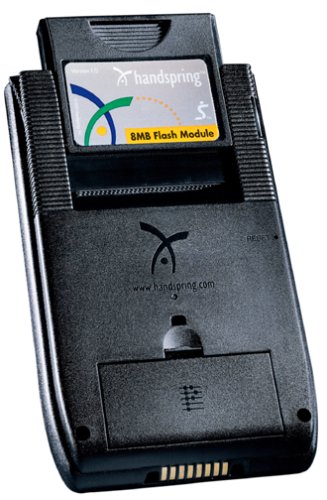
Way back when the dinosaurs roamed, and we had "PDAs", Palm tried to do this with their Visor "Springboards." These module would slide in the back and give you all sorts of awesomeness like "more memory, temperature loggers, cameras, printers, etc."

However, this expansion module came at a cost. The product itself had to be twice as thick as the competition, and the marketplace was moving so fast that it became outdated in just a few years.

Cool idea though - we actually made our own springboard module for our senior design project as a EE.

https://images-na.ssl-images-amazon.com/images/I/511D5DYQQAL...

Re: The dream of Ara: Inside the rise and fall of Google’s most revolutionary phone

#87
post #3

Ara was one of the most exciting things about Motorola, and I really wish Google had at least done us the favor of letting Lenovo have ATAP along with the rest of the company, where it might've had a chance. > _“To us, it just felt like we had just kinda hit molasses. And I think, to Google, it felt like they were being uncomfortably sped up,” the source said. Google constantly gets a lot of credit for "innovation",…

> letting Lenovo have ATAP along with the rest of the company, where it might've had a chance. Who says Lenovo wanted ATAP, or would have given it a chance? And Google bought Motorola almost 5 years ago. If you don't call that a chance, I don't know what is.

I think the point is that if you believe both (a) it had zero chance at google (b) it might have had non-zero chance at Lenovo - then it would've been preferable for it to go to Lenovo, since a possibility of >0 is still better than a flat 0.

Personally, I'm reasonably sure the chances of Ara succeeding were infinitesimal anywhere, but I think your "who says" isn't a counterargument to ocdtrekkie's point.

Re: The dream of Ara: Inside the rise and fall of Google’s most revolutionary phone

#88
post #5

Google mgmt fake releases and then subsequently cancels unlaunched products all the time. They do it to assess market viability and also to stymie competitors. Ara is notable because of the breadth of the project, but it was really just about protecting the android cash cow's flank. The strategy has worked pretty well. Android was released as open source almost 10 years ago, and you still can't run it on any semi ope…

Is it true that there's no semi-open hardware setup that can work for smartphones?

Surely there's a combo of parts that can be thrown together (albeit for a hefty price).

Re: The dream of Ara: Inside the rise and fall of Google’s most revolutionary phone

#89
post #21

Earlier quoted context omitted.

I worked at a startup producing an Android device funded by Intel and Intel wouldn't even give us source code to all the parts of the OS. We had to deal with binary blobs copied into the Android source tree for things like the HAL (hardware abstraction layer) and fastboot. They were things we really needed to customize too because their fastboot referenced buttons our device didn't have and things like that. It was p…

So the Intel system they gave you didn't have things like standard UEFI or a VESA/VGA subsystem? Could you install a standard x86/64 Linux distro or Windows?

Intel's mobile oriented Atom variants are incredibly stripped down vs their "desktop" line.

Back in the day Intel created a linux distro called Moblin to promote these CPUs, because Microsoft balked at supplying a Windows variant for a X86 platform that didn't even have PCI device enumeration.

Re: The dream of Ara: Inside the rise and fall of Google’s most revolutionary phone

#90
post #5

Google mgmt fake releases and then subsequently cancels unlaunched products all the time. They do it to assess market viability and also to stymie competitors. Ara is notable because of the breadth of the project, but it was really just about protecting the android cash cow's flank. The strategy has worked pretty well. Android was released as open source almost 10 years ago, and you still can't run it on any semi ope…

http://www.android-x86.org/
Post reply on HN