Live data from Hacker News

DNA analysis reveals there are four distinct giraffe species, not one

researchgate.net

81–90 of 107 posts

Re: DNA analysis reveals there are four distinct giraffe species, not one

#81
post #25

Earlier quoted context omitted.

Yes, my complaint is that you are highjacking an article on species differentiation in giraffes to talk about purported human subspecies. No, we emphatically do not have that high of a genetic difference. Quite the opposite. The diversity in human genetics is relatively small compared to other species. For example, quoting http://www.nature.com/ng/journal/v27/n2/full/ng0201_155.html : > The extent of DNA sequence var…

>Yes, my complaint is that you are highjacking an article on species differentiation in giraffes to talk about purported human subspecies. I did nothing of the sort. >No, we emphatically do not have that high of a genetic difference Yes, we do. The genetic distance between Nigerians and Australian aboriginals is .176. This is greater than the distance between almost any subspecies ever tested. >DNA doesn't lie. Human…

Citation for the "0.176", please? There are many scoring functions for DNA similarity.

Citation for the same numbers for chimpanzee subspecies, please?

Also, which Nigerians do you refer to? Huasa? Ibo? Because I think you meant to say either Yoruba or Western Pygmy.

At least I give links so others can double-check my statements. I would laugh if your reference used 500 bases rather than 10,000, or used something under strong evolutionary pressure instead of something neutral like this study.

FWIW, I'll use the time to the most recent common ancestor as my scoring function. For chimpanzees, two of the subspecies started to separate ~1 million years ago: http://www.eva.mpg.de/documents/AAAS/Kaessmann_Extensive_Sci... :

> When the MRCAs of the two chimpanzee subspecies for which multiple samples were available were estimated, they were found to be 1,755,000 years (95% confidence interval: 915,000 to 3,660,000 years) for the central chimpanzees and 502,000 years (95% confidence interval: 270,000 to 1,010,000 years) for the western chimpanzees.

The most recent ancestry for humans is no more than 100-200,000 years ago, dating from Mitochondrial Eve. We've had about an order of magnitude fewer generations to diversify than the chimps have. (We reach puberty later than chimps, so our generations are longer. Also, it's much more likely that our most recent common ancestor, pre-1400, is more recent than mtEve.)

By that definition, chimps are more diverse than humans.
Re: DNA analysis reveals there are four distinct giraffe species, not one

#82
post #80

Earlier quoted context omitted.

They were believed to be sub-species and so I doubt zoos mixed and matched. The real outcome seems to be that the species is now 1/4 its previous size. Where there was once one endangered species, now stand four very endangered species. Similar and more dramatic story with mantas: http://news.nationalgeographic.com/news/2008/07/080731-new-r...

> The real outcome seems to be that the species is now 1/4 its previous size. I had a sudden panicky vision of miniature quarter-size giraffes caused by improper zoo breeding before I figured out what you meant.

5' tall proportional giraffe "ponies" would actually probably be a bigger hit than the full sized ones at zoos.

Re: DNA analysis reveals there are four distinct giraffe species, not one

#83
post #82
post #80

Earlier quoted context omitted.

> The real outcome seems to be that the species is now 1/4 its previous size. I had a sudden panicky vision of miniature quarter-size giraffes caused by improper zoo breeding before I figured out what you meant.

5' tall proportional giraffe "ponies" would actually probably be a bigger hit than the full sized ones at zoos.

Only if they were smarter. Giraffe are reputed to be about the least intelligent animal on four feet. It's something to do with the braincase and the pressure differences due to that long neck.

Re: DNA analysis reveals there are four distinct giraffe species, not one

#84

Earlier quoted context omitted.

http://www.nature.com/ng/journal/v36/n11s/full/ng1435.html You can barely even discuss the facts much less publish them because of histrionic accusations of racism and eugenics. Also, it hasn't been a few thousands years, it has been tens of thousands of years at the low end.

>The average proportion of nucleotide differences between a randomly chosen pair of humans (i.e., average nucleotide diversity, or pi) is consistently estimated to lie between 1 in 1,000 and 1 in 1,500 (refs. 9,10). This proportion is low compared with those of many other species, from fruit flies to chimpanzees11, 12, reflecting the recent origin of our species from a small founding population13. >In other words, ap…

http://hydrodictyon.eeb.uconn.edu/people/fry/MolEcol.pdf has a table of π for subspecies of the song sparrow (Melospiza melodia). The smallest value on that list is 0.00095 or 1 in 1052.

The next smallest values are 0.00171 and 0.00204 while the largest is 0.00800 .

For the rock pigeon (~12 recognized subspecies), π = 3.6E-3 (1 in 277) says http://www.chinabird.org/news/Science-2013-Shapiro-science.p... .

Mice (three main lineages) also have a larger value of π than humans, http://www.ncbi.nlm.nih.gov/pmc/articles/PMC2219490/ :

> This study allows us to compare patterns of DNA sequence variation in mice to patterns seen in humans, the only other mammalian species for which extensive population samples of DNA sequence variation have been obtained. Levels of variation on the X chromosome in mice are nearly identical to levels of nucleotide diversity at X-linked introns in humans (π = 0.07%; Hammer et al. 2004), although levels of variation on the autosomes appear to be roughly twice as high in mice (π = 0.26%: Table 4) as in humans (π = 0.11%; Li and Sadler 1991; Aquadro et al. 2001).

These are yet more examples which demonstrate that human genetic diversity, despite the many claims by MustardTiger, is not greater than "virtually all subspecies distinctions made in the animal kingdom".

Re: DNA analysis reveals there are four distinct giraffe species, not one

#85

Earlier quoted context omitted.

http://www.nature.com/ng/journal/v36/n11s/full/ng1435.html You can barely even discuss the facts much less publish them because of histrionic accusations of racism and eugenics. Also, it hasn't been a few thousands years, it has been tens of thousands of years at the low end.

>The average proportion of nucleotide differences between a randomly chosen pair of humans (i.e., average nucleotide diversity, or pi) is consistently estimated to lie between 1 in 1,000 and 1 in 1,500 (refs. 9,10). This proportion is low compared with those of many other species, from fruit flies to chimpanzees11, 12, reflecting the recent origin of our species from a small founding population13. >In other words, ap…

>I'm not sure how this supports your point

Why not? What subspecies has more than 10% of the species wide variation? I can't find any. This is what I meant. Just to report facts you have to try to couch it in politically correct disinfo. "This will make it sound like races aren't real, even though the data clearly shows they are". Just like "we're 99.8% the same DNA!". Yeah, but most of that DNA is also the same as a banana's. What matters is the differences, not the basic requirements for life.

>What species are separated by a pi value of 1 in 10000 or less?

I said subspecies. I won't be able to continue this conversation unfortunately, "you are submitting too fast". HN doesn't seem to approve of discussion.

Re: DNA analysis reveals there are four distinct giraffe species, not one

#86

Earlier quoted context omitted.

>The paper is about species, not subspecies. And my reply is about subspecies, and our refusal to apply the same standards we apply to other animals to ourselves. I do not understand your confusion. >Humans do not meet the phylogenetic criteria which justifies the use of "subspecies" We have greater genetic difference between races than ANY example of subspecies in existence. I am very aware that a large group of peo…

MustardTiger I sympathize with the points you are trying to get across (and the undeserved downvotes and careless replies you are getting). Just one thing though > We have greater genetic difference between races than ANY example of subspecies in existence. You went too far with that comment. I think I know what you're trying to say: that if intrahuman genetic divergence and superficial morphology differences were ob…

Yes, upon further research I see that you are correct. Thanks for the info.

Re: DNA analysis reveals there are four distinct giraffe species, not one

#87
post #70

Earlier quoted context omitted.

>People also talk about Europe and Asia as separate despite being a contiguous landmass on the same plate That analogy is not useful at all. Continents are not biological organisms. >Genetically brown and polar bears can and in reality often do interbreed producing viable offspring and exchanging genetic information between populations And yet they are separate species. Just like the 4 separate species of giraffe the…

The point which is very clear that people stick with old definitions despite new evidence even in the sciences. The great thing is different countries use different definitions yet people seem to assume whatever they grew up with is correct. https://en.wikipedia.org/wiki/Continent#/media/File:Continen... At most you can say brown and polar bears are "generally classified as separate species" But, there really is deba…

So all those posts were just to say nothing?

Re: DNA analysis reveals there are four distinct giraffe species, not one

#88
post #73

I'm pretty happy with a (the?) species definition in microbiology: It's a little more complicated than that, and some important people (especially in the older generation) don't like it, but it's a good / quick standard. [0] http://www.ncbi.nlm.nih.gov/pmc/articles/PMC1764935/

Presumably a "species" should be an equivalence class, right? So the relation "A and B are of the same species" should be transitive, symmetric, and reflexive. Symmetry is easy (an organism shares 100% of its genome with itself) as is reflexivity (A shares n% with B iff B shares n% with A). However, transitivity does not follow obviously: for example, A and B could share 98%, B and C could share 98%, but A and C could share 96%. Which species(es) do the three belong to?

Re: DNA analysis reveals there are four distinct giraffe species, not one

#89
post #68

Earlier quoted context omitted.

Your dates for leaving Africa seem to be off base. Homo sapiens ventured out of Africa around 100,000 years ago https://en.wikipedia.org/wiki/Early_human_migrations There where early tool across Afro-Eurasia as far back as 1.7 to 2.6 million years. Early human ancestors may have maintained separate populations spreading genetic mutations between them with occasional waves of migration displacing existing populations.…

The data regarding the early venturing out of Africa is not good, but even the wiki article says humans reached Australia 46,000 years ago.

There are several sites that are dated to ~46,000 years which is somewhat suspicious as it's approximately the limit for radiocarbon dating. https://en.wikipedia.org/wiki/History_of_Indigenous_Australi... Lists a lot of dates prior to 46,000 years including as much as 200,000 (which is not generally accepted) but again not a lot of evidence for that.

However, if you accept the first habitation probably did not leave a lot of clear evidence some date prior to 46,000 years seems likely.

Re: DNA analysis reveals there are four distinct giraffe species, not one

#90
post #31

Earlier quoted context omitted.

The baring strait is also only 51 miles so there was likely quite a bit of accidental crossings if nothing else. For comparison Australia was populated around 65,000 to 75,000 years ago and that takes more than 200 miles by sea.

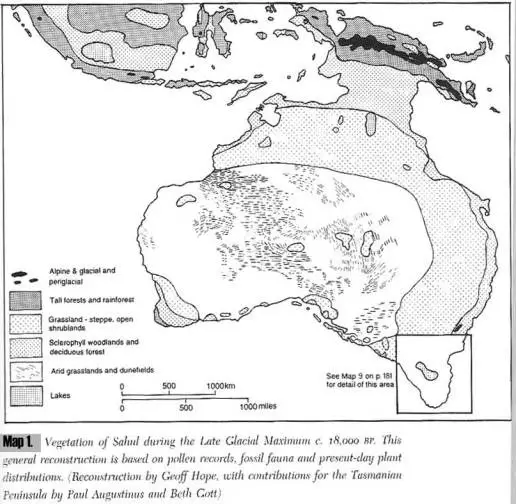
You're assuming that sea distance is a constant. For substantial periods of the past 50k years, Australia, Indonesia, and the South Indian subcontinent were joined or nearly so, due to lower sea levels. Much of the area remains quite shallow. At about 15-20kya: http://www.global-greenhouse-warming.com/ice-ages-and-sea-le... https://upload.wikimedia.org/wikipedia/commons/1/19/CLIMAP.j... Australasia[edit] The Australi…

http://www.global-greenhouse-warming.com/images/SahulLGM.jpg... shows a fairly wide gap between Australasia and Europe. "However, Sahul and Sundaland even at the height of the LGM were separated by at least 80 kilometres (50 miles)." Last thing I read suggested the gap was ~100 miles though this may have been a more recent period.

Thus, a 50 mile gap between Asia and the United states was likely crossed a few times.

Post reply on HN