Live data from Hacker News

DNA analysis reveals there are four distinct giraffe species, not one

researchgate.net

71–80 of 107 posts

Re: DNA analysis reveals there are four distinct giraffe species, not one

#71
A few comments on the academic field that this paper lies in. The aim is to use DNA sequences to make inferences about the history of the populations. It's a really vexed area. The core objective is to make statistical inferences about whether giraffes are one "species" or multiple based on observed DNA sequences. The core problem is that we can't easily know or approximate the relevant probability distributions. Compare species-level giraffe taxonomy with a classification problem in which a large training data set is available, like determining whether a speech recording is male or female. For speech we can collect an arbitrarily large training data set. But for giraffes, the equivalent would be to find a large sample of biological lineages which are in all other respects like giraffes but differ in that some of them are one "species" and some multiple, and collect DNA sequences from each of these. It's fantasy -- it doesn't exist.

To go into a bit more detail: to do the inference task we would need at least three things:

1. A definition of "species"

2. The probability distribution of DNA sequences under the null hypothesis

3. (For Bayesian approaches) The probability distribution of DNA sequences under the alternate hypotheses

(1) Is a huge problem because many biologists don't think it's necessary to worry about the definition. Putting that aside temporarily:

(2). If Giraffes are a single species, what is the probability distribution from which our observed DNA sequences were sampled? The answer is that it depends critically on all sorts of other things: social and reproductive biology of giraffes, giraffe demographics, giraffe post-natal dispersal patterns. Maybe the most important is that it depends on the geographic distribution of savanna vegetation types over the past few million years in sub-saharan Africa. We do not know the effects of any of these on the relevant probability distributions. The field of population genetics does allow us to define probability distributions over sampled DNA sequences, but you have to specify the model. And all the above-listed unknowns and more are relevant to the model. From a formal statistical point of view you could place priors on these unknown things and simulate from the marginal distribution of interest, but in practice that is of course fantasy: there's no convincing way to choose priors for such things, and there's no way to test it because giraffe evolution happened once only.

(3). See (2).

The upshot of all this is that while making evolutionary inferences from DNA sequences is a fascinating discipline, it has some serious challenges and limitations: we need to recognize that it is not in as happy a place as other sorts of statistical inferences for which arguments can be made about the relevant probability distributions needed to make the inference. There is a huge disconnect between the statistical and theoretical machinery used in the field, and the ability of practitioners to understand that material. This is absolutely fair enough: people publishing papers on a particular species are likely to be ecologists and conservation biologists; but to understand coalescent theory and the statistical inference techniques used requires graduate-level understanding of stochastic processes, statistical inference theory, computational statistics and other stuff from discrete math etc. But that's not to imply that it would all be fine if people publishing the papers were professional computational statisticians. The real problem is that while we wish that we had the ability to make, and more importantly test, these inferences, the truth is that it's a wildly ambitious inference problem. Throwing fancy math and computational statistics algorithms at it will get some people tenure, and will make graduate students in organismal biology feel intimidated, but it doesn't change that problem.
Re: DNA analysis reveals there are four distinct giraffe species, not one

#72
post #25

Earlier quoted context omitted.

>The paper is about species, not subspecies. And my reply is about subspecies, and our refusal to apply the same standards we apply to other animals to ourselves. I do not understand your confusion. >Humans do not meet the phylogenetic criteria which justifies the use of "subspecies" We have greater genetic difference between races than ANY example of subspecies in existence. I am very aware that a large group of peo…

Yes, my complaint is that you are highjacking an article on species differentiation in giraffes to talk about purported human subspecies. No, we emphatically do not have that high of a genetic difference. Quite the opposite. The diversity in human genetics is relatively small compared to other species. For example, quoting http://www.nature.com/ng/journal/v27/n2/full/ng0201_155.html : > The extent of DNA sequence var…

>Yes, my complaint is that you are highjacking an article on species differentiation in giraffes to talk about purported human subspecies.

I did nothing of the sort.

>No, we emphatically do not have that high of a genetic difference

Yes, we do. The genetic distance between Nigerians and Australian aboriginals is .176. This is greater than the distance between almost any subspecies ever tested.

>DNA doesn't lie. Humans lie, or are mistaken

Yes they do. And they will even deliberately misrepresent facts to present things the way they want them to be. Like looking at isolated segments of DNA and drawing conclusions based on that (your link).

Re: DNA analysis reveals there are four distinct giraffe species, not one

#73
I'm pretty happy with a (the?) species definition in microbiology:

It's a little more complicated than that, and some important people (especially in the older generation) don't like it, but it's a good / quick standard.

[0] http://www.ncbi.nlm.nih.gov/pmc/articles/PMC1764935/

Re: DNA analysis reveals there are four distinct giraffe species, not one

#74
post #68

Earlier quoted context omitted.

I don't think there is any good evidence for Australia being populated before 45,000 years ago. Modern humans hadn't even left Africa 75,000 years ago.

Your dates for leaving Africa seem to be off base. Homo sapiens ventured out of Africa around 100,000 years ago https://en.wikipedia.org/wiki/Early_human_migrations There where early tool across Afro-Eurasia as far back as 1.7 to 2.6 million years. Early human ancestors may have maintained separate populations spreading genetic mutations between them with occasional waves of migration displacing existing populations.…

The data regarding the early venturing out of Africa is not good, but even the wiki article says humans reached Australia 46,000 years ago.

Re: DNA analysis reveals there are four distinct giraffe species, not one

#75
post #25

Earlier quoted context omitted.

Yes, my complaint is that you are highjacking an article on species differentiation in giraffes to talk about purported human subspecies. No, we emphatically do not have that high of a genetic difference. Quite the opposite. The diversity in human genetics is relatively small compared to other species. For example, quoting http://www.nature.com/ng/journal/v27/n2/full/ng0201_155.html : > The extent of DNA sequence var…

If human races (which clearly exist) are not genetically distinct enough to be considered subspecies, how about the inverse? Can you point out examples of animal species/subspecies that have races? Are different dog breeds the equivalent of human races, for example?

In the post you replied to I pointed out gorilla (with three subspecies, two of which are Gorilla gorilla gorilla and Gorilla gorilla beringei) and orang-utans (with Pongo pygmaeus pygmaeus and Pongo pygmaeus abelii) as two species with recognized subspecies. I also earlier mentioned chimpanzees as a species with multiple subspecies. https://en.wikipedia.org/wiki/Common_chimpanzee#Taxonomy says there are four.

This uses the taxonomic definition of race, which http://www.nature.com/ng/journal/v36/n11s/full/ng1455.html says "Although 'race' and subspecies are usually treated as equivalent, some zoological taxonomists reserve the word 'race' for local breeding populations, with subspecies being geographical collections of populations that are similar or the same in the defining traits."

That same article is careful to point out that the taxonomical definition is different from the sociopolitical, "socially constructed" definitions used by humans when talking about themselves.

Concerning dogs, https://en.wikipedia.org/wiki/Dog#Taxonomy points out that it's unresolved if domesticated animals should be list as a subspecies, so that dogs are "Canis lupus familiaris", or if they are their own species, as in "Canis familiaris".

In either case, dog breeds are "artificial variants created by ... selective breeding", from http://vertebrates.si.edu/msw/mswCFApp/msw/taxon_browser.cfm... . The term "variety" has no formal definition in mammalian taxonomy. See https://en.wikipedia.org/wiki/Variety_(botany)#Other_nomencl... .

Re: DNA analysis reveals there are four distinct giraffe species, not one

#76
post #13

Earlier quoted context omitted.

The paper is about species , not subspecies . The paper says: > Thus, population genetic, phylogenetic, and network analyses of nuclear sequences demonstrate that the giraffe is genetically well structured into four distinct species. This is consistent with divergence times of 1.25 to 2 million years ago (mya) among the four clusters (Figure 3C). That genetic isolation is 100x longer than the human migration to the A…

>The paper is about species, not subspecies. And my reply is about subspecies, and our refusal to apply the same standards we apply to other animals to ourselves. I do not understand your confusion. >Humans do not meet the phylogenetic criteria which justifies the use of "subspecies" We have greater genetic difference between races than ANY example of subspecies in existence. I am very aware that a large group of peo…

MustardTiger I sympathize with the points you are trying to get across (and the undeserved downvotes and careless replies you are getting). Just one thing though

> We have greater genetic difference between races than ANY example of subspecies in existence.

You went too far with that comment. I think I know what you're trying to say: that if intrahuman genetic divergence and superficial morphology differences were observed in any other organism it would be classified as subspecies, but as a matter of fact there remain many examples of strongly genetically divergent populations in nature that have not been elevated from subspecies to species, and some which are unlikely to be due to known introgression etc.

EDIT: yes I know that introgression doesn't contradict species status for many species definitions, but taxonomy literature is determined by practices local to the community studying the taxon in question and for many taxa introgression is still certainly an argument against classifying as species.

Re: DNA analysis reveals there are four distinct giraffe species, not one

#77

Earlier quoted context omitted.

Physical difference is not the same thing as genetic difference. Humans may subjectively look very different but genetically humans aren't very different. This is empiracle fact. Stop living in the 19th century.

Physical difference has nothing to do with the discussion. That is a complete red herring you just pulled out from no where. The empirical fact is that humans are genetically quite different. The genetic distance between human races is greater than many species, and virtually all subspecies distinctions made in the animal kingdom. Stop denying science because of a false belief that lying will somehow get rid of racis…

> The genetic distance between human races is greater than many species

Please back up that claim.

Re: DNA analysis reveals there are four distinct giraffe species, not one

#78

Earlier quoted context omitted.

They were believed to be sub-species and so I doubt zoos mixed and matched. The real outcome seems to be that the species is now 1/4 its previous size. Where there was once one endangered species, now stand four very endangered species. Similar and more dramatic story with mantas: http://news.nationalgeographic.com/news/2008/07/080731-new-r...

There's a philosophical question in the fact that something just became more treasured because of DNA testing results, but I'm not even going to attempt answering that.

Value isn't absolute, but a relation between the valuer and that being valued.

W.F. Lloyd, 1833, "A Lecture on the Notion of Value as Distinguished Not Only from Utility, but also from Value in Exchange".

http://socserv2.socsci.mcmaster.ca/~econ/ugcm/3ll3/lloyd/val...

Re: DNA analysis reveals there are four distinct giraffe species, not one

#79
post #31
post #28

Earlier quoted context omitted.

> ~14,000 years as separate populations. Perhaps even less. http://www.andrewcollins.com/page/articles/romanbust.htm There was at least some contact between North America and Europe, close to 2K years ago.

The baring strait is also only 51 miles so there was likely quite a bit of accidental crossings if nothing else. For comparison Australia was populated around 65,000 to 75,000 years ago and that takes more than 200 miles by sea.

You're assuming that sea distance is a constant.

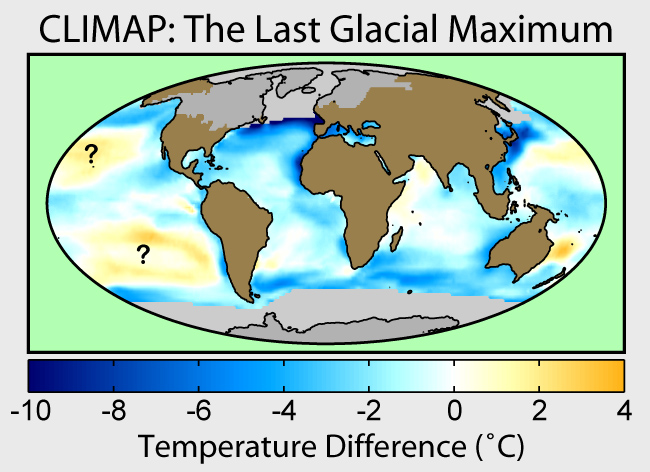
For substantial periods of the past 50k years, Australia, Indonesia, and the South Indian subcontinent were joined or nearly so, due to lower sea levels. Much of the area remains quite shallow. At about 15-20kya:

http://www.global-greenhouse-warming.com/ice-ages-and-sea-le...

https://upload.wikimedia.org/wikipedia/commons/1/19/CLIMAP.j...

Australasia[edit] The Australian mainland, New Guinea, Tasmania and many smaller islands comprised a single land mass. This continent is now referred to sometimes as Sahul. Between Sahul and Sundaland – a peninsula of South East Asia that comprised present-day Malaysia and western and northern Indonesia – there remained an archipelago of islands known as Wallacea. The water gaps between these islands, Sahul and Sundaland were considerably narrower and fewer in number.

https://en.wikipedia.org/wiki/Last_Glacial_Maximum

Re: DNA analysis reveals there are four distinct giraffe species, not one

#80

Since this wasn't known before, am I right to assume that a lot of giraffes in zoos are hybrids of the different species?

They were believed to be sub-species and so I doubt zoos mixed and matched. The real outcome seems to be that the species is now 1/4 its previous size. Where there was once one endangered species, now stand four very endangered species. Similar and more dramatic story with mantas: http://news.nationalgeographic.com/news/2008/07/080731-new-r...

> The real outcome seems to be that the species is now 1/4 its previous size.

I had a sudden panicky vision of miniature quarter-size giraffes caused by improper zoo breeding before I figured out what you meant.

Post reply on HN