Live data from Hacker News

Technologists have produced a 3D-printed painting in the style of Rembrandt

bbc.com

21–30 of 65 posts

Re: Technologists have produced a 3D-printed painting in the style of Rembrandt

#21
post #16

I feel like it's misleading of them to say that a computer painted the picture. That makes it sound like all works of Rembrandt have been fed into a Machine Learning algorithm and finally the computer spit out this piece. After having watched the YouTube video, I fell like actually the picture was more or less photoshopped together from existing Rembrandt paintings. The role of the algorithms was "only" to generate t…

I'm guessing recent progress in texture synthesis [1] and content generation [2] using deep convolutional nets made this possible. It would be interesting to see what was actually fed into the generating system. That would be a piece of art truly speaking magnitudes.
[1] http://arxiv.org/abs/1505.07376

[2] http://arxiv.org/abs/1511.06434

Re: Technologists have produced a 3D-printed painting in the style of Rembrandt

#22
post #16

I feel like it's misleading of them to say that a computer painted the picture. That makes it sound like all works of Rembrandt have been fed into a Machine Learning algorithm and finally the computer spit out this piece. After having watched the YouTube video, I fell like actually the picture was more or less photoshopped together from existing Rembrandt paintings. The role of the algorithms was "only" to generate t…

I used to paint old masters portraits as a hobby (including Rembrandt). I think it's a bit disingenuous to describe this as 'painting'. On top of ma2rten's criticism that it basically photoshopped previous examples to create a most representative work, I'd add that 3D printing with texture is not painting. Rembrandt, in particular, was known for painting with countless layers of semi transparent glazes to give his paintings a sense of depth and an ethereal glow. He'd also mix his pigments with bindings aside from pure linseed oil, sometimes adding chalk or glass. 3D printing the final result with none of that process makes for a very limited reproduction.

Also, I'll add that I think it's very impressive, but I think they're overselling it here.

Re: Technologists have produced a 3D-printed painting in the style of Rembrandt

#23

If it were a -human- painting a fake Rembrandt, no matter how perfect an imitation, it would be called "a very very good imitation of Rembrandt" and nobody would claim that they'd in any sense brought Rembrandt back to life. Calling a very good forged Rembrandt a "new Rembrandt" would be pretty silly. Calling one generated by a computer a "new Rembrandt" seems just as silly. Just because it was composed by an algorit…

Check out Orson Welles "F is for Fake" - illuminating film about authenticity and value.

Re: Technologists have produced a 3D-printed painting in the style of Rembrandt

#24
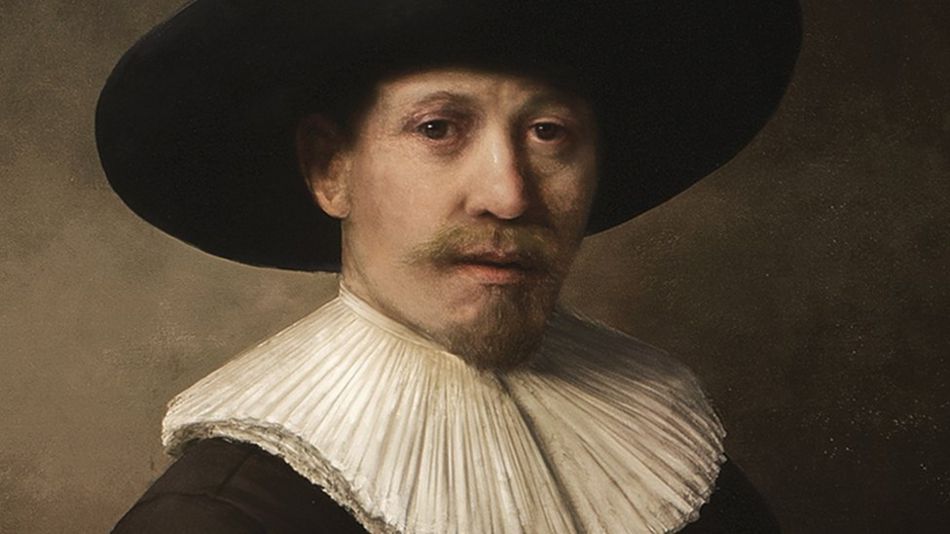
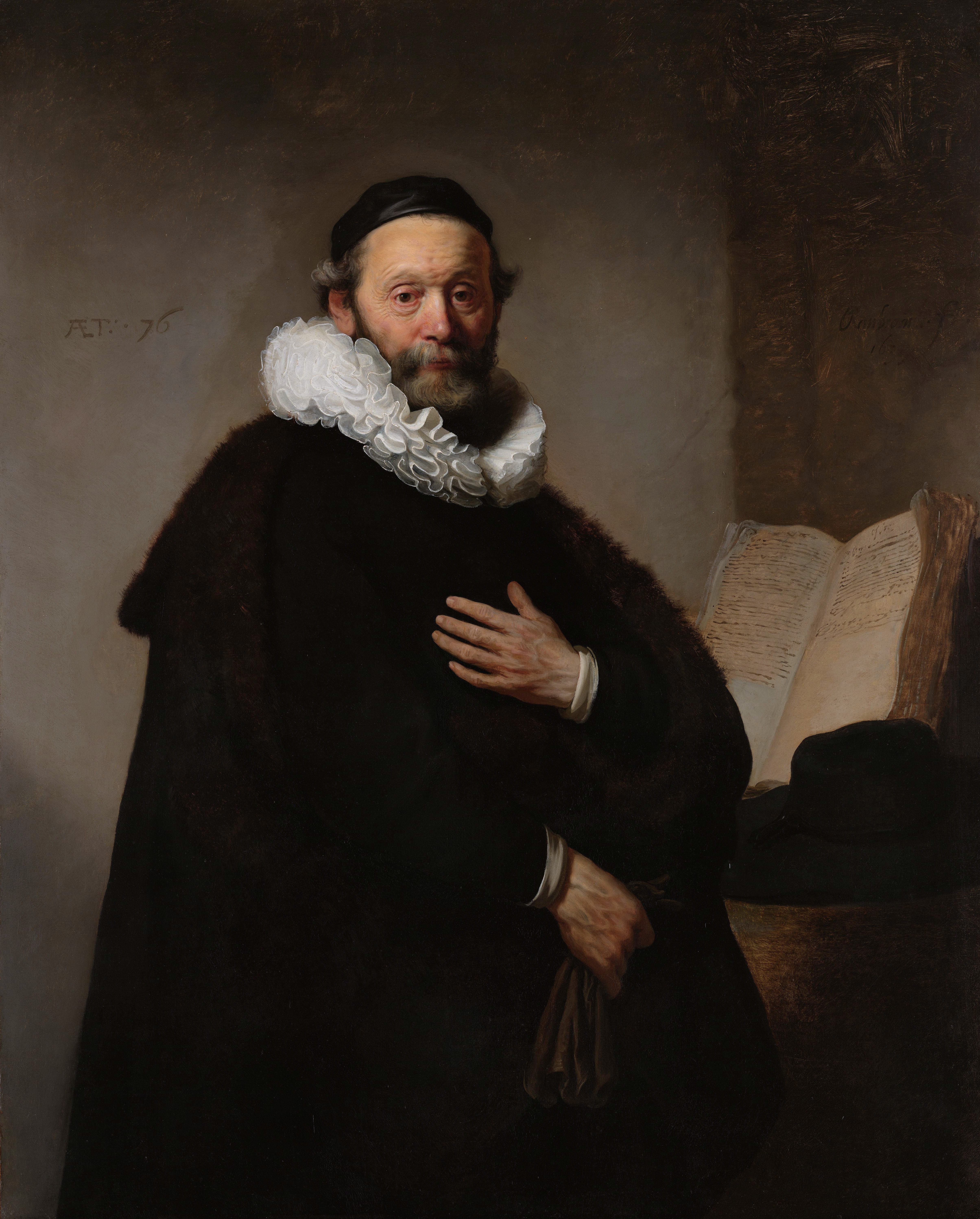
It's an impressive achievement. But compare the computer generated image[1] with a real Rembrandt of a similar subject at high resolution.[2] Compare the detail in the neck ruff. Look at the iris of the eyes. (Why do Rembrandt's people have no eyelashes?)

[1] http://ichef-1.bbci.co.uk/news/950/cpsprodpb/4B28/production... [2] https://upload.wikimedia.org/wikipedia/commons/3/3e/Johannes...

Re: Technologists have produced a 3D-printed painting in the style of Rembrandt

#25

elephants do really good abstract impressionism as long as you tell them when to stop. http://www.getty.edu/education/teacherartexchange/archive/No... Not to say that rembrandt = abstract impressionism. Still, the humans tagging features is kind of a copout. The 'grain of salt' for these projects is to look at the variation of outputs when you tweak the model inputs. In this case it's going to be a head with oil pain…

Take a look at these:

* Combining Markov Random Fields and Convolutional Neural Networks for Image Synthesis (http://arxiv.org/abs/1601.04589)

* A Neural Algorithm of Artistic Style (http://arxiv.org/abs/1508.06576)

They do much more than photoshopping. It's actual synthesis of new images in the style of a desired painter.

Re: Technologists have produced a 3D-printed painting in the style of Rembrandt

#26
post #20

Earlier quoted context omitted.

I think the goal of the project was to make a painting that is statistically indistinguishable from his other paintings. Another painter painting in his style would still inject some of their own style and technique into it. If you looked closely or took statistics from two painters trying to mimic the same style, you would be able to distinguish them. Here they went to great lengths to try to make it very accurate.…

Statistically indistinguishable by what measure? One of many we could come up with, no doubt. If an expert were to look closely at this, perhaps they would also distinguish them, by something the statistics didn't quantify. An expert forger would be trying to make a painting that is literally indistinguishable from an actual Rembrandt, which is much harder. The GP's point was that something that can fool an algorithm…

By what measure? The measure of as many experts as you can find.

Copying a specific painting is a very different thing. It's hard for entirely mechanical and chemical reasons. Trying to make a new painting that blends in is much more interesting.

Re: Technologists have produced a 3D-printed painting in the style of Rembrandt

#27
post #10

Earlier quoted context omitted.

From http://www.catb.org/jargon/html/koans.html#id3141241 In the days when Sussman was a novice, Minsky once came to him as he sat hacking at the PDP-6. “What are you doing?”, asked Minsky. “I am training a randomly wired neural net to play Tic-Tac-Toe” Sussman replied. “Why is the net wired randomly?”, asked Minsky. “I do not want it to have any preconceptions of how to play”, Sussman said. Minsky then shut his eyes…

Yes, I know, and agree.

[deleted]

Re: Technologists have produced a 3D-printed painting in the style of Rembrandt

#28

youtube video showing the process https://www.youtube.com/watch?v=IuygOYZ1Ngo

They said they incorporated the height map from the original. How did they obtain them? Do museums/galleries/owners let scientists or engineers study the layers of paint of the physical paintings?

Yes they let scientists study the layers.

You can create hight maps by casting light from each side of the painting and using the shadows for your hight map calculations.

Re: Technologists have produced a 3D-printed painting in the style of Rembrandt

#29
post #25

elephants do really good abstract impressionism as long as you tell them when to stop. http://www.getty.edu/education/teacherartexchange/archive/No... Not to say that rembrandt = abstract impressionism. Still, the humans tagging features is kind of a copout. The 'grain of salt' for these projects is to look at the variation of outputs when you tweak the model inputs. In this case it's going to be a head with oil pain…

Take a look at these: * Combining Markov Random Fields and Convolutional Neural Networks for Image Synthesis ( http://arxiv.org/abs/1601.04589 ) * A Neural Algorithm of Artistic Style ( http://arxiv.org/abs/1508.06576 ) They do much more than photoshopping. It's actual synthesis of new images in the style of a desired painter.

neural blending side-by-side on p6 of the first paper is really cool

Re: Technologists have produced a 3D-printed painting in the style of Rembrandt

#30
post #5

Earlier quoted context omitted.

Human artist would most likely inject their own take into "imitation" art, but if the computer's art was purely derived from an artist past work, it's only inspired by the artist work; this is in theory, even the code to enable this would most likely have biases that would result in artifacts in the "new" art.

From http://www.catb.org/jargon/html/koans.html#id3141241 In the days when Sussman was a novice, Minsky once came to him as he sat hacking at the PDP-6. “What are you doing?”, asked Minsky. “I am training a randomly wired neural net to play Tic-Tac-Toe” Sussman replied. “Why is the net wired randomly?”, asked Minsky. “I do not want it to have any preconceptions of how to play”, Sussman said. Minsky then shut his eyes…

Ugh. I see the point in general, but the eye closing is a really broken analogy, and there is a difference between a bias and a preconception.
Post reply on HN