Live data from Hacker News

The Hardest chess problem in the world?

hebdenbridgechessclub.blogspot.com

81–90 of 137 posts

Re: The Hardest chess problem in the world?

#81
post #20
post #15

"no longer strictly within the bounds of the rules of the game" I take exception to _strictly_... it's just flat out illegal now, no "strictly" about it. I would have been less ticked off if the article had simply written "no longer within the bounds of the rules of the game." It is fascinating that the move was formerly legal though.

Yeah, but putting "strictly" there does not change the meaning of the sentence, it's just a superfluous word.

"strictly" changes the meaning of the sentence. it suggests that there are "strict" and "not so strict" interpretations of the chess rules, and that if you're not so strict, the move is OK.

but promoting to the other color is not allowed, even under "not so strict" interpretations of the rules of chess.

an example of things that may be permitted in "not so strict" chess: taking back your move, not moving a piece even though you touched it, talking to the other player, agreeing to play on even though you've had a threefold repetition.
Re: The Hardest chess problem in the world?

#82

If chess is a analogy of war and a pawn infiltrates the other side. I believe he has the right to choose a side. I mean he may scale the castle wall only to die releasing a captured prisoner, or he may disrobe a night and get back on the battle field. I love this idea.

I thought defectors were also executed by opposing armies?

Who would want a known traitor in their ranks?

Re: The Hardest chess problem in the world?

#83
I remember reading about a chess puzzle where a similar "out of the box" thinking was required which would probably put it outside of reach of computer solvers. As a plus it was within currently legal rules.

The winning move was en passant and the solution required observing that the only way the situation could have arisen was the opposite pawn moving 2 ranks forward, making this move possible.

Re: The Hardest chess problem in the world?

#84
If we are playing fast with the rules re sides, was there any rule at the time saying the black King couldn't take the black Knight?

That would break the check, force white to move the rook to block, allow the black king to take the rook, and place black in a winning position.

Re: The Hardest chess problem in the world?

#87

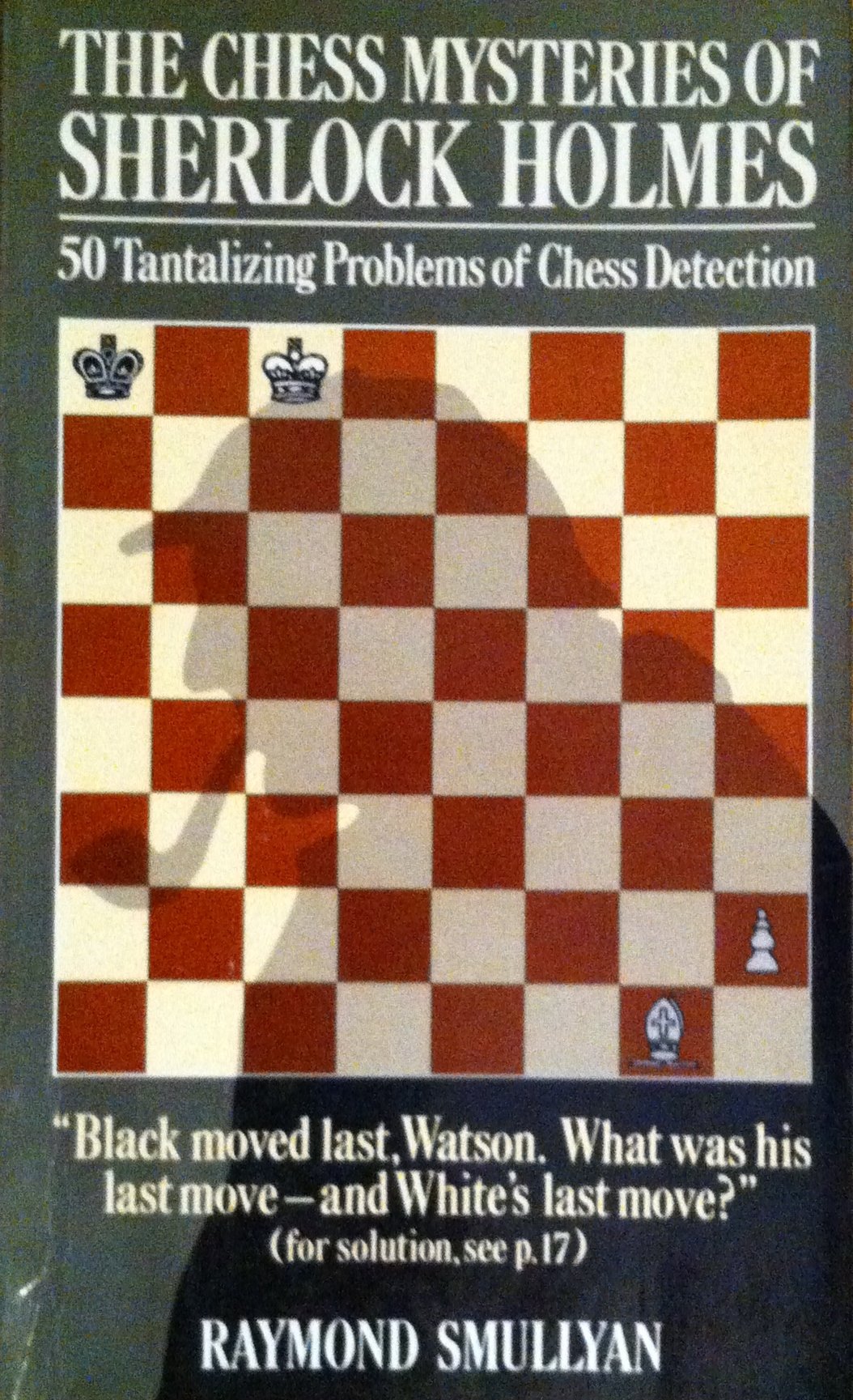
Also very challenging for chess players is retrograde analysis, where you have to find the only possible legal moves to reach the given position. See the cover of this book by Smullyan http://ecx.images-amazon.com/images/I/81y-bMMYCoL.jpg

Thanks for that link, it was fun and took me quite awhile to figure out!

Re: The Hardest chess problem in the world?

#88

If we are playing fast with the rules re sides, was there any rule at the time saying the black King couldn't take the black Knight? That would break the check, force white to move the rook to block, allow the black king to take the rook, and place black in a winning position.

> "force white to move the rook to block"

A better move would be to just move your king out of check and to go protect your rook.

Re: The Hardest chess problem in the world?

#90
post #61

Earlier quoted context omitted.

I think you're just disappointed because you wanted to solve a chess problem. I liked the article because I read it as a story to be enjoyed rather than a problem to be solved.

Marketing problem-solving and delivering history is linkbait, and I dislike bait-and-switch equally among journalism and retail. It's deceptive and the article doesn't deserve the clicks it's getting. Name it "An interesting historical chess rule" and let the chips fall where they may. (I wouldn't have clicked that FWIW)

I didn't click it myself until it got a lot of votes, and now I'm glad I did. It's not hard to figure out why it would be relevant to the audience here. Applying the lesson in a different context might be difficult though.
Post reply on HN