Earlier quoted context omitted.
> The nominal wage has increased since the early 70s, but the purchasing power of that nominal wage has gone down faster than the increase. This is policy, not capitalism. Which option would you prefer? (1) You have a 70s real wage, but can only purchase goods and services that were available in the 70s, or (2) You have a 2016 real wage and you can purchase all goods and services available today. Keep in mind that re…
You're presenting a false choice. You could have a 1970 real wage and buy the stuff of today? My point is exactly the fact that we don't have that is a result of inflation. Please explain, mechanistically, why you believe that there are only two options here.
If you'd like to argue that "purchasing power should have increased more if it wasn't for XYZ..." then that's fine, but it's separate from the point that I was debunking:
> but the purchasing power of that nominal wage has gone down faster than the increase
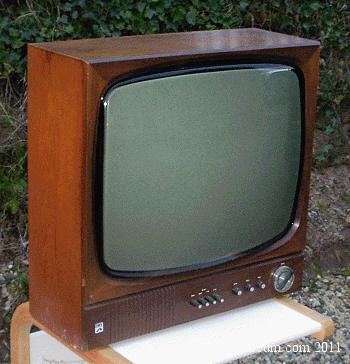
If one prefers 2016 products at 2016 wages, then purchasing power has increased. Since real wages have stayed constant, we're basically just talking about 1970 products vs. 2016 (and 2016 products are much better, cheaper, etc)