Live data from Hacker News

NOAA Satellites Helped Save a Record 421 Lives in 2019

noaa.gov

61–70 of 126 posts

Re: NOAA Satellites Helped Save a Record 421 Lives in 2019

#61
post #40
post #31

> the impact of the crash of a small aircraft near Skwentna, Alaska, activated the emergency beacon onboard. I wonder how that kind of event is detected by the beacon, and if I could buy one for a person I know flies with visual flight rules (this means no recurrent fee, at least for 10 years).

For the aircraft units (ELTs), it's triggered by g-forces. Almost all aircraft in the US are required to have an ELT beacon installed on-board, though many are still equipped with the old analog (121.5 MHz) technology which isn't monitored by satellite anymore. If you want to carry a backup or want to have a modern digital beacon (406 MHz), you can certainly carry a PLB. Many pilots do, myself included. Note that the…

Even if you have a digital ELT, make sure you know how to manually activate it and teach any frequent passengers. The automatic trigger is not reliable, it's better than nothing but survivable impacts may not trigger the beacon.

PLBs tend to have pretty easy to follow instructions written right on them, but again people who'll be with you when it's needed should be told about it during safety briefing. Kids too young to learn the radio or other potentially life-saving apparatus can be shown how to use the beacon because of how simple it is.
Re: NOAA Satellites Helped Save a Record 421 Lives in 2019

#62
post #2

I have one of these beacons and take it with me most times I'm going out alone into the wilderness. I don't want to be the guy who had to cut his own arm off after it got trapped by a falling boulder. That being said, this is an interesting spin on the number. I've been hearing from friends on Search and Rescue crews that an increasing number of people are going out hiking being completely unprepared for any possible…

I'm in search and rescue near the Tahoe area.

So far we've had good luck with beacon call-outs. The cases we've responded to have almost entirely been folks that were legitimately stuck or lost, and yes, they were somewhat under-prepared for the situation they were in, but that's just the modern reality of outdoor play and it makes no more sense to expect all recreationists to be perfectly prepared than it makes to expect all software developers to build some idealized unit-tested software.

I have heard from other SAR groups that the beacons have been a mixed bag, and they're getting too many call-outs from people who just got tired and want a ride home. Those people deserve a verbal chewing-out from the local coordinator, but on balance I'd still rather everyone go out with beacons and have a good time and hit that button if they need to.

Re: NOAA Satellites Helped Save a Record 421 Lives in 2019

#63
post #42

Earlier quoted context omitted.

I've been hearing from friends on Search and Rescue crews that an increasing number of people are going out hiking being completely unprepared for any possible emergency, thinking that they'll just use their cell phone if anything goes wrong. This is so true. I live in the desert, and it's amazing the number of people who simply don't take the natural world seriously. The dead and rescued are almost always tourists.…

> I'm sure there are remote places in Europe There are a few, here and there, but it's just completely different. Everywhere in Italy (I lived there a number of years) there are people. It might just be a little mountain hut, or a cabin or something, but there are pretty much always other people around. Here in Oregon, I can ride my bike to places where I almost won't see other people all day.

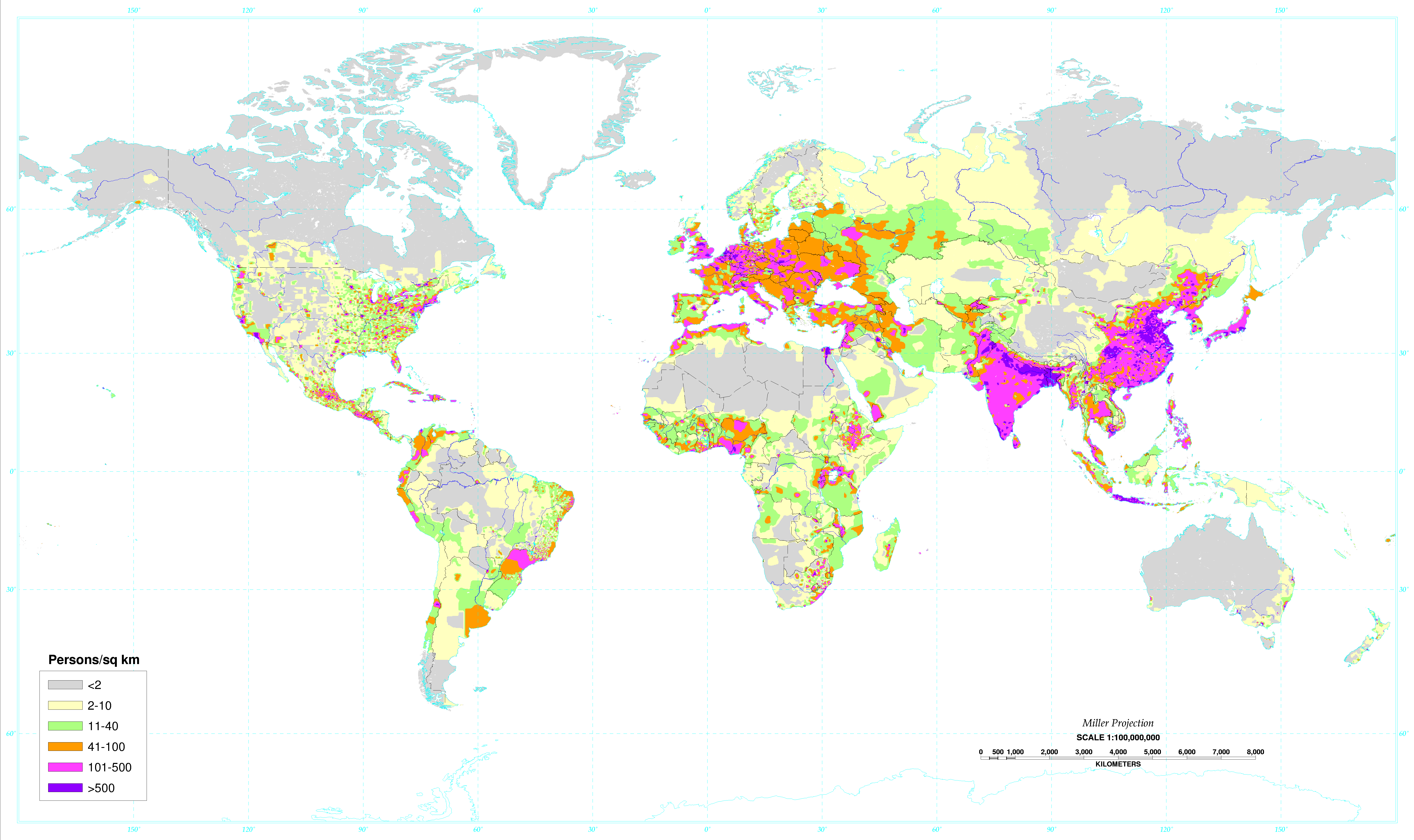
For further context, [1] is a map of worldwide population density. Except for the Nordic countries and Spain there are no places without people.

1: https://upload.wikimedia.org/wikipedia/commons/6/67/World_po...

Re: NOAA Satellites Helped Save a Record 421 Lives in 2019

#64
post #2

I have one of these beacons and take it with me most times I'm going out alone into the wilderness. I don't want to be the guy who had to cut his own arm off after it got trapped by a falling boulder. That being said, this is an interesting spin on the number. I've been hearing from friends on Search and Rescue crews that an increasing number of people are going out hiking being completely unprepared for any possible…

I've been hearing from friends on Search and Rescue crews that an increasing number of people are going out hiking being completely unprepared for any possible emergency, thinking that they'll just use their cell phone if anything goes wrong. This is so true. I live in the desert, and it's amazing the number of people who simply don't take the natural world seriously. The dead and rescued are almost always tourists.…

I found cell reception to be alarmingly bad in the UK outside of populated areas. Entire stretches in Wales with no coverage. Days on 3G (if you're lucky!)

Iceland had stunningly good coverage; no matter how remote you were, it seemed like full service everywhere. (granted, I did't cross the center of the island).

Had no cell coverage on the Rallarvegen in Norway, which surprised me.

But yeah, it's all nothing like the US.

Re: NOAA Satellites Helped Save a Record 421 Lives in 2019

#65
COSPAS-SARSAT originated as a collaboration between the US and the Soviet Union (COSPAS is a romanization of the Russian acronym), with several other countries joining shortly after (France, Canada) and ownership ultimately migrating towards the UN. In many ways it's a remarkable example of successful collaboration between not-so-friendly powers in the typically tense domain of space systems.

The EU Galileo system includes an enhanced SAR capability which will be integrated with the COSPAS-SARSAT system. In the future, properly equipped transponders will be able to receive a confirmation message transmitted from Galileo satellites to provide the user reassurance that their call was received.

There are also subscription services available, such as Spot and Garmin InReach which rely on commercial satellite networks. They're not really that expensive (Spot as low as $18/mo) and depending on the provider include position tracking and two-way text-messaging. These extra features can be very useful, but coverage of these commercial providers is not necessarily as good as COSPAS-SARSAT, especially near the poles. This is particularly true since COSPAS-SARSAT is augmented by a small set of geostationary satellites (NOAA's GOES) which provide "worst-case" coverage, while the commercial networks are LEO.

Re: NOAA Satellites Helped Save a Record 421 Lives in 2019

#66

I bought one of these PLBs after spending 12h down a canyon with a broken ankle and no cell reception. Friends had to hike back out of the canyon and hike then drive for hours to get help. Never again. Since then I got a sailboat and it's pretty standard in that field to have EPIRB, PLBs and the likes. There's life-vests that come with mini-PLBs in them. It's a bit pricey but it's essential in my opinion. I was lucky…

> Since then I got a sailboat Depending on where and with whom you sail, getting a DSC/AIS-based beacon may make sense: * https://en.wikipedia.org/wiki/AIS-SART If you're mostly in coastal waters, and not short-handed, then help is probably not far away, and being able to see where a person is floating on a chart plotter display makes for easier retrieval. * http://oceansignal.com/products/mob1/ Of course if you're d…

[deleted]

Re: NOAA Satellites Helped Save a Record 421 Lives in 2019

#68
post #2

I have one of these beacons and take it with me most times I'm going out alone into the wilderness. I don't want to be the guy who had to cut his own arm off after it got trapped by a falling boulder. That being said, this is an interesting spin on the number. I've been hearing from friends on Search and Rescue crews that an increasing number of people are going out hiking being completely unprepared for any possible…

I've been hearing from friends on Search and Rescue crews that an increasing number of people are going out hiking being completely unprepared for any possible emergency, thinking that they'll just use their cell phone if anything goes wrong. This is so true. I live in the desert, and it's amazing the number of people who simply don't take the natural world seriously. The dead and rescued are almost always tourists.…

> I live in the desert, and it's amazing how many...

Okay yeah but that's very anecdotal. Just because there is a lot of people getting stuck that assume technology would just work, does not mean there weren't a lot of people getting stuck with no backup plan whatsoever. And I wouldn't trust memory either, besides that it is very fallible people also see the past as better than today (from various studies).

I would be interested if you have news (Google-branded or otherwise) that reports it has gone up since cell phone coverage became ubiquitous in many countries, corrected for things like plane ticket prices and car rental availability near a desert (i.e. more people trying it rather than actually a higher percentage of unprepared people).

Re: NOAA Satellites Helped Save a Record 421 Lives in 2019

#69
post #49

Earlier quoted context omitted.

Yowsa. Do I spent the additional $100 and go with a new one? I wonder how much technology has changed in 10 years since I bought this..

May be better GPS processing: more channels for a quicker fix. Perhaps lower power or better battery chemistry so the '2.0' unit may last longer?

great points

Re: NOAA Satellites Helped Save a Record 421 Lives in 2019

#70
post #42

Earlier quoted context omitted.

> I'm sure there are remote places in Europe There are a few, here and there, but it's just completely different. Everywhere in Italy (I lived there a number of years) there are people. It might just be a little mountain hut, or a cabin or something, but there are pretty much always other people around. Here in Oregon, I can ride my bike to places where I almost won't see other people all day.

For further context, [1] is a map of worldwide population density. Except for the Nordic countries and Spain there are no places without people. 1: https://upload.wikimedia.org/wikipedia/commons/6/67/World_po...

Wow, I had no idea the USA is so sparsely populated.

As someone from a purple region on that map (having lived near Aachen and Amsterdam), I can't imagine what it's like to be more than a few minutes driving away from the nearest occupied house or named road. The most alone I've ever been was probably in a German forest and that was almost certainly still within hearing distance from other people, if not immediately then almost certainly within 30 minutes of me wanting to reach someone.

Not sure if it would frighten me or if I'd be fine to be actually unreachable for a few hours.

Post reply on HN