Live data from Hacker News

Changes since congestion pricing started in New York

nytimes.com

491–500 of 735 posts

Re: Changes since congestion pricing started in New York

#491
post #448

Earlier quoted context omitted.

You’re kind of proving the point here. NYC has fewer car owners and yet NYC doesn’t have a single pedestrian street or street closed to through traffic. Sounds like a city that can’t imagine itself without cars even though it’s completely realistic.

There is a street in Williamsburg that has been pedestrianized. I cant remember which one. Broadway has had large expansions to its curbing from the flatiron building to union square. Its a slow process but its getting there.

Which one? Berry is semiclosed, but people routinely remove the wooden barriers so they can drive on it and delivery app e-bikes/motor bikes routinely blast down it at speeds that make it uncomfortable to walk.

Broadway has expanded the sidewalk but it is definitely not closed to traffic. Also 2 partial closures in a city of 10 million kind of proves the point.
Re: Changes since congestion pricing started in New York

#492
post #428

Earlier quoted context omitted.

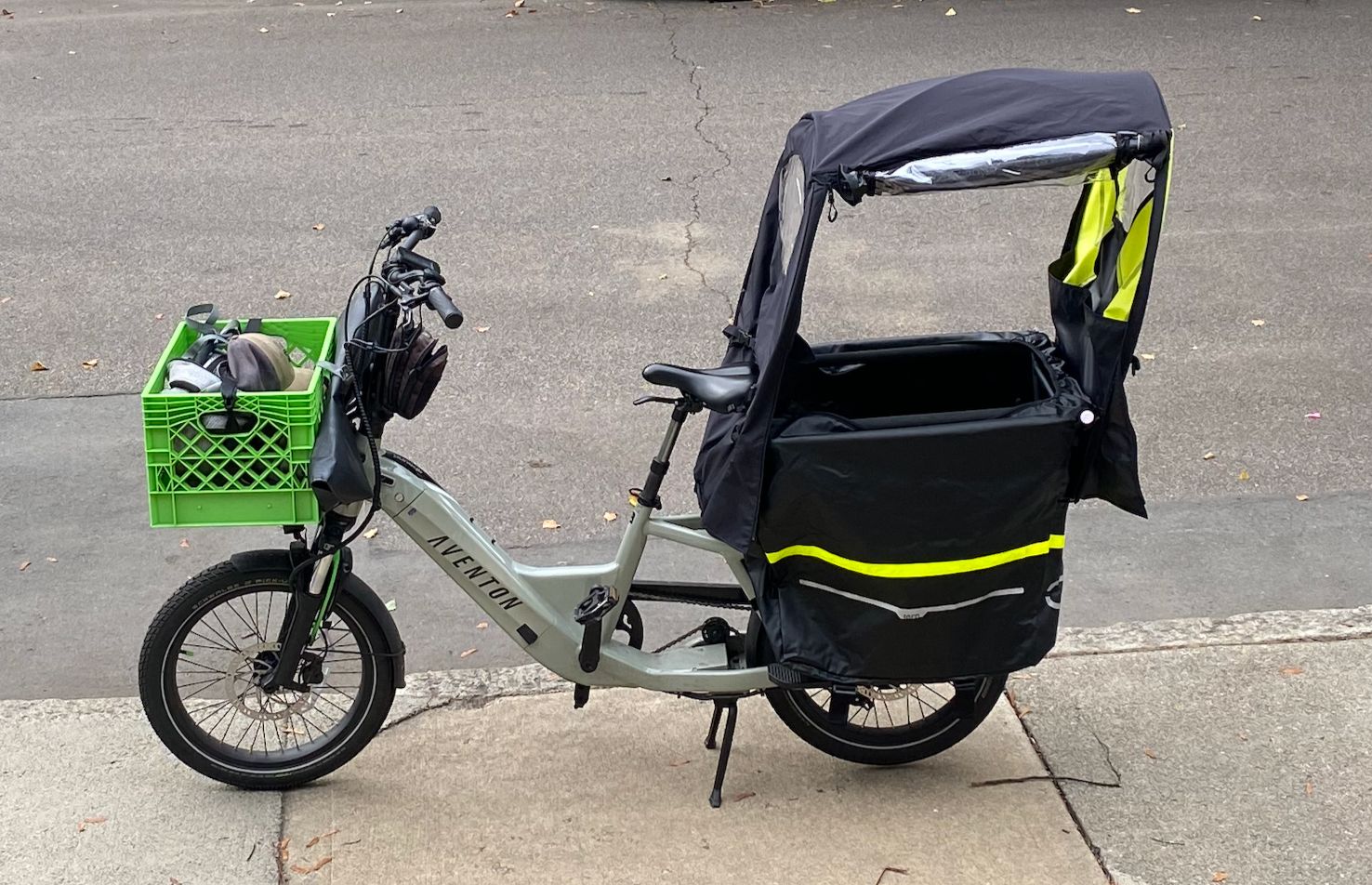
I live in Chicago and use a cargo ebike with a child seat for probably 90% of my trips. I can take my kid to school, go shopping, and go to my office on my bike, often quicker than if I were to take a car. Chicago has (recently?) put a lot of focus on their bike infrastructure (protected bike lanes, bike signals, bike only paths, etc) and it seems pretty widely used.

I’ve experienced Chicago winters. Do you put the kid in that seat?!?

Yes, with a warm coat and this full enclosure[0] she was happy in the winter.

[0]: https://betterabound.familybikeride.org/img/winter-kit.jpg

Re: Changes since congestion pricing started in New York

#493

There was a time when there were no automobiles in New York City, but there was lots of public transportation. (Ok, there were horses and the consequent manure, and the population was way smaller then. But still...)

The population of Manhattan peaked in the 1910s. Source - https://en.wikipedia.org/wiki/Demographic_history_of_New_Yor...

Re: Changes since congestion pricing started in New York

#495
post #482
post #271

As a long time NYC resident who moved out during Covid but commute to work in the city. I definitely noticed less traffic on the streets and less noise. I see a lot of talk of other cities that don't have good public transportation. For example, between Flushing in Queens to 8th Ave in Brooklyn, there are privately run buses at affordable rate and get you there at half the time of trains. There are buses from a lot o…

What are the brands/types of busses you're talking about? In my city, Greyhound, Chinatown busses, etc., handle city-to-city connections, but they don't connect the residential areas to the city center. It's not lucrative enough (one reason being car use is so heavily subsidized). This is one of the reasons the concept of public transit exists. Like delivering mail to Americans who live in remote areas, we spread out…

These minibusses or dollar vans don't have strong brands that you would recognize. They often operate in a legal grey area, so they're deliberately anonymous looking if you aren't in the know.

https://en.wikipedia.org/wiki/Dollar_vans_in_the_New_York_me...

Re: Changes since congestion pricing started in New York

#496

The increased speeds are excellent for those who can afford the toll. This is a universal benefit of toll roads for those people.

Yet, the article states > Public Opinion: Not great (but improving) So most people aren't happy (yet). Why is that?

Free stuff from the government is almost always very popular regardless of how bad of an idea it is. Free roads are no different.

Re: Changes since congestion pricing started in New York

#497
post #472

Earlier quoted context omitted.

It's curious but unsurprising that privatization of public transport is considered an answer to congestion when existence of good (or great) public transport is the working answer one can find in many places around the world. When I visited NYC two years ago, I was blown away by how unbelievably bad public transport infrastructure is. The most flabbergasting thing was the absence of Metro ring lines around the center…

The decline public transportation, in my view, reflects a shift in priorities within the Democratic Party. Back in the 1990s, Democrats were more focused on tangible public services—things like infrastructure, roads, transit systems. Today, the emphasis seems to have moved toward issues like environmental policy, DEI, and gender identity. As someone who’s deeply frustrated by the lack of progress on projects like hig…

What a stupid self centered excuse for supporting fascism.

Re: Changes since congestion pricing started in New York

#498

Earlier quoted context omitted.

>IMHO the real problem is cars. The US still can't imagine itself without cars. All of the US except NYC. In NYC 45.6% of households own a car. In Berlin it's 49%. https://www.titlemax.com/discovery-center/u-s-cities-with-th... https://www.berliner-zeitung.de/en/car-free-berlin-li.113268

You’re kind of proving the point here. NYC has fewer car owners and yet NYC doesn’t have a single pedestrian street or street closed to through traffic. Sounds like a city that can’t imagine itself without cars even though it’s completely realistic.

Also, many of the cars we see in the city are bound to be from outside the city (like New Jersey). Just look at the traffic in the Lincoln and Holland tunnels at rush hour.

A less abrasive approach than congestion pricing might just be pedestrian streets or narrower streets/wider sidewalks. If you make the city unattractive for cars, there will be fewer of them, and I am willing to bet that programs like these are less likely to trigger the outrage congestion pricing has, because it doesn't target car owners directly and en masse. You can sort of pick away at it, street by street. There will be less of a show of solidarity, because, hey, it's not my street.

The only thing that seems silly is penalizing delivery trucks. This only raises the costs of goods and services. This is one reason I would favor narrower, one-way streets over pedestrian streets. You still want vehicles. The issue is that many if not most vehicles in NYC are a luxury item and do nothing but negatively impact the common good. They don't even make transportation easier for their owners, on the whole. Of course, this should be combined with other policies that improve public transportation and improve availability of good and services in the city to reduce the burdens that cars alleviate.

Re: Changes since congestion pricing started in New York

#499

Earlier quoted context omitted.

How would limiting access by adding a cost not obviously impact people differently based on their income? I'm struggling to see why this would even need to be verified by research.

What's not obvious is how strong the impact is, does it cause substitution of travel modes or just decrease in travel, how does it change when travel takes place, what share of people are those who still have to drive etc.

In general cost, travel time, difficulty of parking, etc. all affect optional travel. (And, also, just age and inclination.) I know I'm way less inclined to go into Boston/Cambridge for something in the evening for some combination of those reasons than I used to be. I can take commuter rail in for a day event but it's pretty much a non-starter for something in the evening.

Re: Changes since congestion pricing started in New York

#500
post #431

Earlier quoted context omitted.

It's curious but unsurprising that privatization of public transport is considered an answer to congestion when existence of good (or great) public transport is the working answer one can find in many places around the world. When I visited NYC two years ago, I was blown away by how unbelievably bad public transport infrastructure is. The most flabbergasting thing was the absence of Metro ring lines around the center…

Part of the reason is that public transit for whatever reason appears to be unusually sketchy in many places in the US. For example, a few years ago, there was an incident with a man with two chainsaws threatening passengers [1] in the local transit system. In contrast, the transit systems I've seen in Europe and Asia appear well maintained, clean, and relatively safe. Biking is also safer in European cities that hav…

It’s funny how the one time it has ever happened that someone wielded a chainsaw on the subway it’s memorable news, and becomes evidence of a narrative that all of public transit is ‘sketchy’. That article’s from 7 years ago, and nobody got hurt and the guy was arrested. (BTW, I wonder why they used a photo from 2009?)

In the mean time, the number of shooting deaths by private car drivers in the US has more than doubled since 2018, to more than 1 per day. That doesn’t count threats with other weapons, nor any other kind of road rage, nor does it count accidental crashes. There are more than 120 deaths per day in the US in cars (the vast majority of “private transit”), and more than 2 million ER visits by injured riders per year.

And public transit is sketchy? Not compared to driving cars it isn’t.

Post reply on HN